
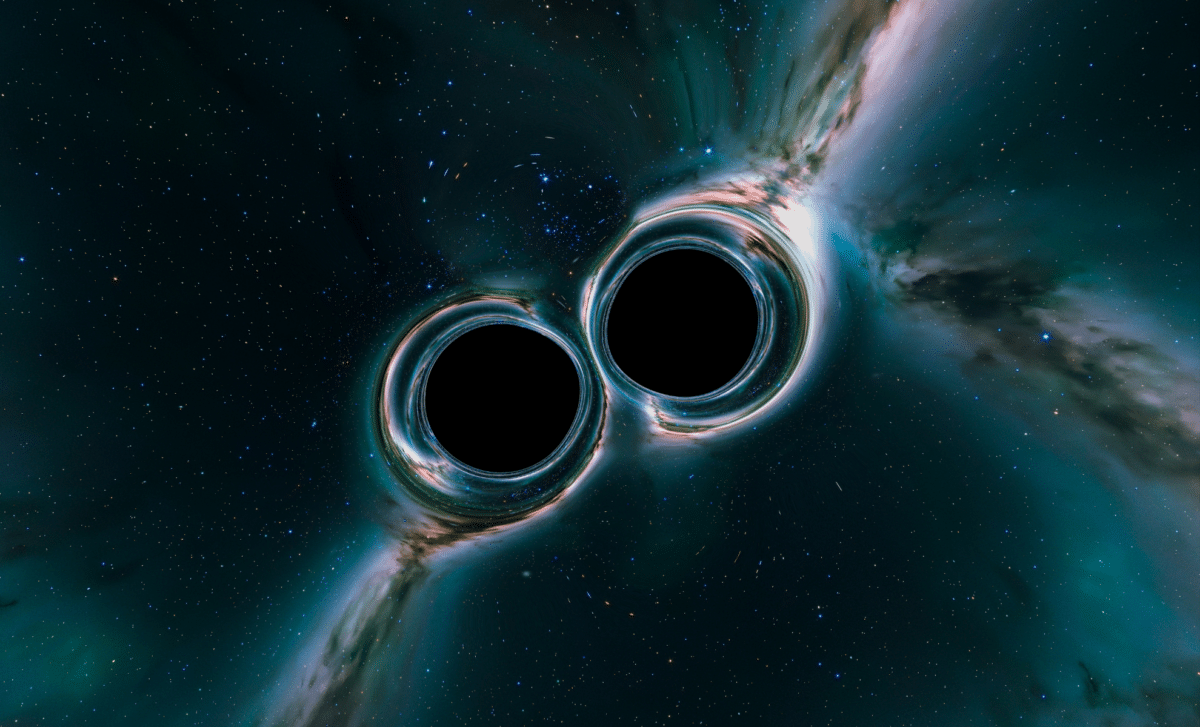
Researchers have captured the most powerful gravitational wave signal to date, offering an unprecedented test of Albert Einstein’s landmark theory of general relativity. This remarkable detection, named GW250114, originated from the collision of two black holes located around 1.3 billion light-years away. The signal’s unmatched clarity, nearly three times sharper than earlier observations, allowed scientists to perform an in-depth examination of black hole dynamics and assess Einstein’s description of gravity with exceptional rigor.
Advancing the Field of Gravitational Wave Astronomy
The groundbreaking identification of gravitational waves, initially recorded in 2015, transformed our cosmic perspective. These disturbances in space-time arise from violent astrophysical phenomena such as black hole mergers, providing novel insights into the universe’s extreme events. The recent event, GW250114, marks a significant enhancement in the sensitivity and accuracy of gravitational wave observatories. Scientists working with the Laser Interferometer Gravitational-Wave Observatory (LIGO) in the United States captured this signal with a clarity never achieved before, a feat made possible by ten years of technological refinements. This data not only revealed intricate details about the merging black holes but also enabled an unparalleled evaluation of general relativity.
“This event made it very, very obvious that, indeed, this prediction of general relativity was present in the signal, which was really exciting,” said Keefe Mitman, a postdoctoral researcher at the Cornell Center for Astrophysics and Planetary Science.
Add Cosmo Herald as a Preferred Source

The highly precise observations corroborated predictions formulated over a century ago by Einstein, reinforcing the resilience of his theory against increasingly complex astronomical phenomena. The extraordinary detail within the GW250114 signal enabled researchers to isolate the black hole “ringdown” phase—a critical moment when the newly formed black hole oscillates, producing gravitational waves bearing vital clues about its mass and rotational characteristics.
Exploring Gravity’s Final Frontier through Gravitational Ripples
A major highlight from the findings, featured in Physical Review Letters, was the identification and measurement of specific elements within the gravitational wave signal that confirm Einstein’s theoretical forecasts. Following a black hole merger, the resultant black hole briefly “rings” like a bell, producing characteristic vibrations or "tones" that reveal its physical properties, such as mass and spin, along with subtle features predicted by Einstein's equations. For the first time, researchers measured two main tones along with a fainter overtone occurring early in this phase, validating a long-standing prediction of general relativity.
If these measurements had contradicted Einstein’s theory, it would have suggested new physics beyond our current understanding of gravity. “Had the measurements disagreed, we would have had a lot of work to do as physicists to try to explain what’s going on and what the true theory of gravity would be in our universe,” Mitman explained. Instead, the findings reaffirmed the enduring precision of Einstein’s gravitational framework.
Future Horizons in Gravitational Wave Research
Beyond confirming Einstein’s theory, this discovery underscores the immense potential of future gravitational wave measurements to deepen our grasp of the cosmos. The exceptional precision demonstrated in this detection paves the way for more detailed studies of black holes and other astrophysical events. Yet, as Mitman notes, gravitational wave astronomy is still in its infancy.
“We’re living in the regime where we don’t have enough data, and we’re kind of just twiddling our thumbs waiting for more data to come in,” he remarked.
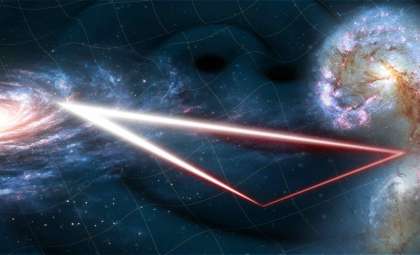
Upcoming missions such as LISA (Laser Interferometer Space Antenna), scheduled to launch in 2035, are expected to revolutionize the field by capturing gravitational waves from supermassive black holes at low frequencies. This influx of data will provide even finer details about cosmic occurrences.
The notable discovery of GW250114 and the advancements in LIGO’s detection capabilities mark a pivotal moment in gravitational wave science. As newer, more sensitive instruments become operational, researchers will gain unprecedented access to the universe’s hidden dynamics, potentially identifying phenomena that diverge from Einstein’s framework and opening doors to new physics. Ultimately, gravitational wave research promises to bridge the gap between general relativity and quantum mechanics, moving us closer to unraveling one of science’s greatest mysteries.
- Categories:
- News




0 comments
Sign in to Comment