
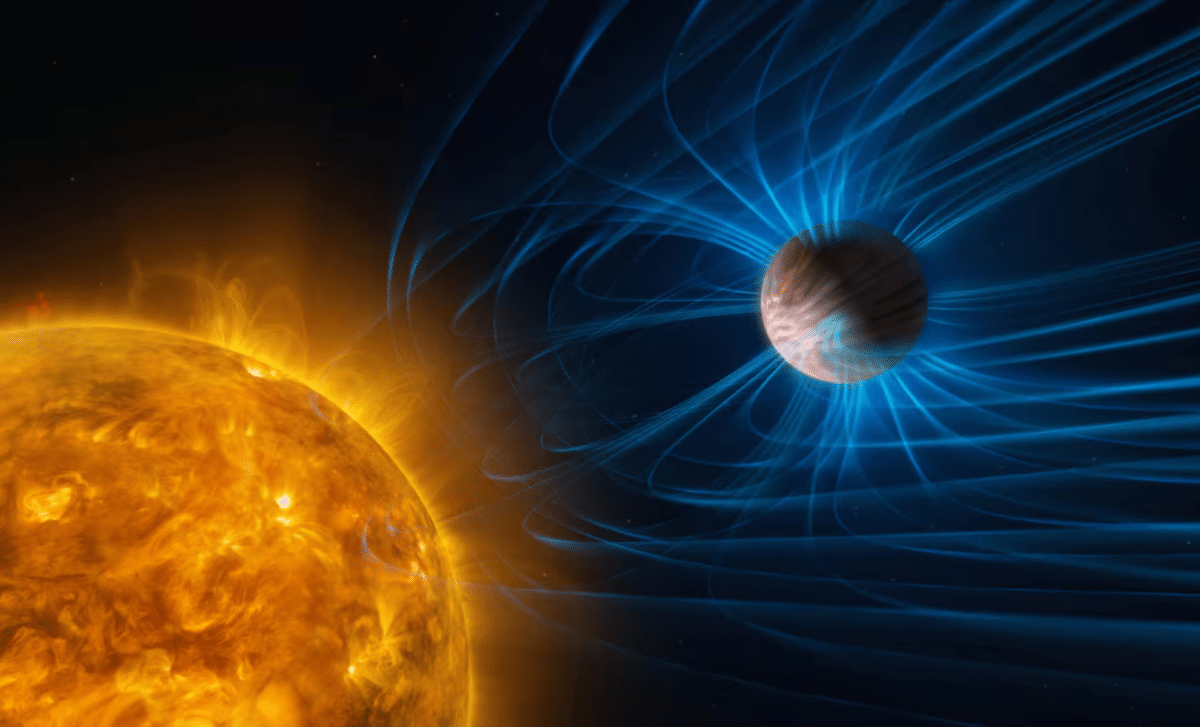
Astronomers have unveiled strong evidence that planets orbiting stars beyond our solar system possess magnetic fields, akin to those found on Earth and Jupiter. This breakthrough came from analyzing seven hot Jupiter exoplanets, offering fresh perspectives on the interactions between their atmospheres and magnetic forces. Published in Nature Astronomy, the study highlights a complex relationship among intense heat, atmospheric dynamics, and magnetism on these alien worlds.
Atmospheric Anomalies Reveal Magnetic Influences
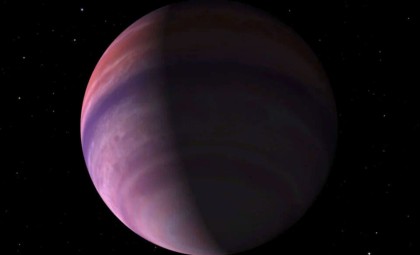
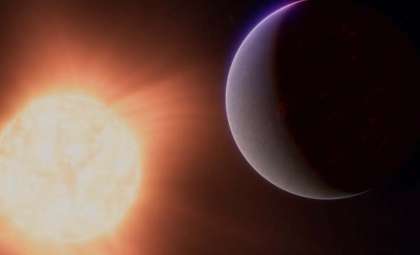
The seven gas giants included in the research orbit extremely close to their stars and are tidally locked, resulting in one hemisphere constantly facing the star while the other remains in perpetual darkness. These planets endure some of the most extreme conditions, with blazing daytime temperatures and fierce winds blowing toward the cooler night sides at velocities reaching 15,500 mph (25,000 km/h), surpassing Jupiter’s wind speeds.
“You would typically expect that as temperatures increase, so would wind speeds, since more energy drives more vigorous atmospheric movement. However, our findings show the reverse,” explained astronomer Julia Seidel of the Observatoire de la Côte d’Azur’s Lagrange Laboratory in Nice, France, who led the research published this week in Nature Astronomy.

“It’s the hottest planets that have the least strong winds mixing the atmosphere. And that’s really strange from what we know of how atmospheres behave. That means all that energy that the star puts into the planet’s atmosphere has to be dissipated in a different way. And the only possibility to brake the atmosphere that much that fast is via the magnetic field and its interaction with the moving charged particles of the atmosphere.”
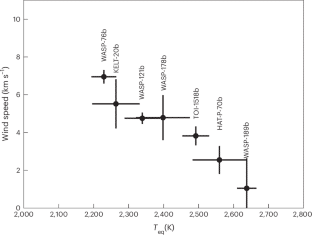
This pattern indicates that magnetic fields function as a braking mechanism within the atmosphere, redirecting energy and stabilizing violent winds. Unlike previous research focused on individual exoplanets, this study analyzed a group, enabling scientists to detect consistent trends. “Our approach isn’t limited to a single exoplanet; we examined a sample population to identify overarching behaviors,” Seidel added.
Understanding the Role of Planetary Magnetic Fields
Planetary magnetic fields arise from movements of electrically conductive fluids, usually molten metallic cores, combined with planetary rotation. Inside our solar system, planets like Earth, Jupiter, Mercury, Saturn, Uranus, and Neptune generate global magnetic fields, whereas Venus and Mars lack them. These fields are crucial for protecting planetary atmospheres from damaging stellar radiation and are indicators of a planet’s potential to sustain life.
For the hot Jupiters examined here, their magnetic fields are smaller than Jupiter’s massive magnetosphere but align with magnetic strengths seen on other solar system planets. Analyzing these fields offers vital clues about the planets’ internal processes, atmospheric chemistry, and star-planet interactions.
Implications for Planetary Habitability Beyond Gas Giants
While the gas giants studied are unlikely to host life, this discovery bears significant consequences for rocky planets orbiting other stars. Magnetic fields may shield atmospheres from erosion by stellar winds, help stabilize climates, and retain surface water—factors essential for habitability. This research highlights magnetism as a key player in assessing exoplanet habitability prospects.
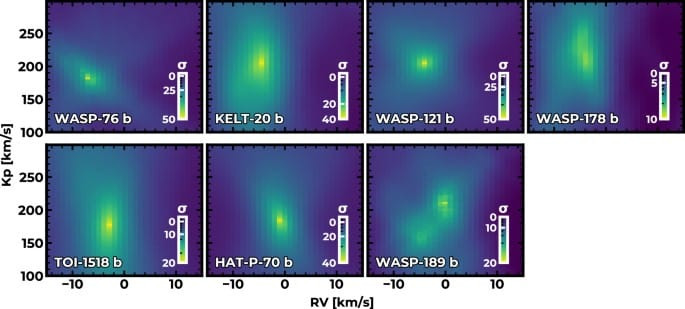
The team gathered data from observatories in Chile and Hawaii, merging precise wind speed measurements with models estimating magnetic field strengths. This marks one of the first occasions scientists have identified magnetic activity across multiple exoplanets, reinforcing the credibility of these groundbreaking observations.
- Categories:
- Astronomy

0 comments
Sign in to Comment