

In a remarkable cosmic event, Comet C/2025 K1 (ATLAS) has been observed fragmenting as it neared the Sun, captured by the powerful Gemini North telescope located in Hawaii. This extraordinary observation was detailed in a recent publication by the National Optical-Infrared Astronomy Research Laboratory (NOIRLab).
The findings showcase not only breathtaking visuals of the comet’s dramatic breakup but also enhance our understanding of cometary behavior under intense solar stress. This rare event has captivated astronomers, shedding light on the volatile and transient qualities of these frozen wanderers from the distant solar system.
The Dramatic Disintegration of Comet C/2025 K1 (ATLAS)
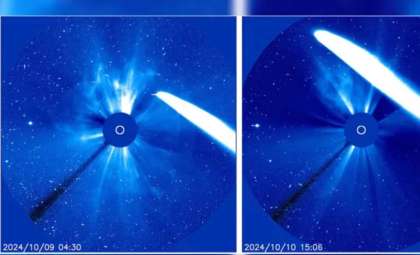
Comets, often seen as emissaries from the outer solar system, display a delicate balance of endurance and fragility when subjected to extreme forces. Comet C/2025 K1 (ATLAS) exemplified this balance as it approached the Sun in October 2025. The intense solar radiation triggered the sublimation of the comet’s icy nucleus, resulting in vigorous outgassing. These jets of gas and dust, influenced by solar gravity, progressively tore the comet apart.

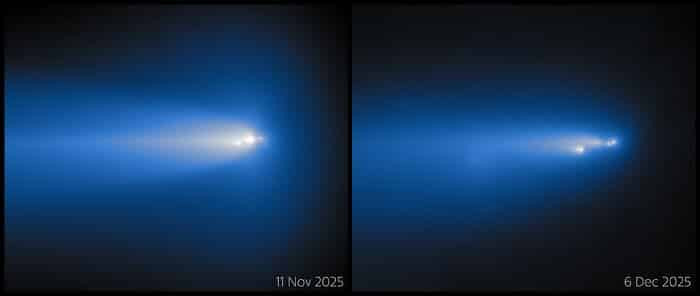
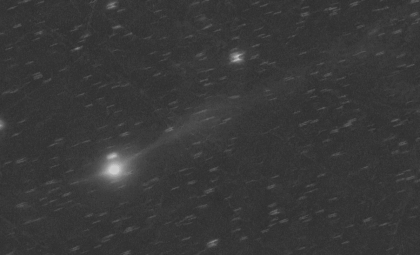
The remarkable photos taken by Gemini North revealed the comet in its final stages, splitting into three main chunks that reveal its original composition. This shattering event highlights the relentless and complex processes shaping these ancient cosmic bodies, some believed to be billions of years old. Astronomers have described this breakup as "spectacular," offering a unique chance to observe comet fragmentation live.
How Solar Radiation Drives Cometary Fragmentation
The Sun exerts a powerful and often destructive influence on comets. As they approach, the intense heat causes their icy materials to vaporize, a process called sublimation. This releases powerful jets of gas and dust from the comet’s core, which incrementally weakens its structure until fragmentation occurs.
While comet breakups are common, they are not frequently observable from Earth. Many comets disintegrate hidden by the Sun’s glare or before astronomers can track them. In this case, Comet K1 survived its closest approach only to fragment where it could be thoroughly studied. This event sheds light on the impact of solar heat on comet integrity and helps scientists decode their lifecycle within the solar system.
Insights from the Disruption of Comet C/2025 K1 (ATLAS)
Studying Comet C/2025 K1 (ATLAS) unlocks key information about comet-Sun interactions. The breakup event reveals the susceptibility of comet nuclei to the extreme environment near the Sun. Examination of these events aids researchers in understanding the forces influencing the formation, evolution, and demise of comets.
Moreover, imagery from Gemini North offers important clues about the comet’s makeup and how solar energy affects its structure. This data will refine existing comet models and deepen our knowledge of the early solar system, as these icy bodies are considered primordial remnants bearing clues from the solar system’s formation billions of years ago. Observing their destruction offers a rare glimpse into our cosmic past.
What Lies Ahead for Comet Observation Following K1’s Demise?
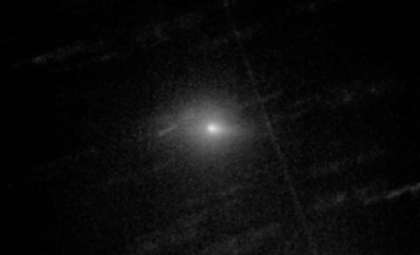
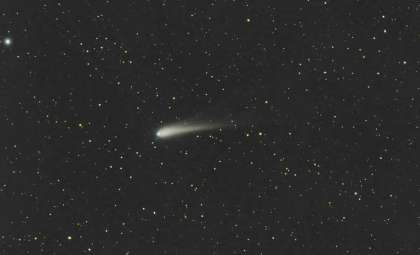
The fragmentation of Comet C/2025 K1 (ATLAS) prompts greater focus on near-Sun comets now and in the future. Attention has shifted to Comet C/2026 A1 (MAPS), which is on a trajectory toward a close solar encounter. Expected to pass just 465,000 miles from the Sun in April 2026, this comet may reveal additional facets of comet behavior under intense solar conditions.
If Comet A1 endures its close solar passage, it could brighten spectacularly, rivaling Venus in brilliance. This will provide an extraordinary opportunity for both professional astronomers and stargazers to witness a thrilling display while gaining more insight into the dynamic interactions shaping these ancient celestial bodies.
- Categories:
- Space






0 comments
Sign in to Comment