
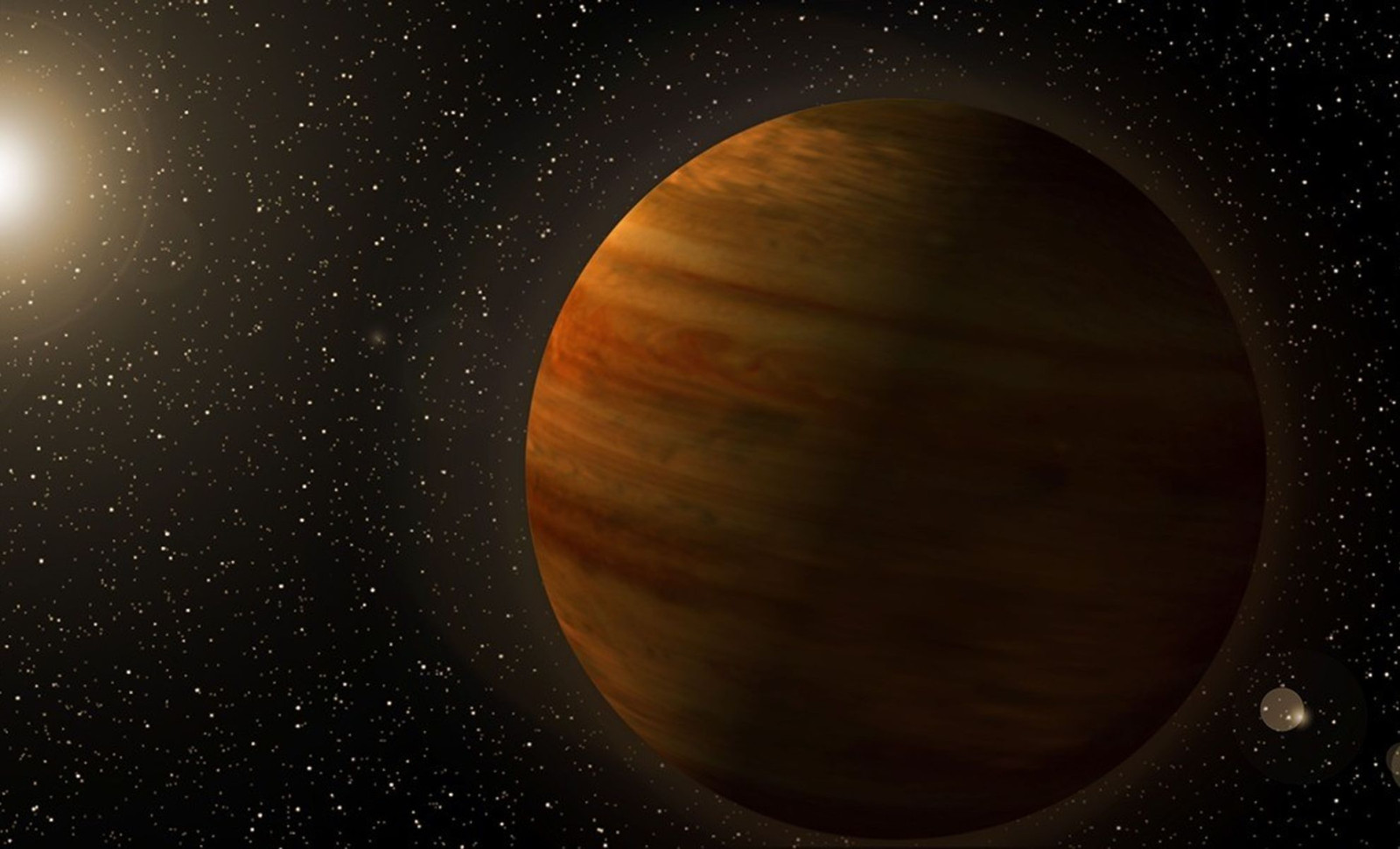
NASA’s TESS (Transiting Exoplanet Survey Satellite) has uncovered a remote exoplanet previously concealed within its observations by applying a detection technique grounded in Einstein’s general relativity. The planet, named Gaia23bra b, was detected through gravitational microlensing, a method that promises to reveal other planets overlooked by conventional detection strategies.
This finding signifies an innovative application of TESS, which was initially intended to identify planets via the transit method. Unlike the conventional approach of spotting a planet as it transits its star, scientists captured Gaia23bra b through a fleeting brightening of a background star caused by the planet’s gravitational influence.
Hints of this exoplanet first emerged in 2023 from data collected by the now-decommissioned Gaia space observatory. Researchers observed a microlensing event occurring when the planetary system positioned itself between Earth and a distant star, producing a subtle but detectable luminosity increase.

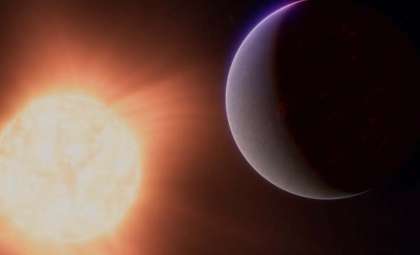
Gaia23bra b stands apart from the usual TESS discoveries. It has about 1.6 times Jupiter’s mass and orbits an orange dwarf star at a distance roughly equal to Jupiter’s orbit around our Sun. Its host star is estimated to be about 80% the size of the Sun, situated nearly 40,000 light-years away.
Einstein’s Relativity Uncovers a Previously Hidden World
The groundbreaking discovery, detailed on July 1 in The Astrophysical Journal Letters, exploits gravitational microlensing, a consequence of how massive bodies influence light. In 1915, Albert Einstein’s theory explained that gravity arises from the warping of spacetime caused by mass.
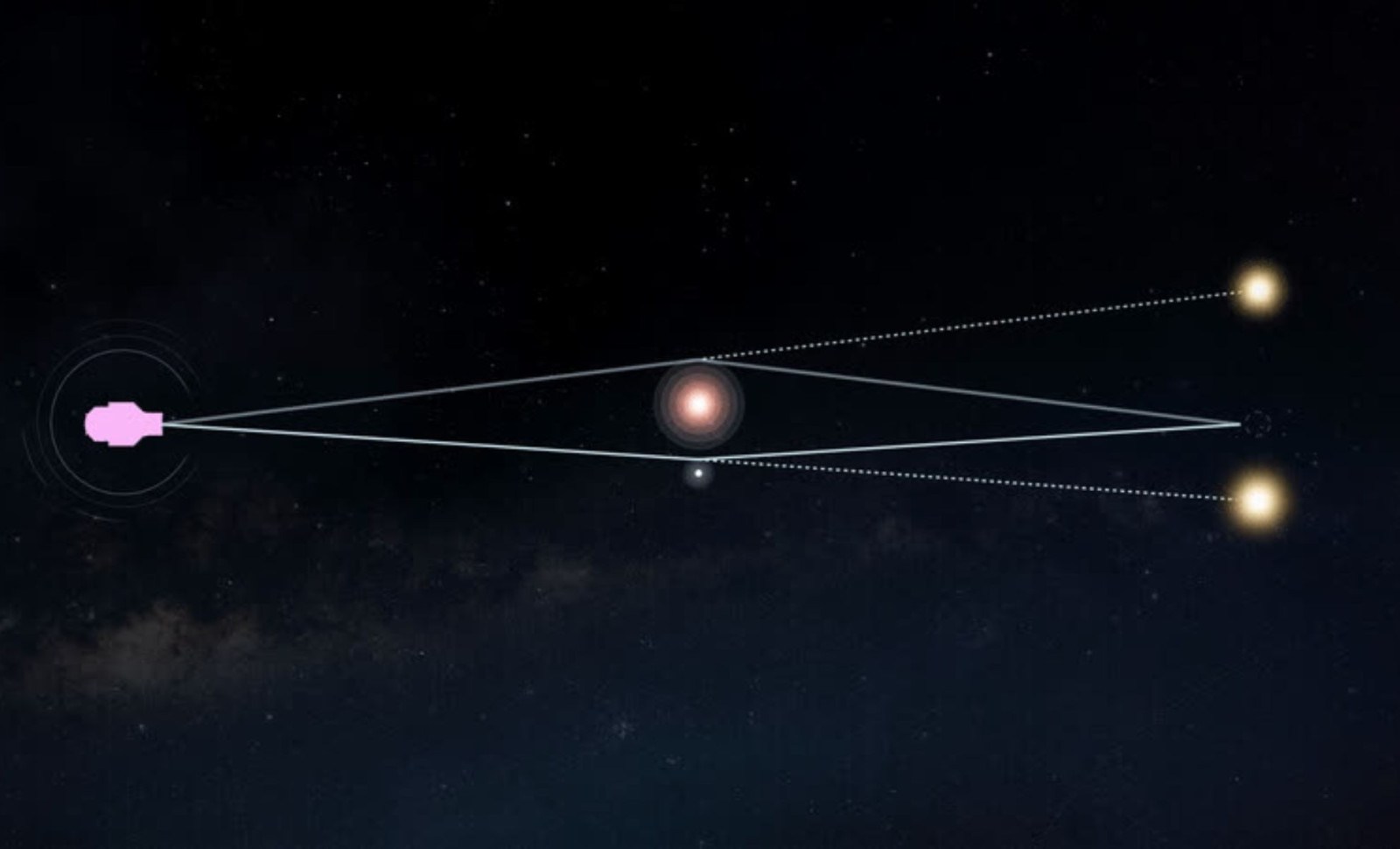
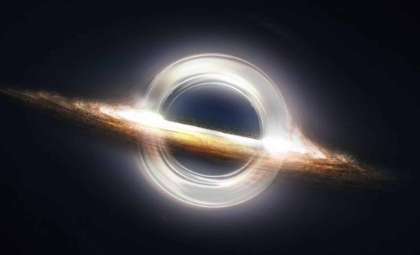
As light beams from a distant source travel near a hefty object, gravity bends their path. This bending can momentarily make the background object appear brighter, enabling astronomers to detect hidden masses acting as cosmic lenses. While this effect has helped study faraway galaxies magnified by foreground galaxy clusters, planets, though less massive, create a similar but smaller-scale effect called microlensing.
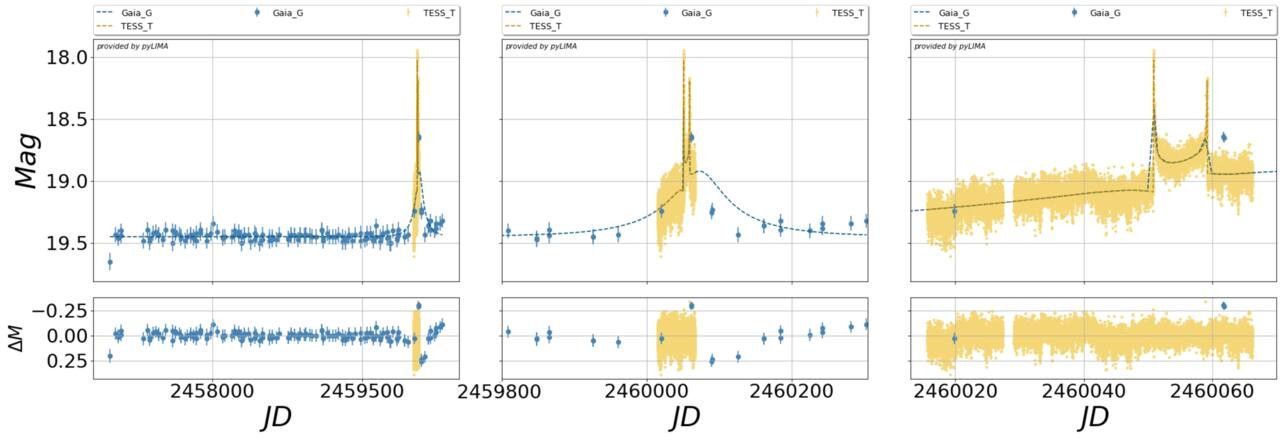
According to NASA’s announcement, the TESS team had not anticipated detecting this category of planet when the satellite began its mission.
“When TESS launched, no one expected it to ever be capable of finding this kind of planet,” said Diana Dragomir from the University of New Mexico. “The discovery implies that there are probably other so-called microlensing planets hiding in TESS’s data that we hadn’t previously thought to look for.”
Microlensing Offers a Fresh Approach to Planet Hunting
Locating Gaia23bra b highlights how microlensing complements the transit approach employed by most exoplanet surveys. While the transit method requires a planet passing directly in front of its star, microlensing relies on a momentary alignment between a planetary system, Earth, and a background star.
This method allows astronomers to find planets on wider orbits. For instance, Gaia23bra b would have been a difficult target for detection by TESS’s standard transit technique due to its distance and orbital placement.
Of the nearly 6,000 planets confirmed beyond our solar system, only about 5 percent have been found by microlensing, whereas approximately 75 percent were discovered by the transit technique.
Mallory Harris from the University of New Mexico pointed out that microlensing is especially useful for detecting planets with larger orbits, including those situated within the habitable zone of their stars. However, microlensing events are one-time occurrences, precluding repeated observations once the alignment ends.
Combining Missions to Reveal More Exoplanets
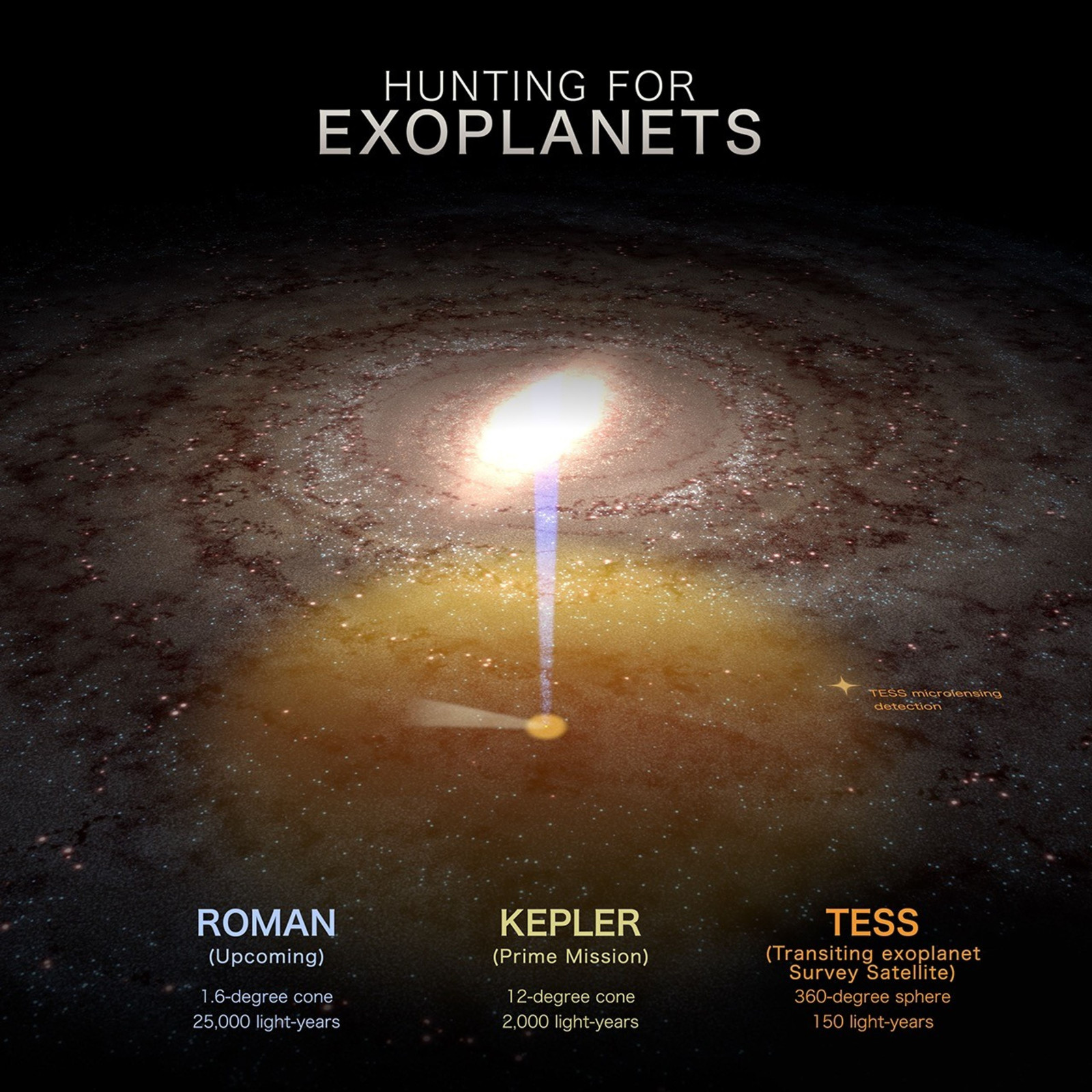
This breakthrough demonstrates the promise of integrating data from multiple space observatories. TESS offers a glimpse into the microlensing capabilities that will be expanded by NASA’s forthcoming Nancy Grace Roman Space Telescope.
The Roman telescope will focus on microlensing events toward the densely populated center of the Milky Way. NASA projects it could uncover roughly 1,000 exoplanets using microlensing, in addition to detecting about 100,000 planets through transits.
Michael Fausnaugh of Texas Tech University noted that the TESS microlensing observations serve as a foundation for Roman’s upcoming survey strategy. Merging results from both observatories will enrich knowledge about planetary systems across various galactic neighborhoods.
“The TESS mission uniquely provides these rapid observations for stars in other parts of the galaxy, and pairing the two opens up prospects for understanding planet formation in a diverse population of stars.”
- Categories:
- Astronomy




0 comments
Sign in to Comment