
Researchers at the University of Illinois Urbana-Champaign have successfully identified a massless particle previously hypothesized by physicist David Pines. This elusive particle, dubbed the “demon,” may unlock new perspectives on energy transfer and revolutionize how energy is manipulated and conveyed.
Electrically neutral and undetectable by traditional methods, the demon remained a theoretical element for over sixty years. However, a serendipitous discovery has now revealed this particle, paving a potential pathway toward reshaping our comprehension of superconductivity.
The Origin of Pines’ Demon Particle Concept
The demon particle concept traces back to David Pines, who, in 1956, proposed a massless plasmon—a disturbance within the electron cloud of a material—that might explain anomalies in superconducting behavior. Pines theorized that this entity plays a crucial role in describing materials exhibiting superconductivity at temperatures beyond the scope of traditional BCS theory.

BCS theory defines the widely accepted framework for explaining superconductivity, primarily effective for materials at extremely low temperatures. It postulates that superconductivity arises from interactions between electrons and lattice vibrations, or phonons. However, this framework falls short in explaining why some materials, such as high-temperature superconductors, maintain their superconductive states at comparatively warm temperatures.
The demon is posited as a massless quasiparticle potentially responsible for these unexplained properties, though it remained purely theoretical for decades.
Discovery of the Massless Quasiparticle
Recently, UIFC scientists examined strontium ruthenate, a metal with superconducting-like characteristics akin to those found in high-temperature superconductors, but with puzzling differences. As detailed in their Nature publication, the researchers initially aimed to understand the peculiar behaviors of strontium ruthenate and were not explicitly searching for the demon particle. Unexpectedly, they detected a unique quasiparticle unlike any they had previously encountered. Ali Husain, a contributing author, described:
“As we started ruling things out, we started to suspect that we had really found the demon.”
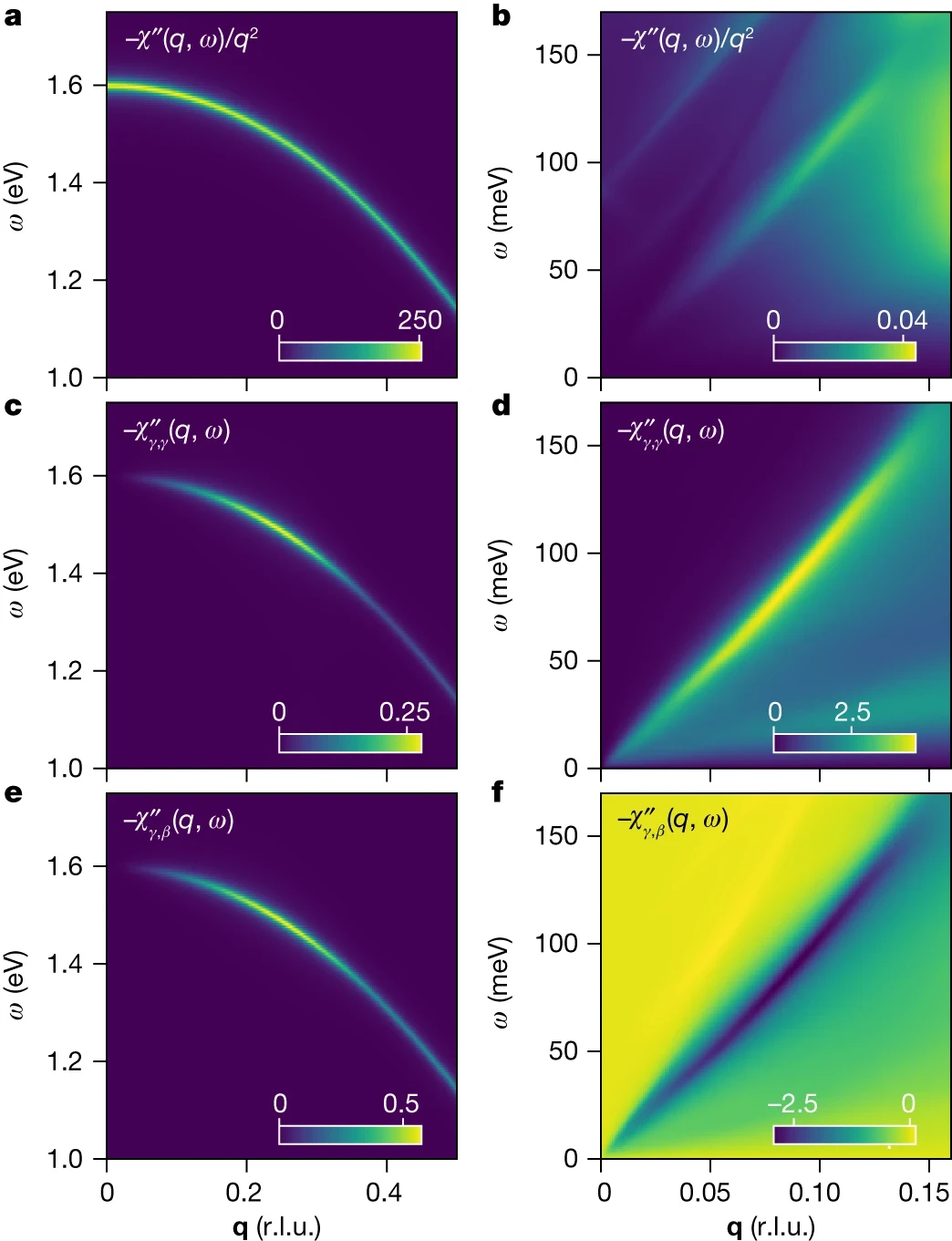
The findings initially felt too extraordinary to be real. The team meticulously measured the energy changes caused by electron injections into the sample with exceptional accuracy. Once alternative explanations were excluded, their data convincingly aligned with Pines’ demon particle concept.
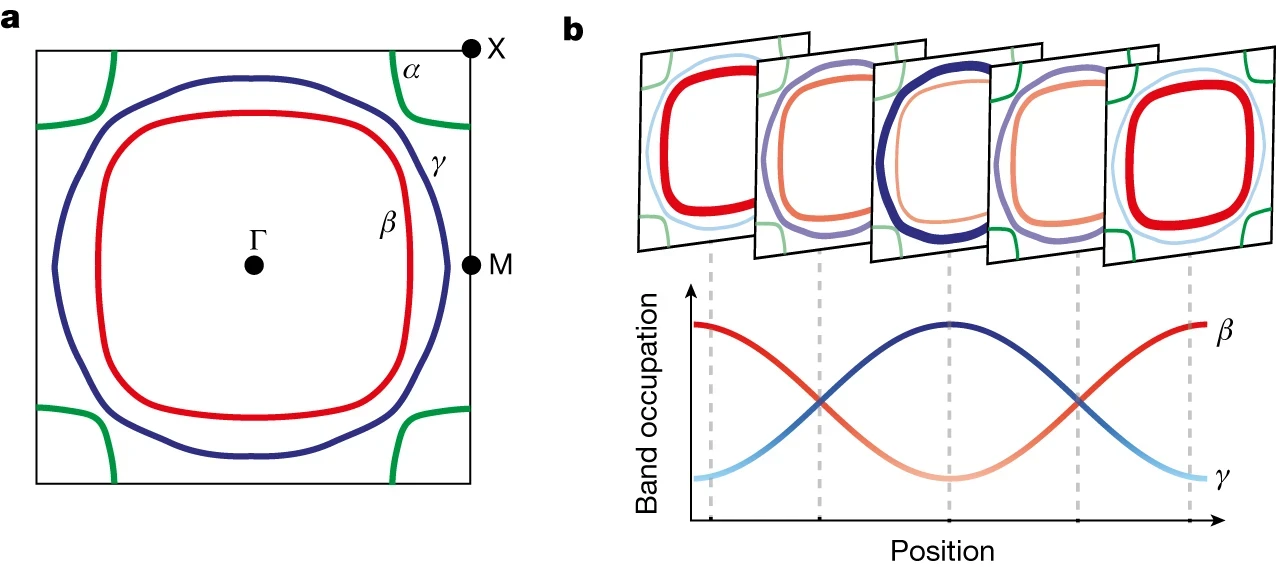
“We had to perform a microscopic calculation to clarify what was going on. When we did this, we found a particle consisting of two electron bands oscillating out-of-phase with nearly equal magnitude, just like Pines described,” stated Edwin Huang, Moore Postdoctoral Scholar at UIUC with a focus on condensed matter theory
Implications for the Future of Superconductivity
Why is this discovery significant? It could transform our framework for superconductivity. Today’s superconductors typically demand extremely low operating temperatures, necessitating expensive cooling infrastructure. This massless quasiparticle’s existence hints at the possibility of superconductivity occurring at considerably higher, and potentially ambient, temperatures.
Peter Abbamonte, a professor and co-author, noted that many groundbreaking scientific breakthroughs emerge unexpectedly. He commented:
“Most big discoveries are not planned. You go look somewhere new and see what’s there.” And that’s exactly what happened here.
While the team initially pursued answers about strontium ruthenate’s unique properties, they ultimately uncovered the long-sought demon particle. This milestone is generating notable enthusiasm within the scientific community, as it offers new avenues to explore how such massless quasiparticles may facilitate superconductivity at elevated temperatures.
- Categories:
- Physics











0 comments
Sign in to Comment