
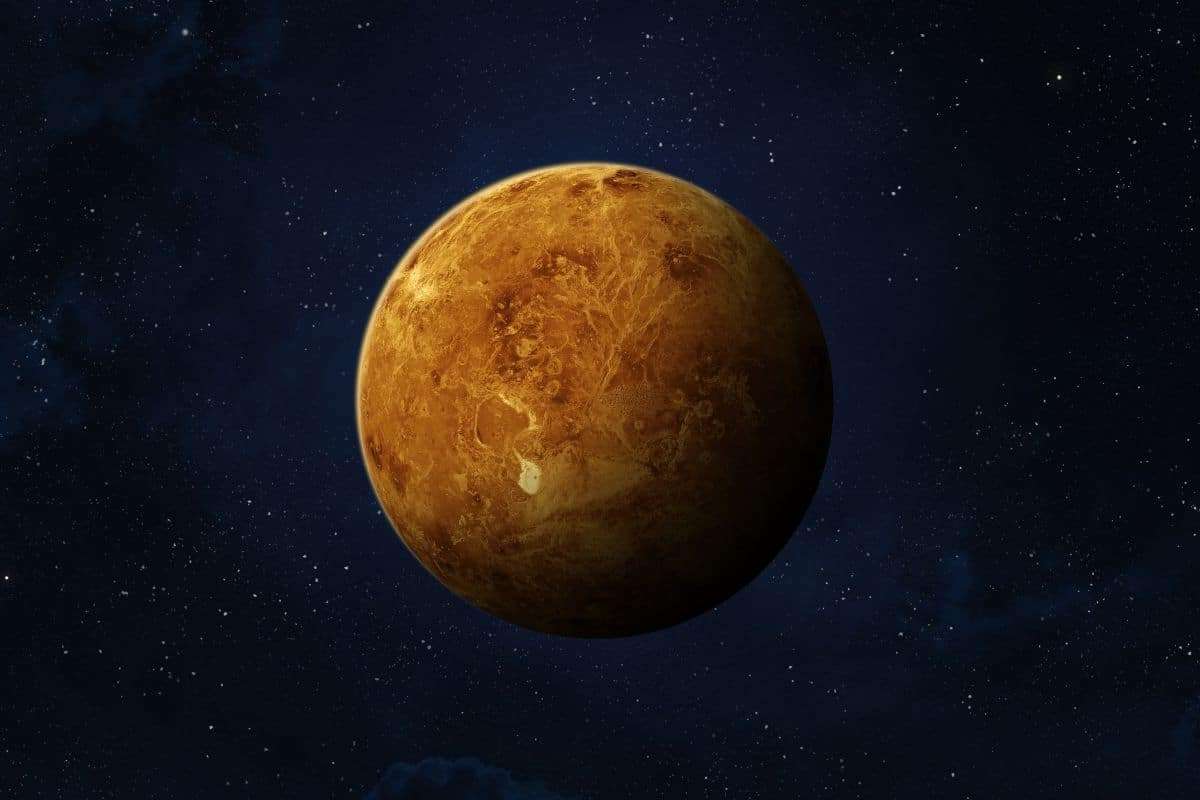
This past Saturday, Venus reached a unique position in its orbit, passing almost directly between Earth and the Sun in an event astronomers call an inferior conjunction. While this moment is unlikely to be visible due to the Sun’s intense brightness, it signifies an important orbital milestone for the planet and offers stargazers a chance to observe its shifting location in the sky.
Understanding Inferior Conjunction
An inferior conjunction happens when a planet orbiting closer to the Sun than Earth—known as an inferior planet—aligns nearly between us and the Sun. In this case, the planet involved is Venus, famously one of the brightest objects in our skies. Around 9 p.m. EDT on Saturday, Venus reached this alignment point, though the Sun’s glare prevents direct observation.
Michelle Nichols from Chicago’s Adler Planetarium explains, “The glare from the sun makes it really, really difficult to see.” This differs from a planetary transit, where a planet crosses the Sun’s disk from Earth’s viewpoint. Instead, Venus’ inferior conjunction involves a close alignment without crossing directly in front of the Sun.

The Meaning Behind the “Venus Kiss”
The evocative phrase “Venus kiss” is used casually to describe Venus’s near passage between Earth and the Sun. Astronomer Geary Albright of James Madison University says this poetic term reflects imagery of Venus seemingly “kissing” the Sun from our perspective.
Although this nickname evokes romantic visuals, the event remains subtle and mostly hidden from view. The true fascination lies in the orbital dynamics and the anticipation of Venus’s reappearance as it shifts from the evening sky to become a prominent morning star.
Tracking Venus’ Path Around the Event
While the conjunction itself cannot be seen, Venus’s movement can be followed in the nights before and after. In the days leading up to Saturday, Venus appeared low near the western horizon just after sunset, shining brightly to those with a clear view before dipping below the skyline.
Following the conjunction, Venus emerged into the morning sky, visible just prior to sunrise. On Sunday morning, roughly 30 minutes before dawn, observers looking to the eastern horizon could again spot Venus gleaming brightly, signaling its orbital transition was complete.
Through a telescope, Venus displays crescent shapes reminiscent of the Moon, shrinking to a slender arc just before the conjunction and gradually widening after. This changing phase results from the angle of sunlight illuminating the planet as it travels around the Sun.
Insights from Venus’ Orbital Journey
For planetary scientists, inferior conjunctions are more than symbolic—they represent key points for studying the motion and positioning of planets within the solar system.
These occurrences also tie into Venus’s enigmatic nature, from its extreme greenhouse atmosphere to its unusual slow backward rotation compared to most planets.
Upcoming NASA missions, specifically VERITAS and DAVINCI+, aim to investigate Venus in unprecedented detail to unravel why it developed so differently from Earth. Interest in Venus has surged recently, as scientists explore it as an example of planetary climate evolution and potential warning sign for Earth’s future.
Adding a cultural touch, Paul McCartney's song “The Kiss of Venus” draws inspiration from this astronomical event, weaving science and art in celebration of the planet’s allure.
- Categories:
- Astronomy







0 comments
Sign in to Comment