
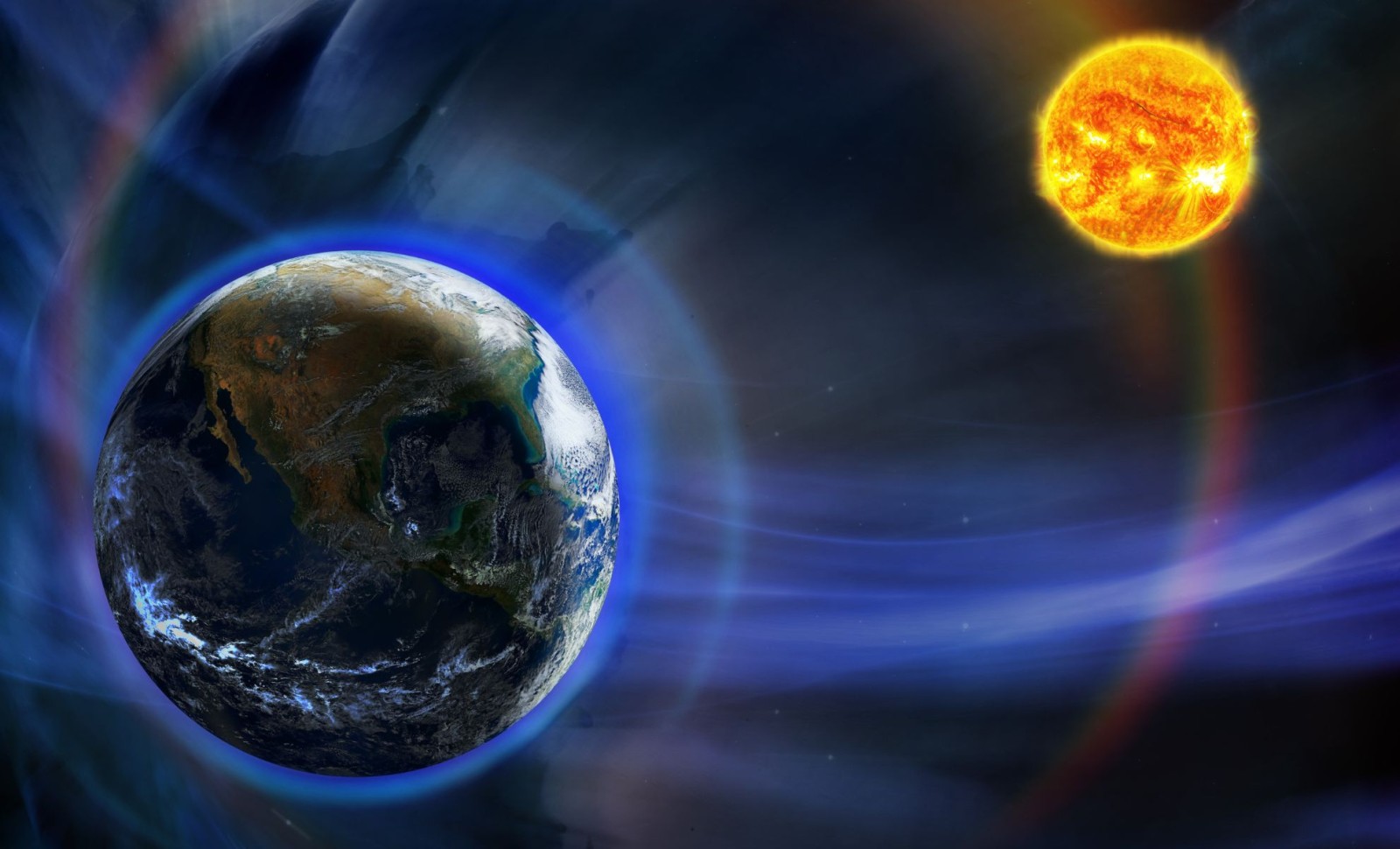
Each year in January, our planet arrives at perihelion, the point in its orbit closest to the Sun. Surprisingly, the Northern Hemisphere is still in the depths of winter during this time. How can it be colder when Earth is nearer to the Sun? On January 3, 2026, Earth will lie approximately 2.5 million kilometers (1.5 million miles) closer to the Sun than it does at aphelion, the farthest orbital point. Yet, the coldest period persists in the Northern Hemisphere, which can be explained by considering Earth’s orbital path and its axial tilt.
The Role of Earth’s Tilt in Shaping Seasons
The key factor influencing Earth’s seasons is not how far the planet is from the Sun but rather the angle of its axial tilt. NASA explains that Earth’s axis is inclined at about 23.4 degrees to its orbital plane. This tilt causes certain regions to receive varying amounts of sunlight throughout the year, resulting in summer when a hemisphere leans toward the Sun and winter when it tilts away.
Earth’s trajectory around the Sun is elliptical, meaning it forms a slightly stretched circle. However, this shape causes only minor variations in temperature. The distance difference between perihelion and aphelion is roughly 3%, which is insufficient to produce large swings in climate between the two orbital extremes.

Why Winter Persists at Perihelion
Although Earth is nearest the Sun during perihelion, the Northern Hemisphere’s colder weather arises primarily from the planet’s axial tilt. In January, this hemisphere tilts away from the Sun, leading to reduced direct sunlight, shorter daylight hours, and lower temperatures. Conversely, the Southern Hemisphere enjoys summer by facing the Sun more directly at this time.
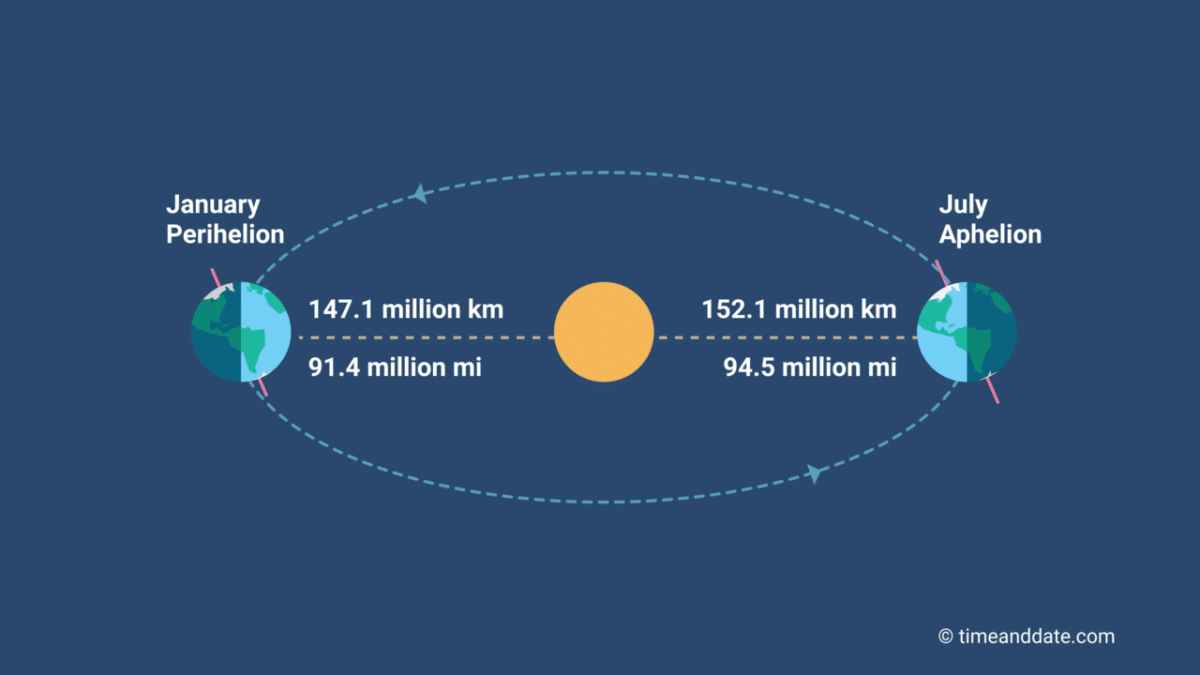
The overlap of perihelion with northern winter is coincidental. Though Earth’s orbit is elliptical, the relative timing of perihelion and aphelion compared with solstices gradually shifts over time. Presently, perihelion takes place in early January, but this pattern will evolve.
Long-Term Changes in Perihelion and Aphelion Timing
The dates of perihelion and aphelion slowly change due to gravitational effects from other planets, notably Jupiter and Saturn. As TimeandDate notes, this causes a gradual shift in these orbital events’ calendar positions. Currently, perihelion occurs a few weeks after the December solstice, but in approximately 4,000 years, it will align with the March equinox.
This ongoing change also influences seasonal durations; for example, northern summer today lasts about 4.5 days longer than winter. Despite these shifts, the axial tilt of Earth remains the dominant factor responsible for the seasons, overriding any effects from Earth’s varying distance to the Sun.
- Categories:
- Science









0 comments
Sign in to Comment