

While cities light up with fireworks on December 31, 2025, an extraordinary astronomical event will quietly unfold overhead. A waxing gibbous Moon, accompanied by prominent planets and popular constellations, will provide an awe-inspiring celestial display visible without any optical aid.
The night sky promises a rare gathering of bright celestial bodies, all easily spotted with the naked eye. From the eastern emergence of Jupiter beside the constellation Orion to the graceful descent of Saturn, this cosmic arrangement will welcome 2026 with tranquil brilliance.
The Moon and Pleiades Draw Close
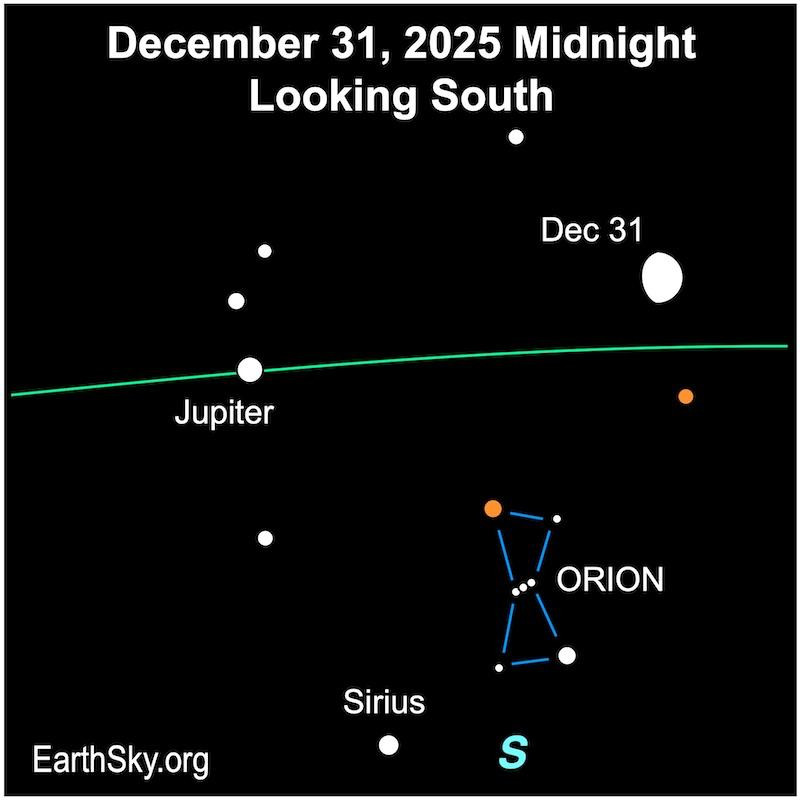
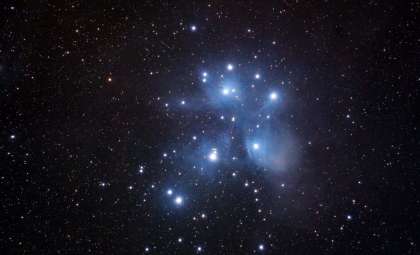
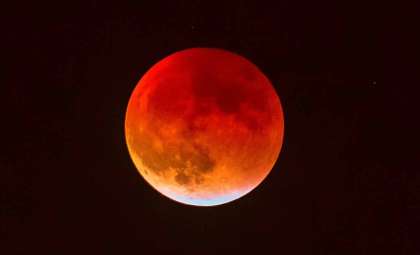
TimeandDate notes that a 95% illuminated waxing gibbous Moon will dominate early evening skies, rising mid-eastern horizon. Positioned within the constellation Taurus, it will hover near the famous Pleiades star cluster, also known as the Seven Sisters.

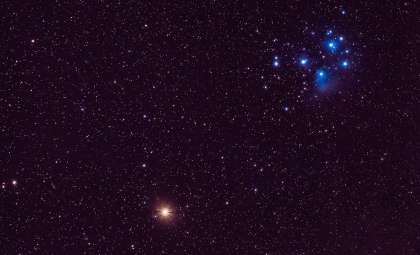
The Pleiades, renowned for their tight, shimmering group, will be visible just above and slightly right of the Moon, about five degrees apart—roughly the width of three fingers held at arm’s length. The Moon’s bright glow beside the delicate twinkle of the Pleiades creates a captivating spectacle in the night sky, lasting for much of the evening.
Jupiter and Orion Take the Stage
Below the Moon sits Orion, the notable winter constellation famous for its three-star belt and bright surrounding stars, easily spotted near the horizon after sunset. To Orion’s left shines Jupiter, presenting itself distinctly within the Gemini constellation.
Forbes reports that Jupiter will be near Gemini’s bright stars Castor and Pollux, ascending high overhead by midnight. Though it may look like a shining star, its steady glow confirms it as a planet.
Meanwhile, Saturn will be visible in the southern sky earlier in the evening, rising to about halfway before dipping below the horizon by midnight. Using a telescope with a six-inch aperture, viewers might glimpse Saturn’s rings, which are currently aligned edge-on from Earth. The iconic Cassini Division—a dark separation within the rings spanning approximately 4,800 kilometers—could be faintly seen under favorable conditions.
North’s Celestial Anchor: The Big Dipper and Polaris
As midnight nears, facing north reveals Polaris, the North Star, located roughly 40 degrees above the horizon — about the height of four fists stacked at arm’s length. This star serves as the pivot point around which the night sky subtly rotates.
To Polaris’ right, the Big Dipper will be seen standing upright at the end of its handle, a typical wintertime position. Space.com explains this stance adds balance and calm to the night sky. The stars will gradually arc through darkness, quietly marking the shift into the new year.
- Categories:
- News








0 comments
Sign in to Comment