
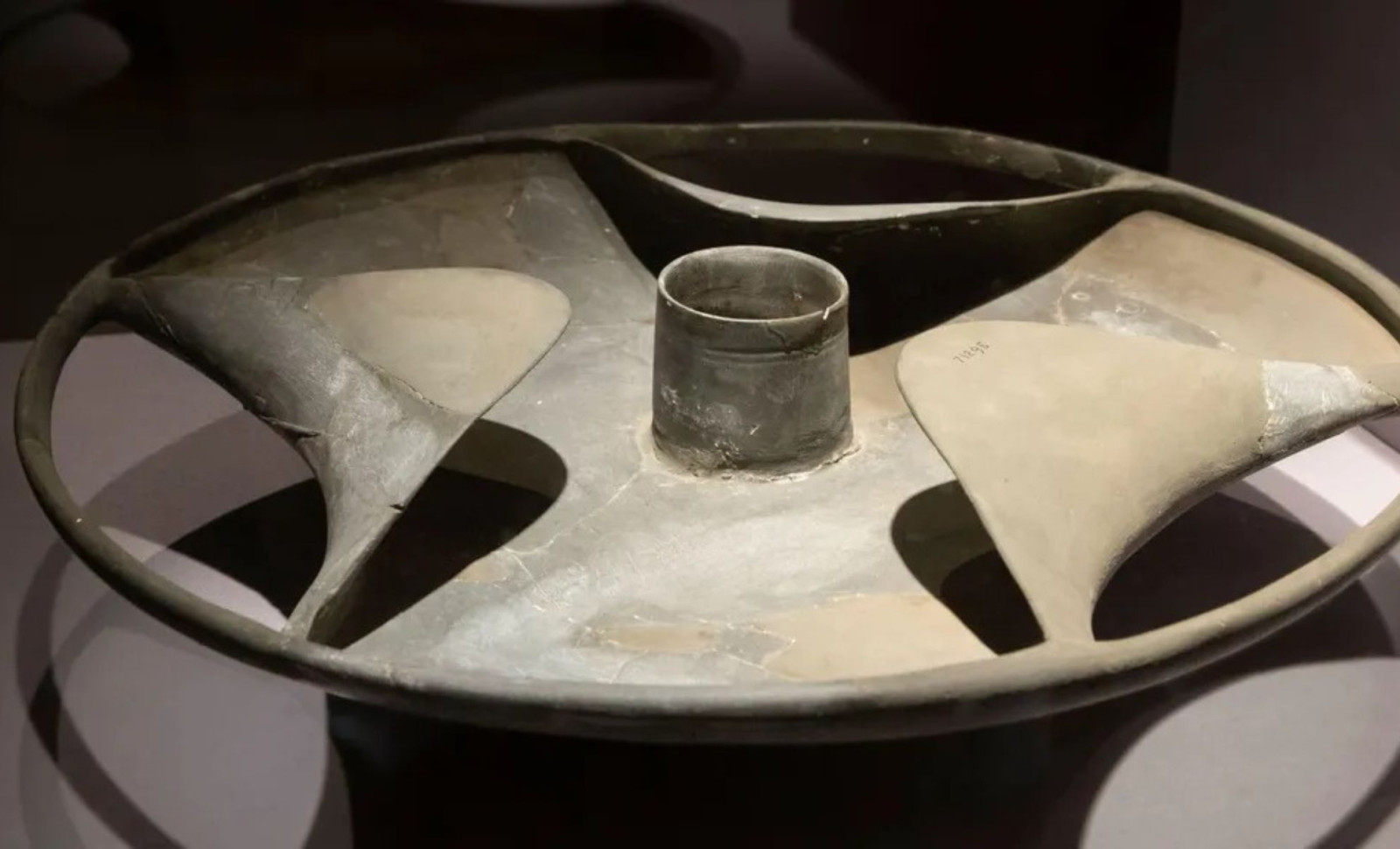
Unearthed nearly a century ago within an ancient Egyptian burial site, the Sabu Disk continues to intrigue experts with its distinctive design. Despite the many theories it has inspired, researchers largely agree on a more straightforward explanation.
This stone artifact was found in 1936 inside the tomb of Sabu, a high-ranking figure interred at the Saqqara necropolis during Egypt’s First Dynasty. Dating back to approximately 3100 to 2900 B.C., it was initially discovered in fragments but painstakingly pieced back together. The disk currently resides at the Egyptian Museum in Cairo.
Its unique form is what sets it apart. Viewed from above, the disk’s three curved arms give it an appearance often likened to a hubcap, propeller, or a steering wheel. This resemblance has kept the artifact in public fascination for decades.

An Extraordinary Tomb Find
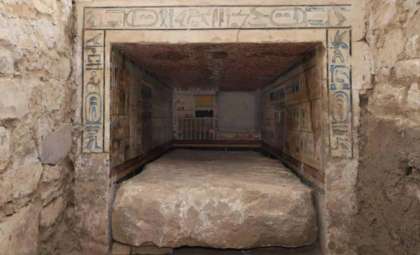
The disk emerged during digs led by British Egyptologist Walter Emery. A study published in Archaeological Discovery notes that the burial chamber had been previously robbed, having lost its valuable metals and jewelry.
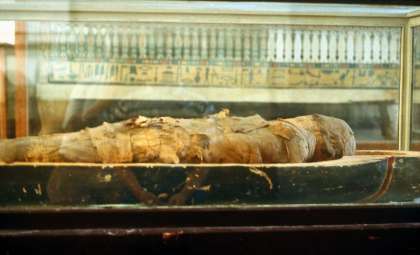
Nonetheless, the tomb was still rich with artifacts. Sabu’s remains rested in a wooden coffin, surrounded by numerous stone and ceramic vessels, flint and copper tools, the bones of two oxen, and the now-iconic stone disk.
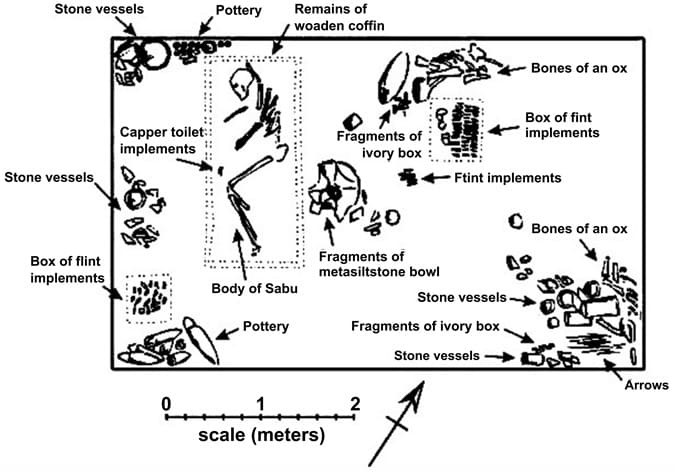
The disk had not survived whole. It was recovered in pieces that archaeologists later restored, enabling detailed examination of its distinctive structure.
A Unique Stone Vessel
The Sabu Disk spans 24 inches (61 centimeters) in diameter and is 3.9 inches (10 centimeters) tall. Crafted from metasiltstone, a sedimentary rock with some metamorphic traits, it stands out due to its craftsmanship.
Egyptian archaeologist Ali El-Khouli explains that broad, flat stone bowls were typical in Egypt’s First through Third Dynasties. However, this piece is remarkable because of its three slender, curved projections that rise from the rim toward the disk’s center.
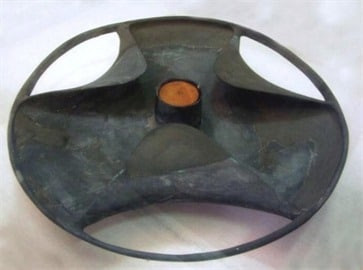
This distinctive design makes the disk instantly recognizable, with a surprisingly modern look contributing to its enduring fascination.
A More Grounded Explanation
The disk’s intriguing form has led to a variety of imaginative hypotheses. As noted by Live Science, some have speculated it could be part of a water turbine, or even linked to an extraterrestrial craft. Recently, a suggestion was made that it served as a mash tun for beer production, holding grain and hot water.
However, archaeologists tend to support a simpler usage. According to the same source, the Sabu Disk probably functioned much like other wide stone bowls in ancient Egyptian culture, as a container for food or oil.
Further insight comes from the material itself. The fine carving and the delicate nature of metasiltstone imply that this object was likely not created for practical daily use. Rather, it was probably included in Sabu’s tomb as a ceremonial item meant to accompany him in the afterlife, alongside other funerary goods from the First Dynasty.
- Categories:
- News







0 comments
Sign in to Comment