
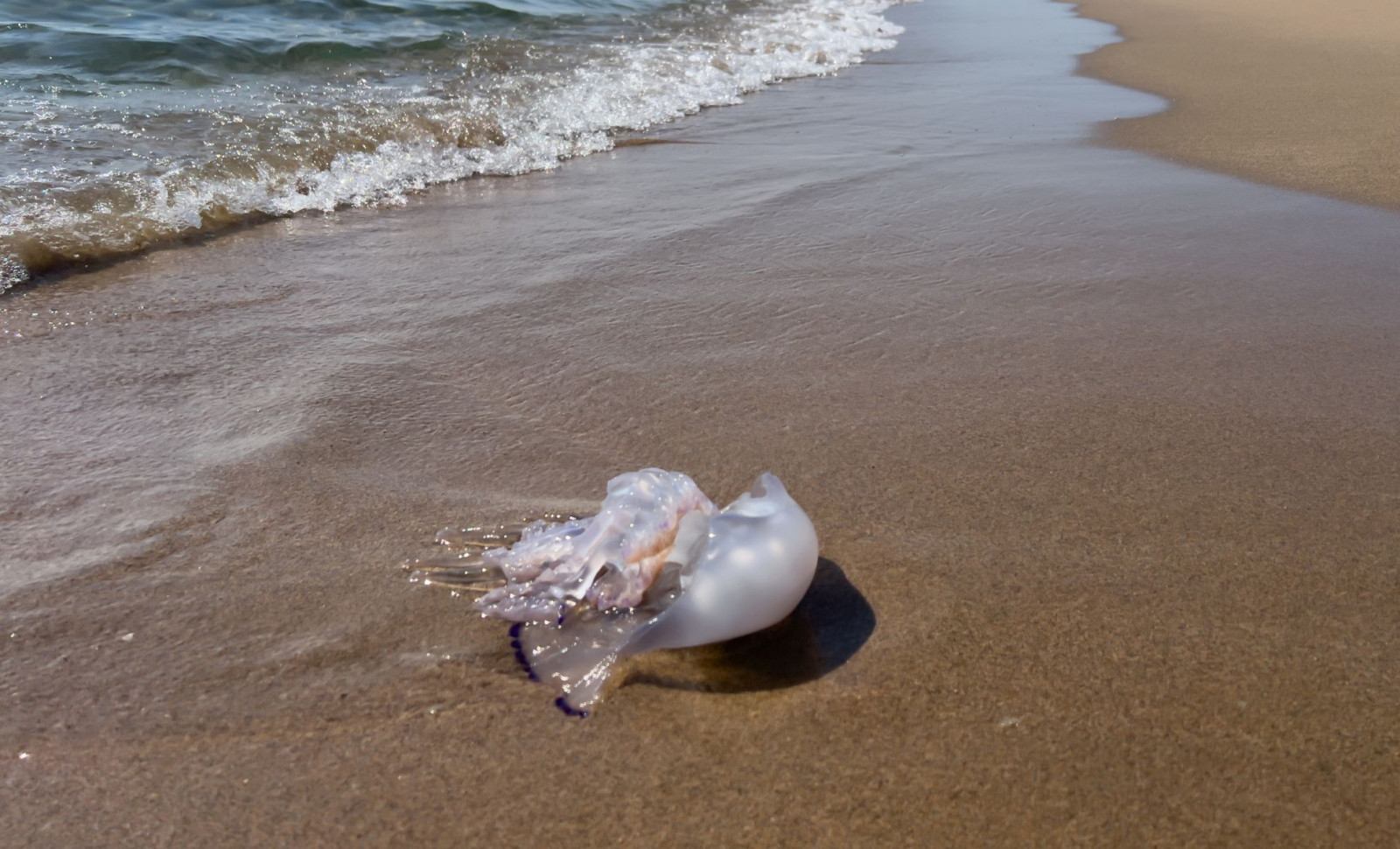
While walking on a beach in northeastern Japan, a biologist encountered an unusual blue, translucent creature that appeared like a jellyfish but was distinct. This discovery led to the identification of a previously unknown species within the genus Physalia, a group of venomous marine siphonophores. The creature was found at Gamo Beach in Miyagi Prefecture, an area far north of where such creatures are typically found. The species has been named Physalia mikazuki, potentially indicating broader shifts in marine species distribution.
Yoshiki Ochiai, a researcher at Tohoku University, first spotted the translucent organism during a seaside walk. Measuring roughly 20 centimeters in length with a gelatinous texture and distinctive blue color, its unusual form piqued his curiosity. Initially thought to be jellyfish remains, detailed study reported in Frontiers confirmed it to be a member of the Physalia group, commonly known as sea bladders.
An Unfamiliar Blue Creature Challenges Known Species
The discovery started with a routine shoreline stroll. On the sands of Gamo Beach, Yoshiki Ochiai came across a gelatinous, jellyfish-like form that initially seemed familiar, yet differed from typical specimens. Further examination revealed it to belong to Physalia, a group of pelagic siphonophores known for drifting in ocean currents and capturing prey with their tentacles.

“I was working on a completely different research project around Sendai Bay in the Tohoku region, when I came across this unique jellyfish I had never seen around here before,” he explained. “So I scooped it up, put it in a ziplock bag, hopped on my scooter, and brought it back to the lab!”
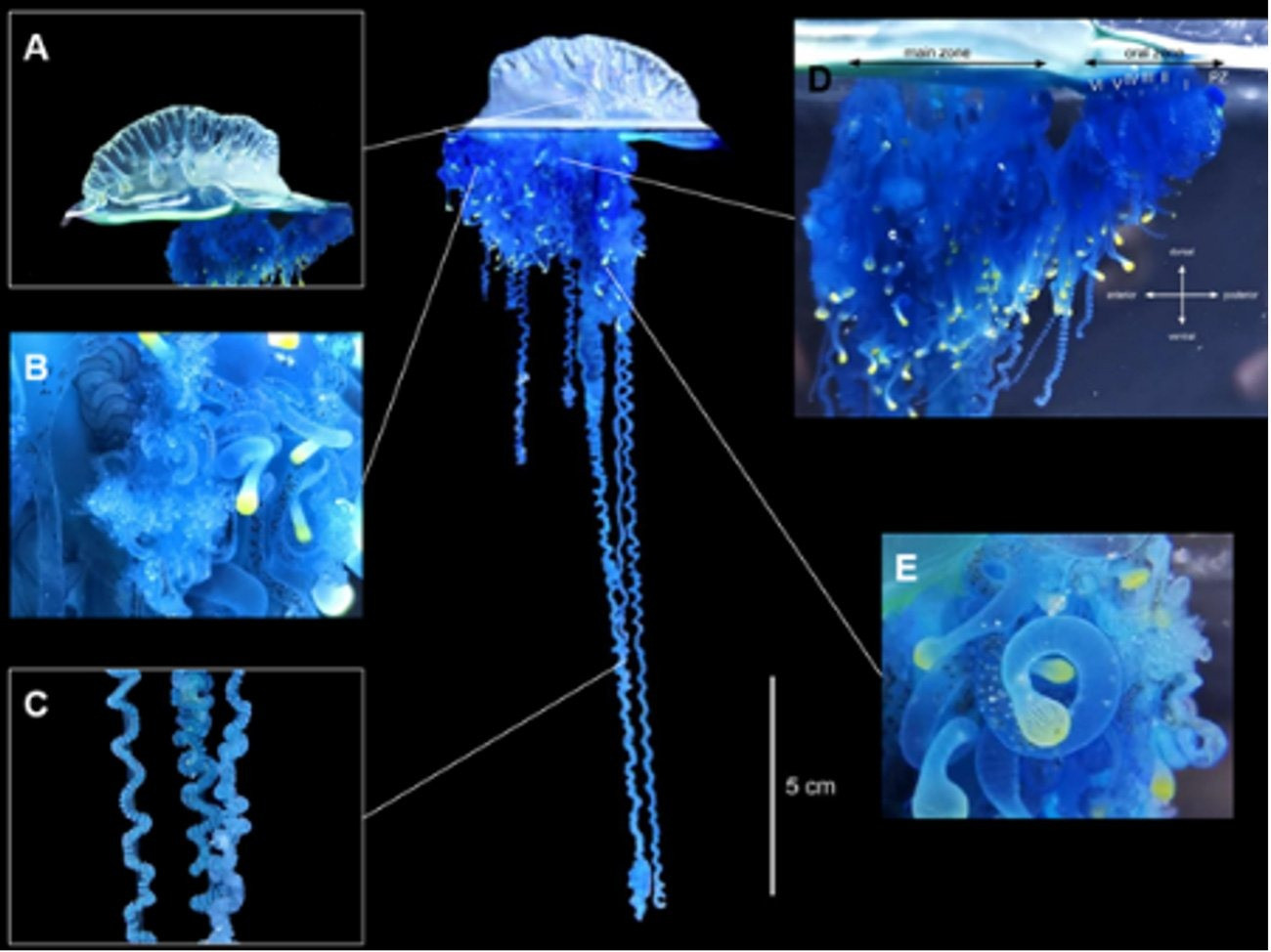
The genus was previously known to include just four species, with Physalia physalis being the most recognized. Since this specimen did not correspond with existing species descriptions, researchers concluded they had discovered a new species.
The Significance Behind the Name Physalia mikazuki
The new species, named Physalia mikazuki, derives its name from “mikazuki,” meaning crescent-shaped helmet. This is a nod to the legendary Date Masamune, a feudal lord from the Tōhoku region known for his iconic crescent-moon helmet and his influence during the late 16th to early 17th century.
This naming connects the species not only scientifically but culturally to the northeastern coast of Japan, reflecting the region’s heritage via a notable historical figure.
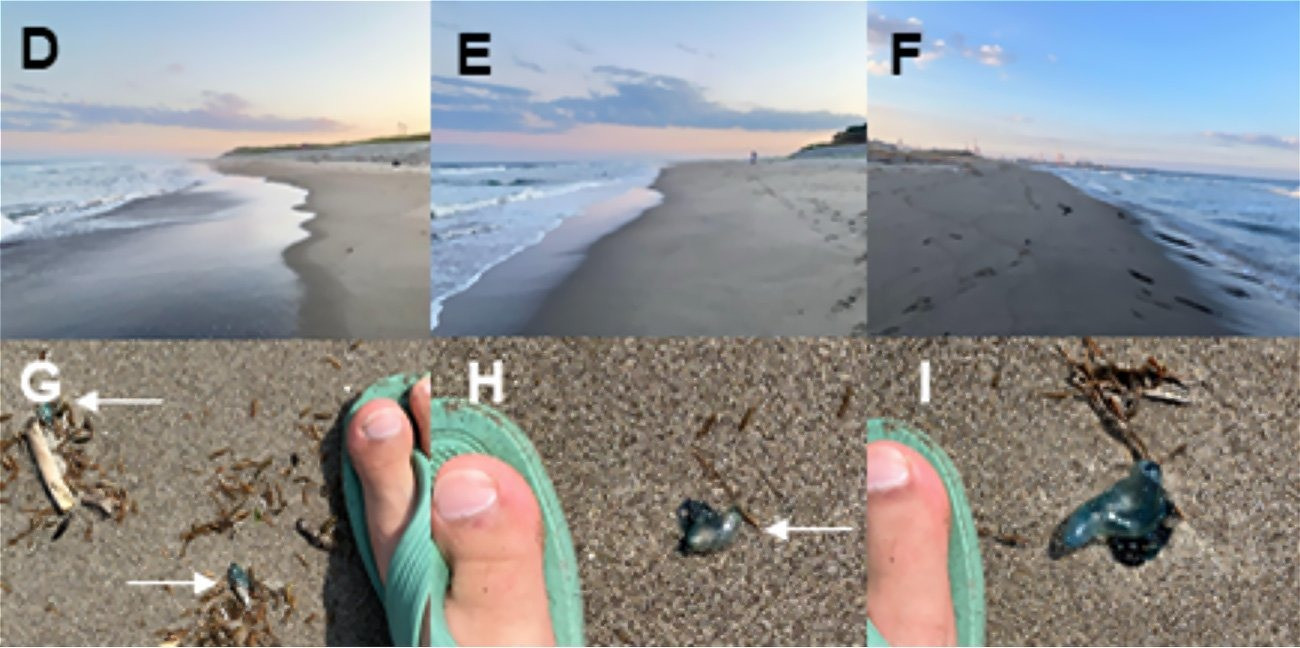
According to a press release from Tohoku University, Physalia utriculus was the only known Physalia species native to Japanese waters prior to this discovery. This species commonly drifts near Okinawa, situated far south of the Miyagi Prefecture coastline. The presence of a new Physalia species in northeastern Japan was therefore unexpected by scientists.
An Unanticipated Discovery Farther North
What sets this finding apart is its location. The beach where the specimen was discovered lies in a temperate zone, whereas Physalia species generally inhabit tropical regions. This occurrence marks the northernmost documented sighting of a Physalia species to date. Researchers noted the importance of integrating taxonomy, molecular biology, and oceanographic modeling to comprehend the shifting ranges and hidden diversity of marine species amidst changing ocean conditions.
For Ochiai, the discovery is evidence of a significant shift in geographic distribution. Rising sea temperatures linked to climate change are likely expanding the habitats suitable for Physalia species.
The comparison with the Nomura jellyfish is obvious, as that species has proliferated in Japanese waters, impacting ecosystems and fisheries. Like the Nomura jellyfish, Physalia species are carnivorous and can deliver painful stings to swimmers.
“These jellyfish are dangerous and perhaps a bit scary to some, but also beautiful creatures that are deserving of continued research and classification efforts,” noted Ayane Totsu, co-author of the study.
Their unexpected presence further north suggests a need for increased coastal surveillance and public awareness along Japanese shorelines.
- Categories:
- News




0 comments
Sign in to Comment