
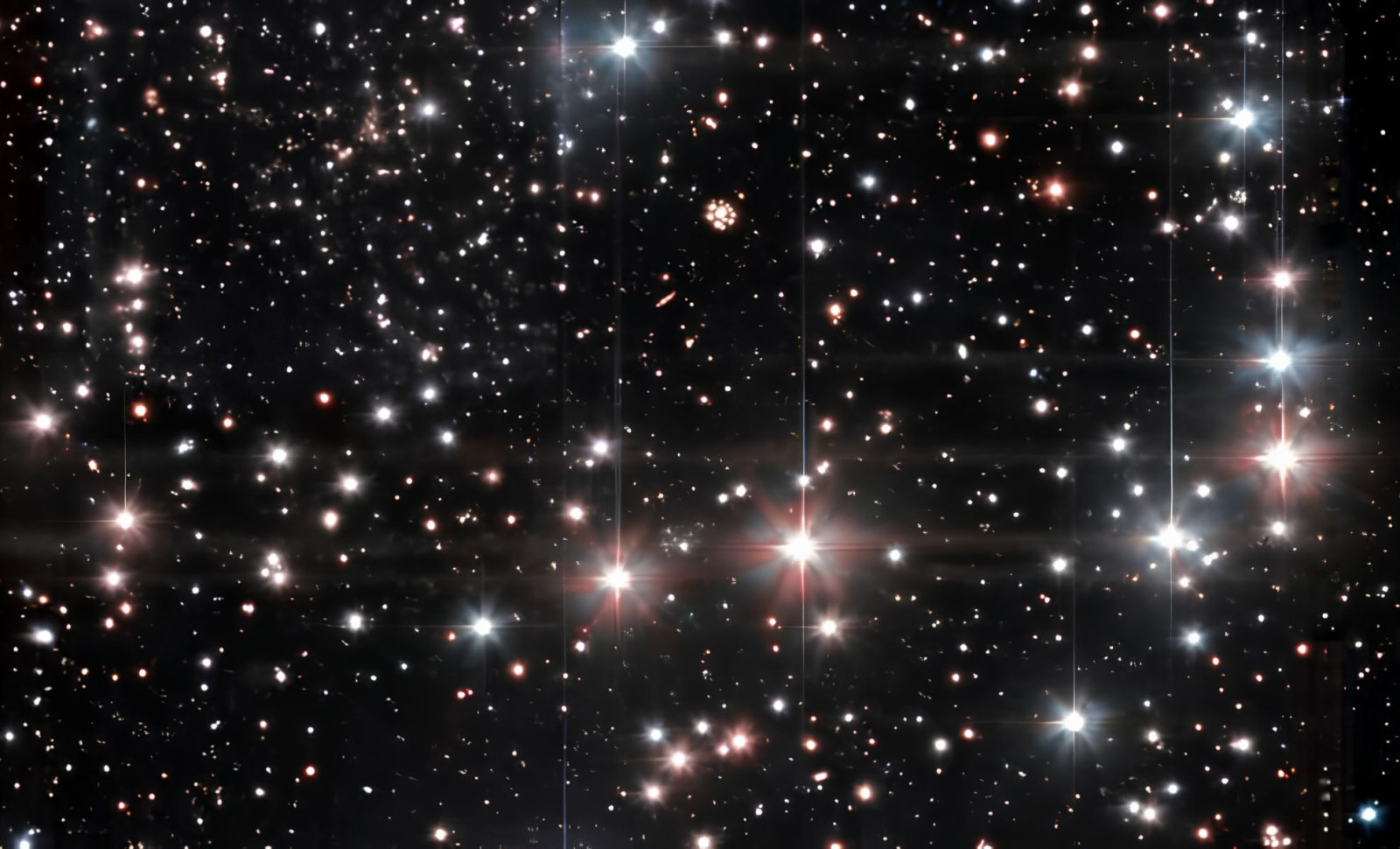
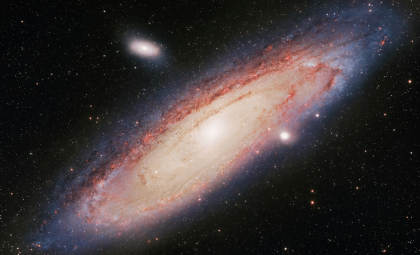
A remarkably faint galaxy, dubbed Andromeda XXXVI, has been detected as a new companion to the Andromeda galaxy. This dwarf galaxy is extraordinarily faint, containing only about 46 stars currently observed. Scientists believe it formed roughly 12.5 billion years ago, making it one of the earliest galactic remnants associated with Andromeda.
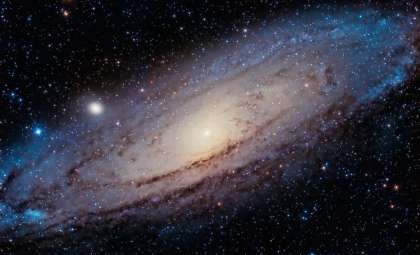
This discovery adds to the increasing number of known satellite galaxies around M31, Andromeda’s massive spiral counterpart nearest to the Milky Way. These small galaxies serve as vital relics from the dawn of galaxy formation, shaped in dark matter-heavy surroundings. Studying them provides valuable clues regarding the formation and endurance of primordial galactic systems across cosmic history.
Ultra-faint dwarf galaxies such as Andromeda XXXVI are especially important, as they have experienced minimal chemical changes since their inception. The research published in Astronomy & Astrophysics highlights these galaxies as some of the most untouched structures surviving from the early universe, preserving physical conditions from shortly after the Big Bang.

Identification Using Wide-Field Survey Observations
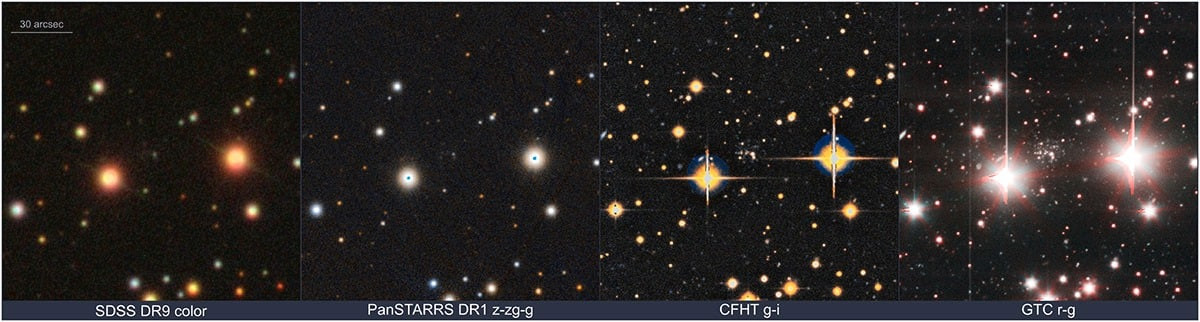
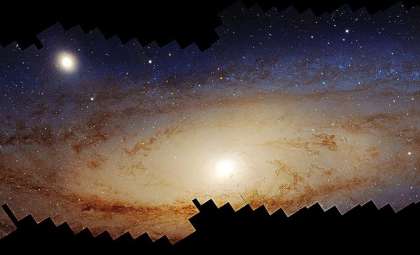
The presence of Andromeda XXXVI came to light during analysis of images from the Pan-Andromeda Archaeological Survey (PAndAS), conducted with the Canada-France-Hawaii Telescope. Astrophotographer and amateur astronomer Giuseppe Donatiello recognized its faint, diffuse glow within the Andromeda halo images.
The object appeared as a patch of very low surface brightness with hints of partially resolved stars. This peculiar appearance suggested it might be a dwarf galaxy rather than a mere background fluctuation or imaging defect, prompting further investigation.
According to work detailed in Astronomy & Astrophysics, such discoveries often depend on careful visual inspections of survey data, especially when objects barely exceed detection limits. Andromeda XXXVI was shortlisted for subsequent observations to clarify its nature.
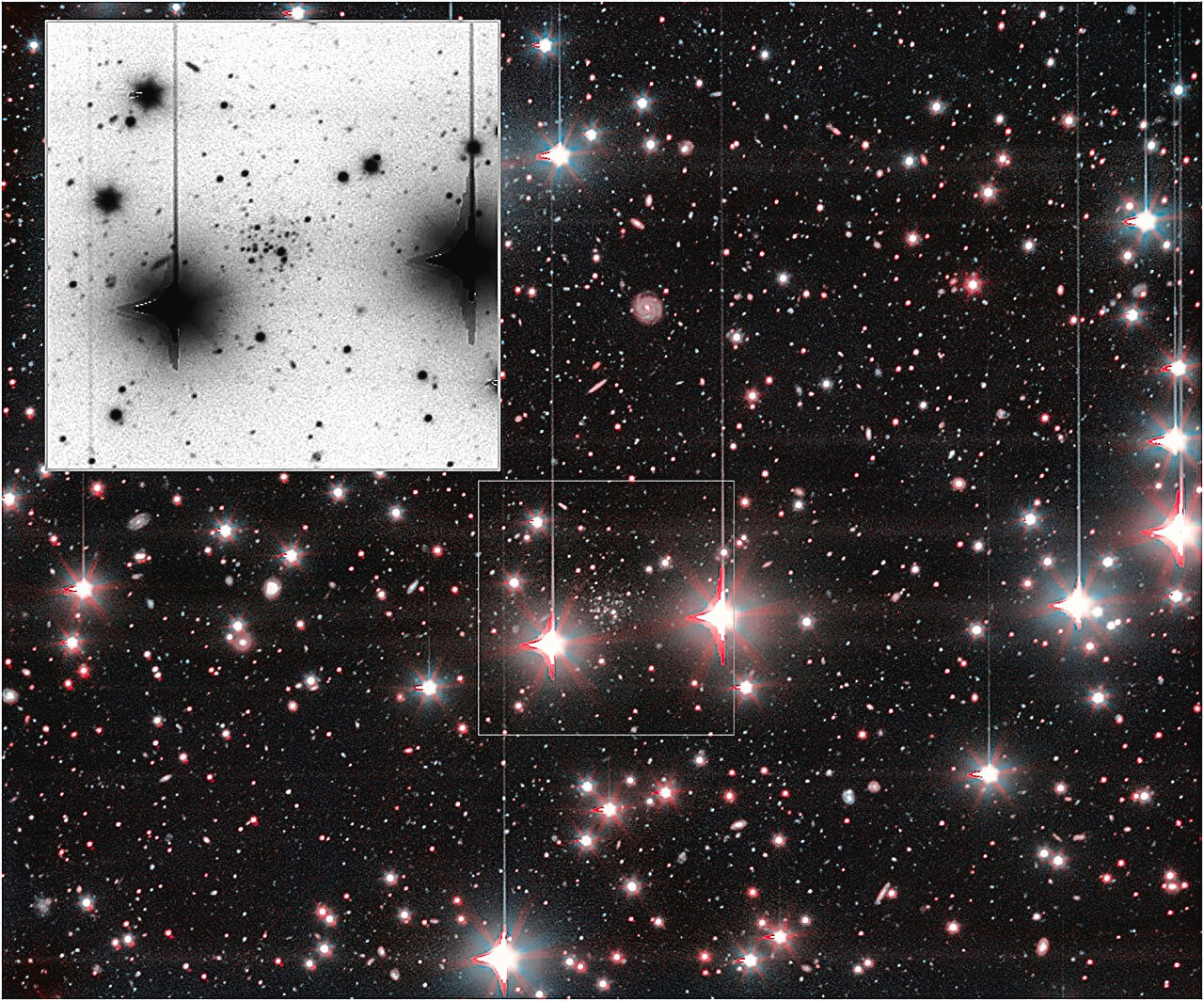
Since ultra-faint galaxies can resemble insignificant stellar over-densities in deep survey photos, confirming Andromeda XXXVI’s classification required more detailed observations.
In-depth Imaging Underscores Its Remarkable Dimness
Further study employed the Gran Telescopio Canarias equipped with the OSIRIS+ instrument for deeper imaging. These observations resolved individual stars within the faint smudge, affirming its status as a gravitationally bound dwarf galaxy.
Only about 46 stars are linked with this ultra-faint M31 satellite, underscoring how incredibly scarce and dim the galaxy truly is. This stellar tally pushes the boundaries of detection for existing terrestrial telescopes.
Despite enhanced imaging, many characteristics remain uncertain. Key parameters like distance, internal configuration, and elemental composition still require precise measurements. The study suggests that further observations using space telescopes, notably the Hubble Space Telescope, are essential for obtaining accurate data.
This challenge highlights how ultra-faint dwarfs often reside at the edge of detectability, representing the elusive population predicted by cosmological theories.
Expanding Our View of Andromeda's Satellite System
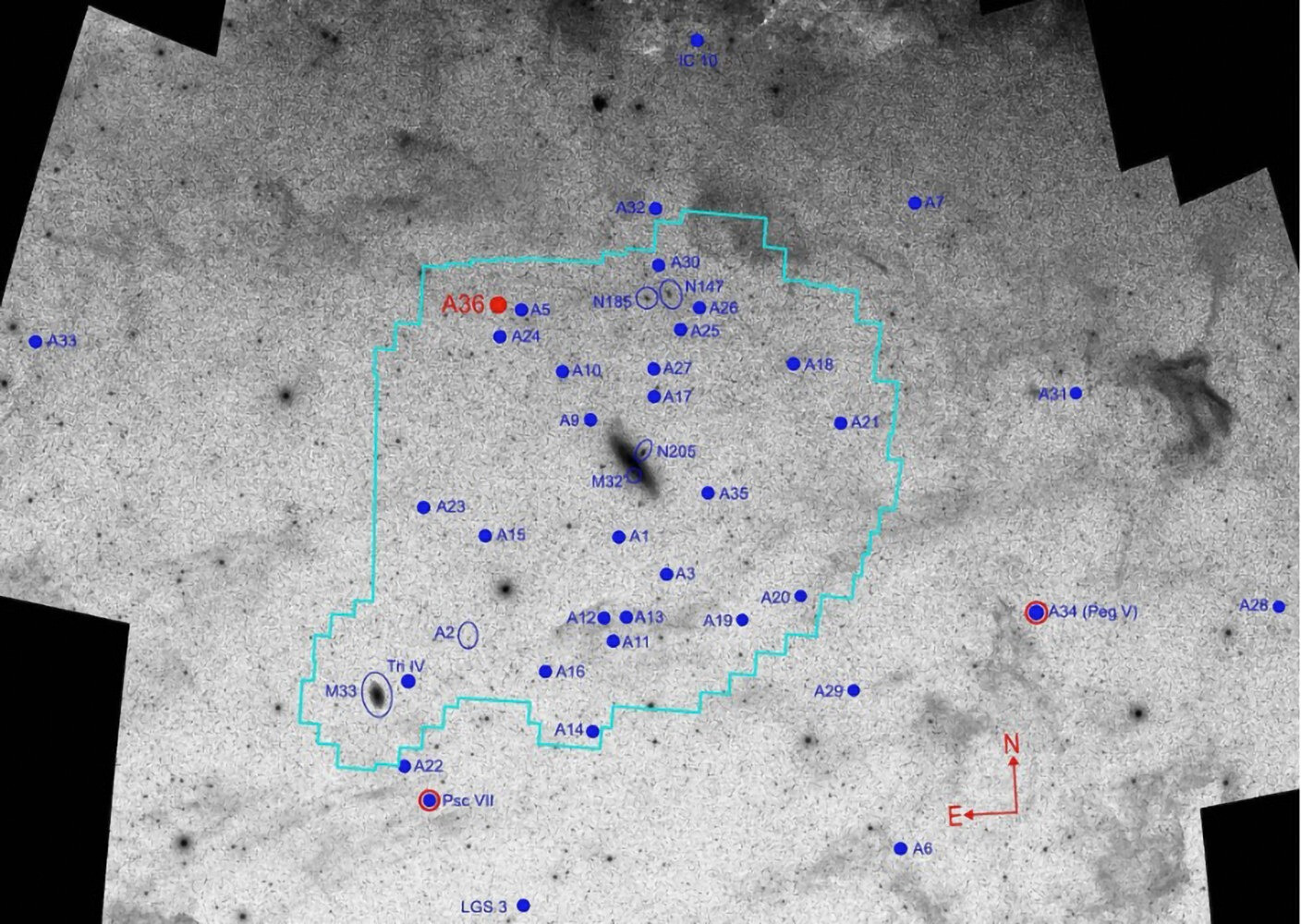
This faint dwarf increases the known tally of satellites around M31. Research led by Isabel Santos-Santos at the Leibniz Institute for Astrophysics Potsdam (AIP) reports approximately 40 satellites are confirmed, with about 15 classified as ultra-faint dwarfs.
“Within the framework of the standard cosmological model, the so-called Lambda Cold Dark Matter model (ΛCDM), we expect galaxies like Andromeda to be surrounded by hundreds of such small companions—yet many of them have remained hidden until now due to their low luminosity,” she explained.
Santos-Santos emphasizes that each newly discovered ultra-faint dwarf galaxy refines our grasp on galaxy formation processes and the distribution of dark matter in small cosmic structures. The research also indicates numerous faint and hidden dwarf satellites likely still orbit Andromeda, awaiting detection.
- Categories:
- Astronomy


0 comments
Sign in to Comment