
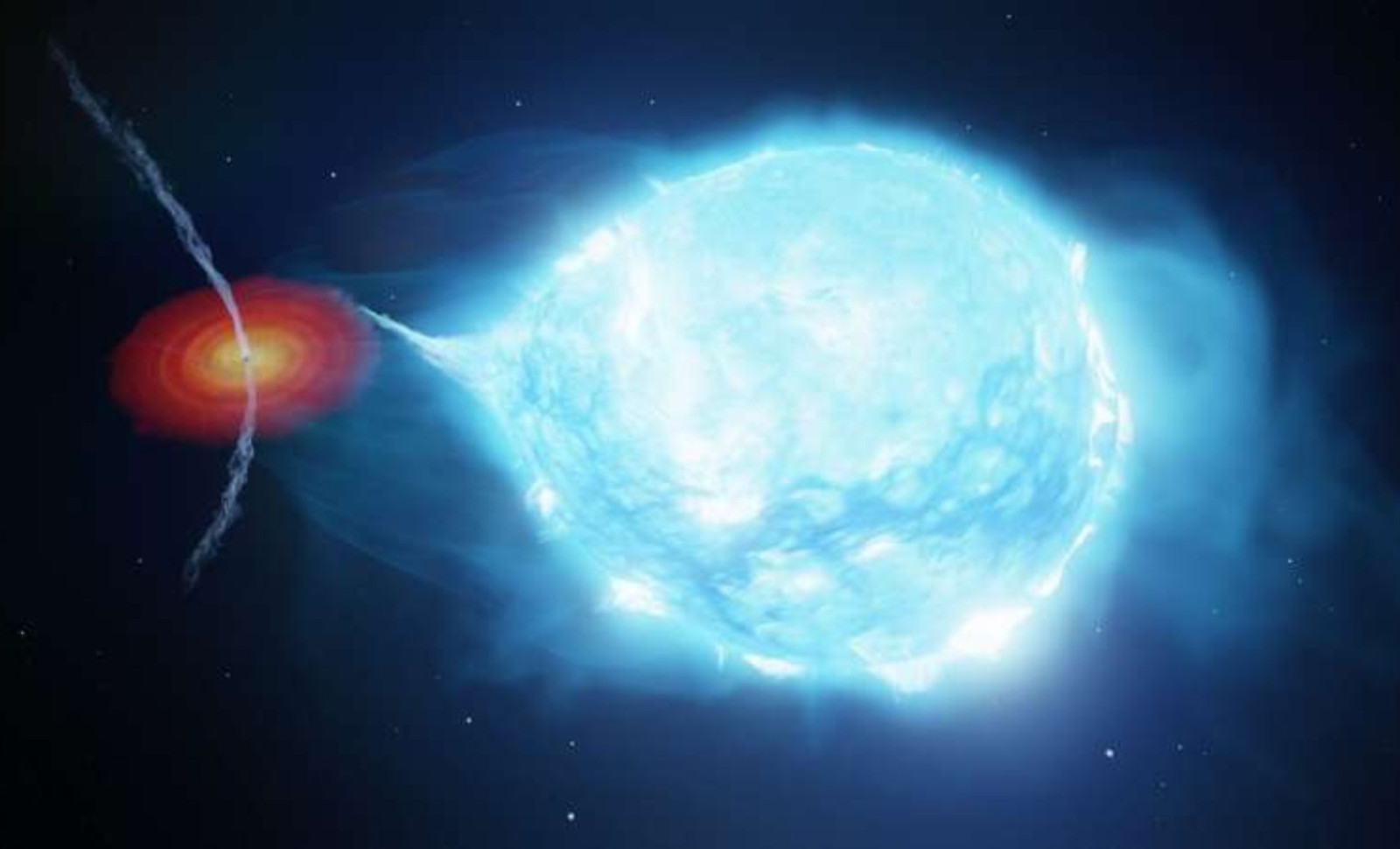
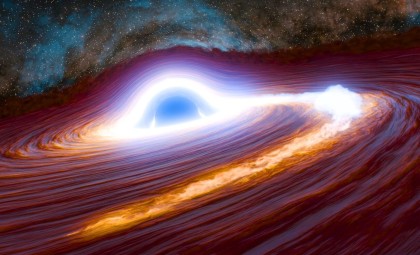
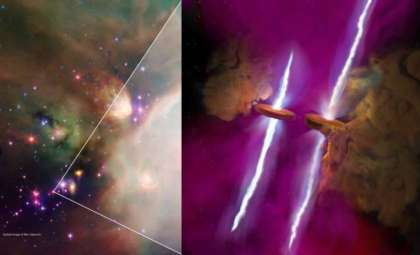
For the first time ever, scientists have directly quantified the immediate energy output of jets streaming from a black hole system, revealing a power nearly equal to that of 10,000 suns. The focus of the study was the renowned binary system Cygnus X-1, where jets were observed traveling at speeds close to half the speed of light.
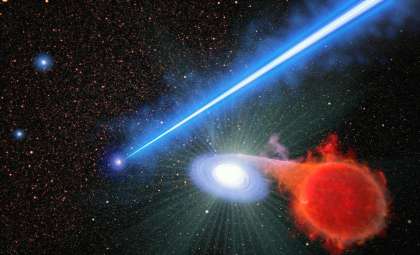
Sitting approximately 7,200 light-years away in the constellation Cygnus, this system consists of a black hole paired with a blue supergiant star locked in orbit. The black hole continuously siphons material from its massive companion, which fuels the creation of these highly energetic jets shooting into space.
As detailed in Nature Astronomy, the investigation was spearheaded by Steve Prabu from the University of Oxford, based on 18 years of precise radio data accumulated via a global array of telescopes. This effort began while Prabu was affiliated with Curtin University in Australia.

Jets Propelling at Nearly Half Light Speed
The team recorded jets moving at about 355 million mph (540 million kph), equivalent to roughly 50% of light speed. Capturing this rapid jet activity in real time is a key breakthrough, as previous estimates relied on long-term averages instead of instantaneous measurements.
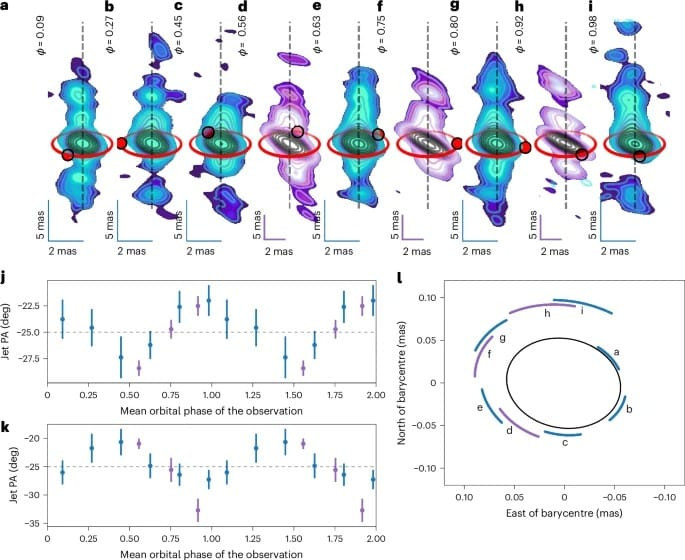
Researchers analyzed how the jets interact with the strong stellar wind emitted by the blue supergiant star. Instead of following straight trajectories, the jets are bent and deflected due to the pressure from the star’s intense wind.
The authors in Nature Astronomy explained that combining radio imaging with computational models allowed them to derive jet power based on the extent of the observed bending. Prabu likened the shifting jets to “dancing jets” driven by the stellar environment. Previously, jet power estimates involved indirect calculations over extended durations.
A Black Hole System Long Under Scrutiny
Cygnus X-1 holds a pivotal role in astronomy as the first black hole candidate broadly accepted by the scientific community. Discovered in the 1960s, it remains one of the most intensively studied black hole binaries in the Milky Way.
Although the black hole is smaller than the supermassive ones found in galaxy cores, it is highly active due to continuous gas accretion from its stellar partner. This material powers the accretion disk and fuels the jets’ formation.
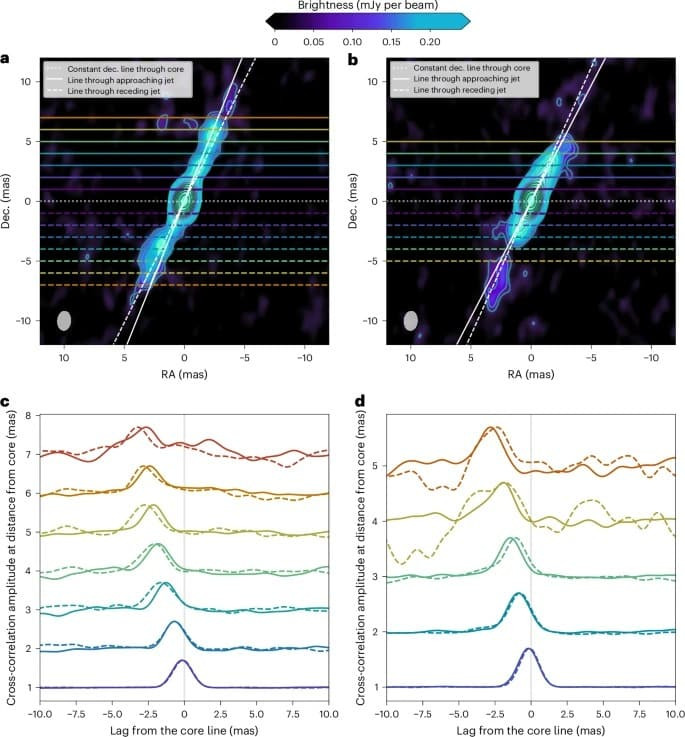
Prabu noted that the supergiant star supplies the black hole with matter, which is then ejected as jets, creating a dynamic exchange as both bodies revolve around each other.
The study also determined that approximately 10% of the energy produced as matter falls into the black hole is carried away by the jets.
Black Hole Jets Shape Their Cosmic Neighborhoods
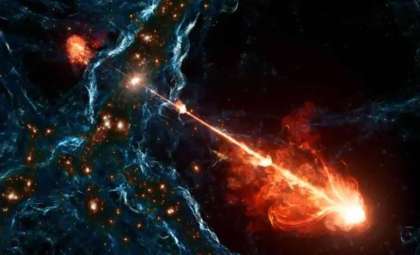
These findings provide valuable insight into the impact black hole jets have on their environment. These streams create shocks and turbulence that affect gas and larger cosmic structures far beyond the binary system.
“Jets also provide a major channel for kinetic feedback between accreting black holes and their surroundings. Without this injection of energy into the surrounding environment, models of large-scale structure formation in the universe fail to reproduce the observed properties of galaxies,” the authors said.
The team highlighted that precisely measuring jet power rather than relying on long-term averages marks a significant technical milestone in studying compact astrophysical objects. Prabu expressed eagerness to apply these methods to other black hole systems in forthcoming research.
“It would be exciting to measure jet power in many more systems,” he stated.
- Categories:
- Space






0 comments
Sign in to Comment