
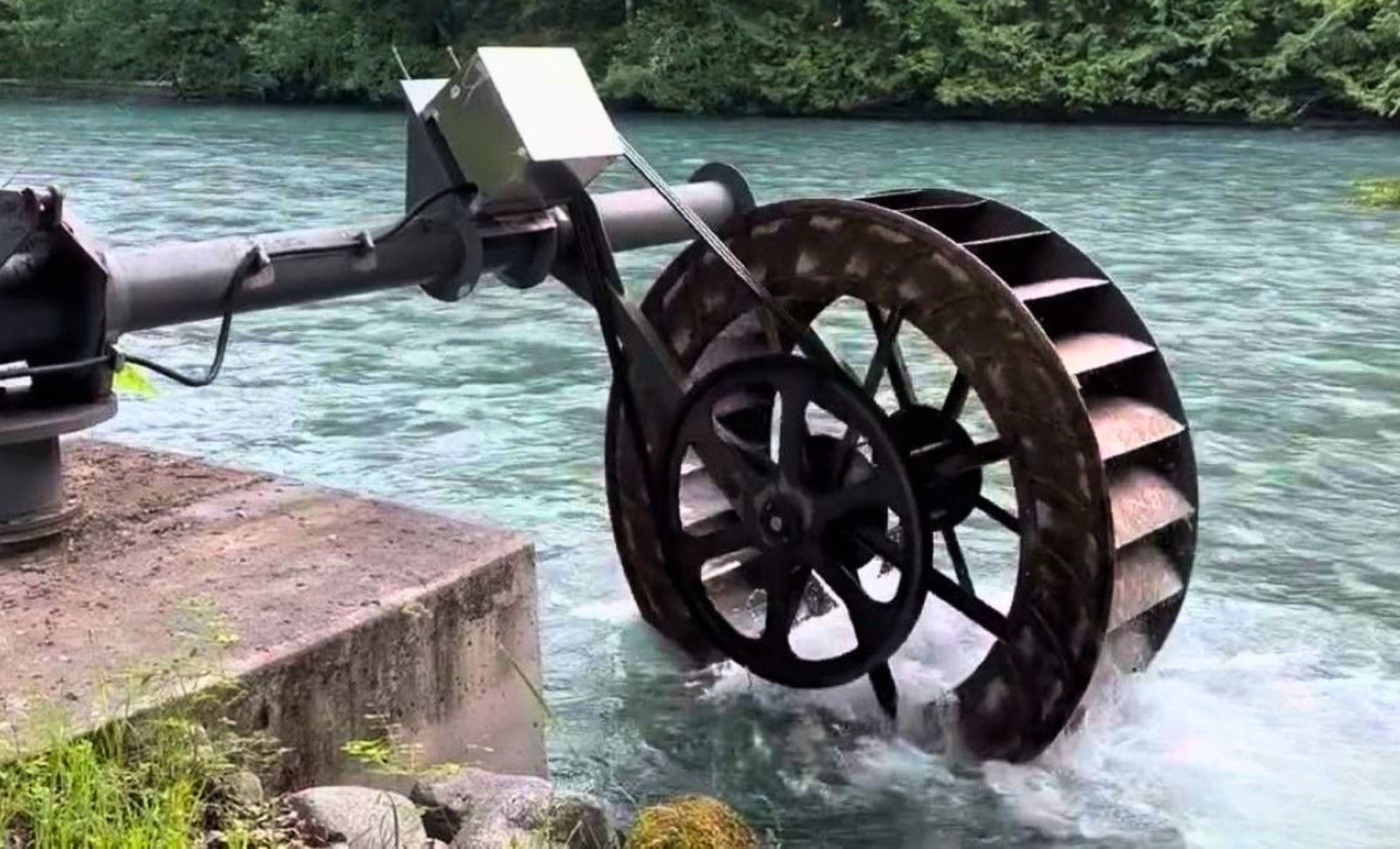
A retired engineer from Canada has designed a water wheel powered by river currents capable of generating up to 36 kWh each day in steady flow conditions. This invention, created by Marc Nering in British Columbia, taps into the natural energy of fast-moving rivers without the need for traditional dams, delivering continuous renewable energy.
The device produces approximately 1,500 watts of consistent power, sufficient to meet major household electricity demands when installed in suitable locations. Nering states, “I use it to power my house,” and notes that surplus electricity can be fed back into the grid through a compatible converter. This practical application proves it as more than just a prototype—it’s a functional small-scale hydropower solution for residential use.

This concept has drawn interest because it provides a form of renewable power that operates continuously, as long as river flow is consistent. Unlike solar panels or wind turbines, which fluctuate based on sunlight and weather, this run-of-river hydropower system maintains a more reliable energy supply. Its steady output is why it stands out among off-grid and rural power options.

Operation of the Hydropower Wheel
The device operates on a straightforward concept: the river current turns a sizable wheel connected to a generator. Positioned alongside the riverbank, the wheel exploits the velocity of flowing water rather than relying on dammed reservoirs. Nering explained this benefit clearly: “You don’t need to dam a river to use it.”
This feature is key to the innovation’s appeal. By harnessing the river’s speed directly, it reduces infrastructure needs compared to conventional hydroelectric setups. While a proper site, stable construction, and environmental assessments remain necessary, its core mechanism is far simpler than dam-based systems.
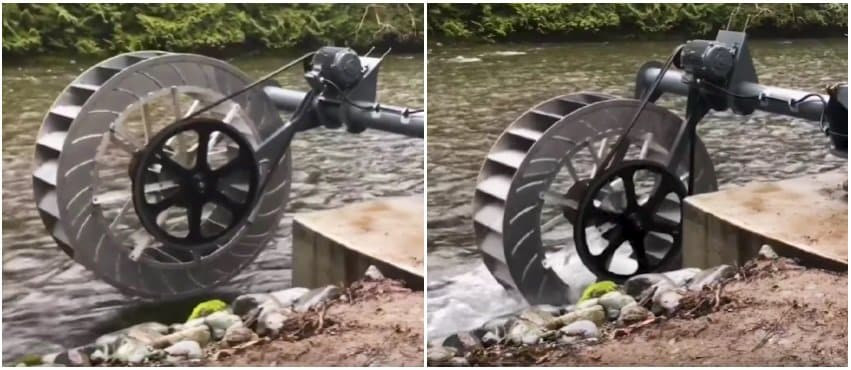
The river must meet specific criteria to supply adequate power. Nering mentions the wheel requires a minimum flow rate of “Ten feet or 3 meters per second.” Flow below this threshold reduces output significantly, meaning the design suits particular river environments rather than all residential sites.
Importance of Consistent Energy Production
Reported power outputs vary depending on conditions, but the key advantage remains steady generation over peak power. Nering indicates the wheel usually produces between 800 and 900 watts, stabilizing near 1,500 watts, and occasionally reaching 2 kilowatts. This sustained performance totals roughly 36 kWh per day.
He also shared a peak figure based on personal observations: “The most I’ve made is about 3 kilowatts.” This distinction highlights the difference between maximum peak and reliable daily output, with continuous energy production being more important for home energy planning.
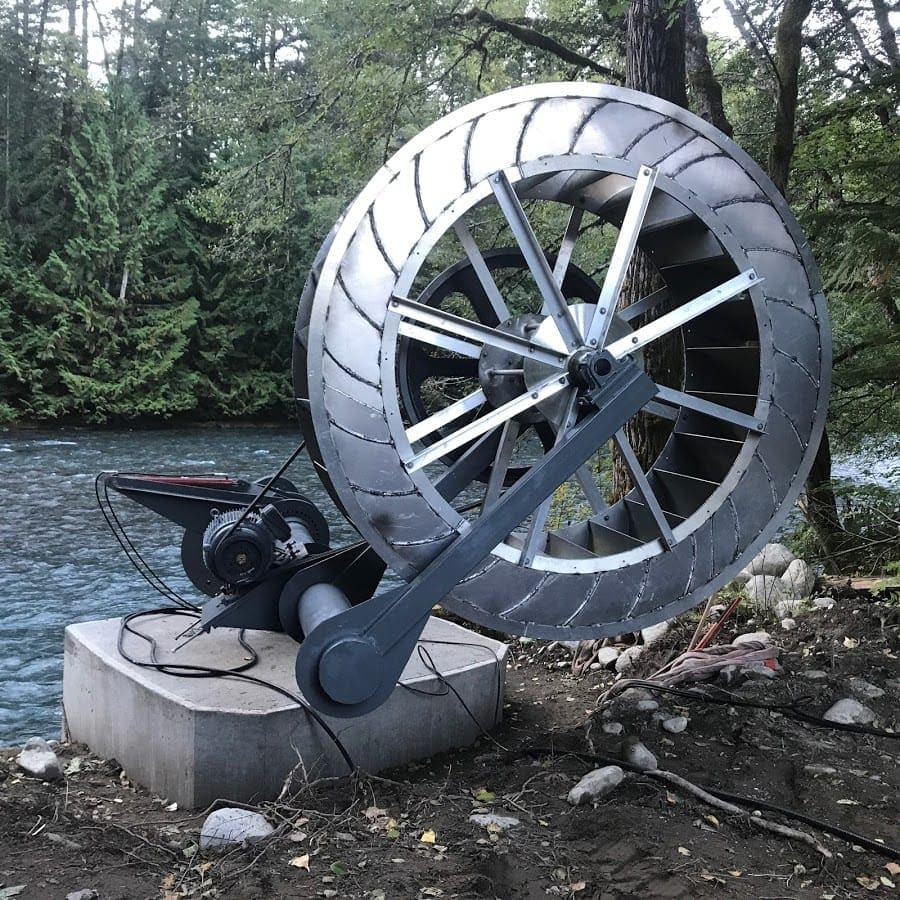
This characteristic is crucial for off-grid and rural power applications. A system delivering constant electricity reduces reliance on energy storage and backup power. For locations with appropriate river flows, micro hydropower can be more practical than solely intermittent renewables.
Challenges with Practical Engineering
The project also reveals real-world challenges in renewable technologies. Nering points out that high torque at low rotation speeds causes belt slippage issues, especially when the components become wet. Proposed solutions include switching to chain drives, installing gearboxes, or adopting direct-drive generators.
Another concern is component wear. Water penetration hastened the degradation of mechanical bearings despite using high-quality seals and parts. Eventually, he switched to lignum vitae wood bearings, reporting: “It’s been great.”
These insights go beyond conceptual interest. This is not just a viral invention for clean power; it is a genuine micro hydropower setup requiring ongoing maintenance, design tweaks, and material improvements over time. This practical experience is valuable for those exploring residential renewable energy solutions.
Environmental Permitting and Ideal Applications
Even small-scale river power projects face significant regulatory oversight. Nering explains that obtaining permits involved numerous municipal, provincial, and federal agencies, along with consultations focused on protecting fish populations and other river stakeholders. Regulators initially assessed the project as if it were a dam-based hydro plant, despite the wheel not impounding water.
This regulatory complexity contributes to why the system remains a niche technology rather than a widespread product. Nering suggests it is best suited for remote communities, areas lacking a reliable grid, or locations dependent on diesel generators or intermittent renewables. In these cases, it offers a localized form of clean energy that takes advantage of a specific river resource.
Overall, this demonstrates a clear example of renewable energy innovation: a homeowner-crafted water wheel employing river currents to supply steady electricity in practical conditions. While not universally applicable, it highlights the potential of river-based power to fulfill residential energy needs where geography and water velocity align.
- Categories:
- News








0 comments
Sign in to Comment