
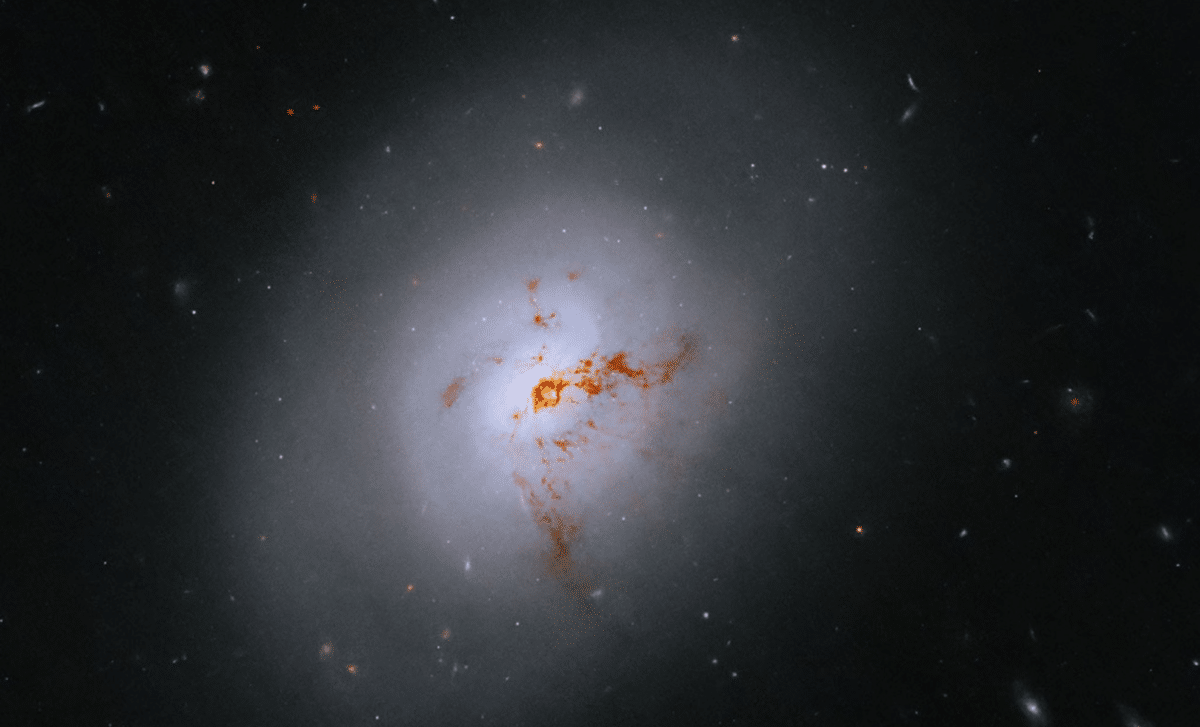
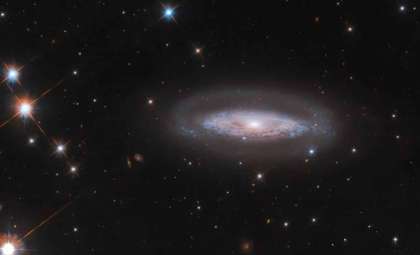
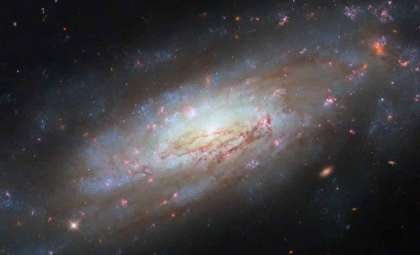
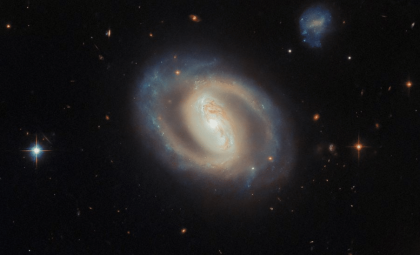
Utilizing the NASA Hubble Space Telescope, astronomers have captured a compelling snapshot of NGC 1266, a galaxy caught in a rare post-starburst stage that provides valuable insights into the forces driving galaxy evolution. Its distinctive features and vigorous internal activity signal a key transitional period, highlighting the complex relationship between supermassive black holes and their galaxies.
A Galaxy in Transition
Situated about 100 million light-years away in the constellation Eridanus, often referred to as the Celestial River, NGC 1266 is classified as a lenticular galaxy. This type of galaxy represents a middle ground between spiral galaxies, known for their well-defined arms, and elliptical galaxies, which are smoother and have fewer stars. Lenticular galaxies display a bright core and flattened disk like spirals, but lack active areas where new stars typically form or visible spiral patterns.
What distinguishes NGC 1266 is its rare post-starburst nature. This means it contains a relatively young star population but shows very little current star formation. Post-starburst galaxies are extremely uncommon, making up only about one percent of nearby galaxies. These galaxies are especially valuable to astronomers because they shed light on how star formation can suddenly cease over cosmic timescales.

The Turbulent Core of NGC 1266
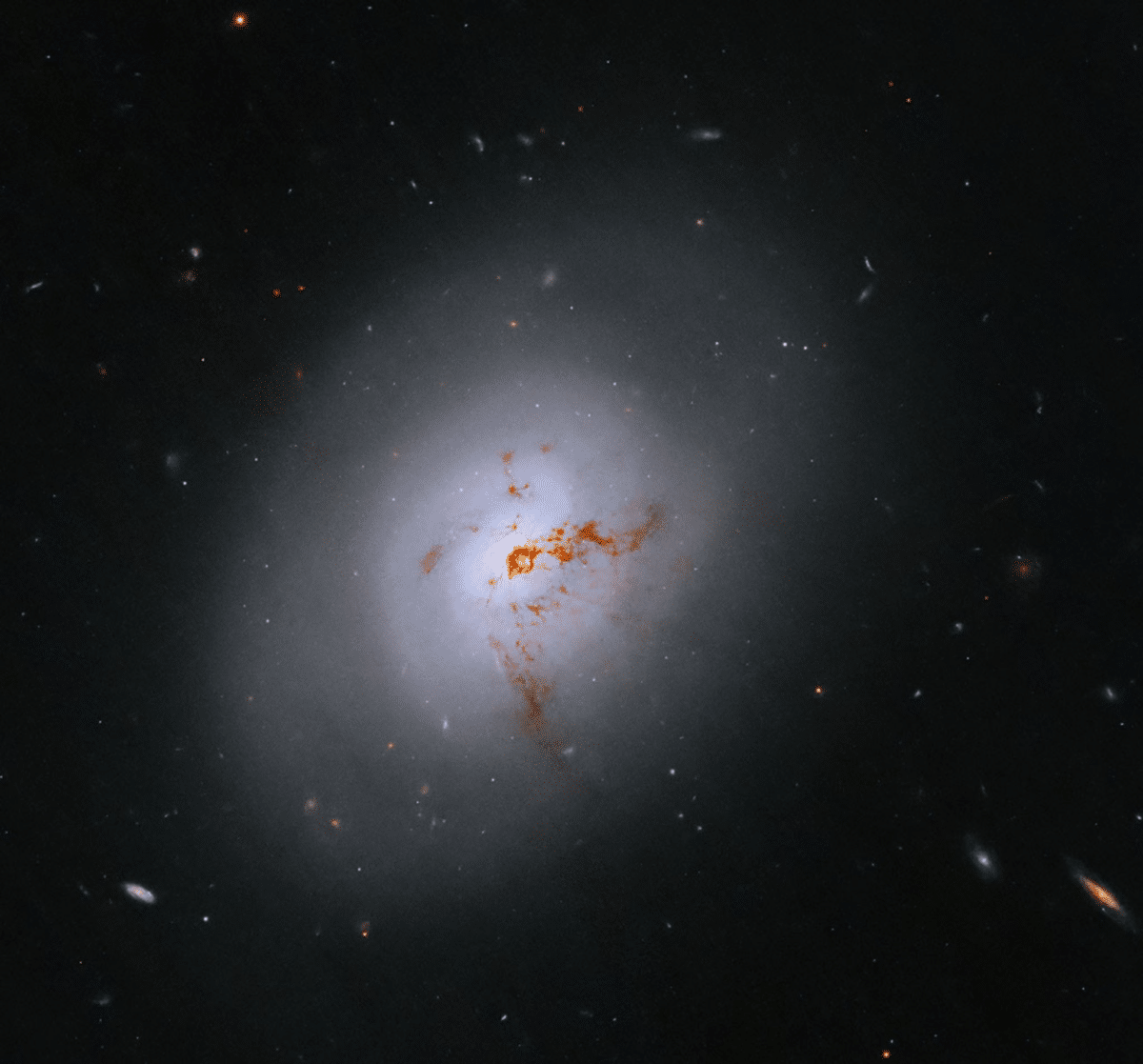
Data indicates that around 500 million years ago, NGC 1266 experienced a minor galactic merger. This event likely sparked an intense phase of star formation and pushed gas toward the galaxy’s central supermassive black hole, activating it dramatically. The ensuing energetic phenomena include an active galactic nucleus (AGN) that emits potent jets and gas outflows.
These energetic emissions do more than dazzle; they play a crucial role in shaping the galaxy’s evolution. By expelling or heating the gas essential for forming stars, the AGN effectively halts new star production. Observations from Hubble and other telescopes reveal shockwaves and turbulence rippling across the galaxy’s interstellar material. While residual star-forming regions remain concentrated near the core, the outer parts of NGC 1266 are largely inactive. This dynamic demonstrates the significant impact of black hole activity on the fate of galaxies.
NASA’s Perspective on Galactic Life Cycles
NASA emphasizes that galaxies like NGC 1266 serve as crucial case studies for examining how galaxies evolve from vibrant, star-forming entities to serene, elliptical forms. By studying post-starburst characteristics and the effects of black hole feedback, scientists gain a clearer understanding of the processes that regulate star formation. These insights refine evolutionary models, demonstrating how internal energetic events can steer a galaxy’s development over hundreds of millions of years.
- Categories:
- Nasa





0 comments
Sign in to Comment