
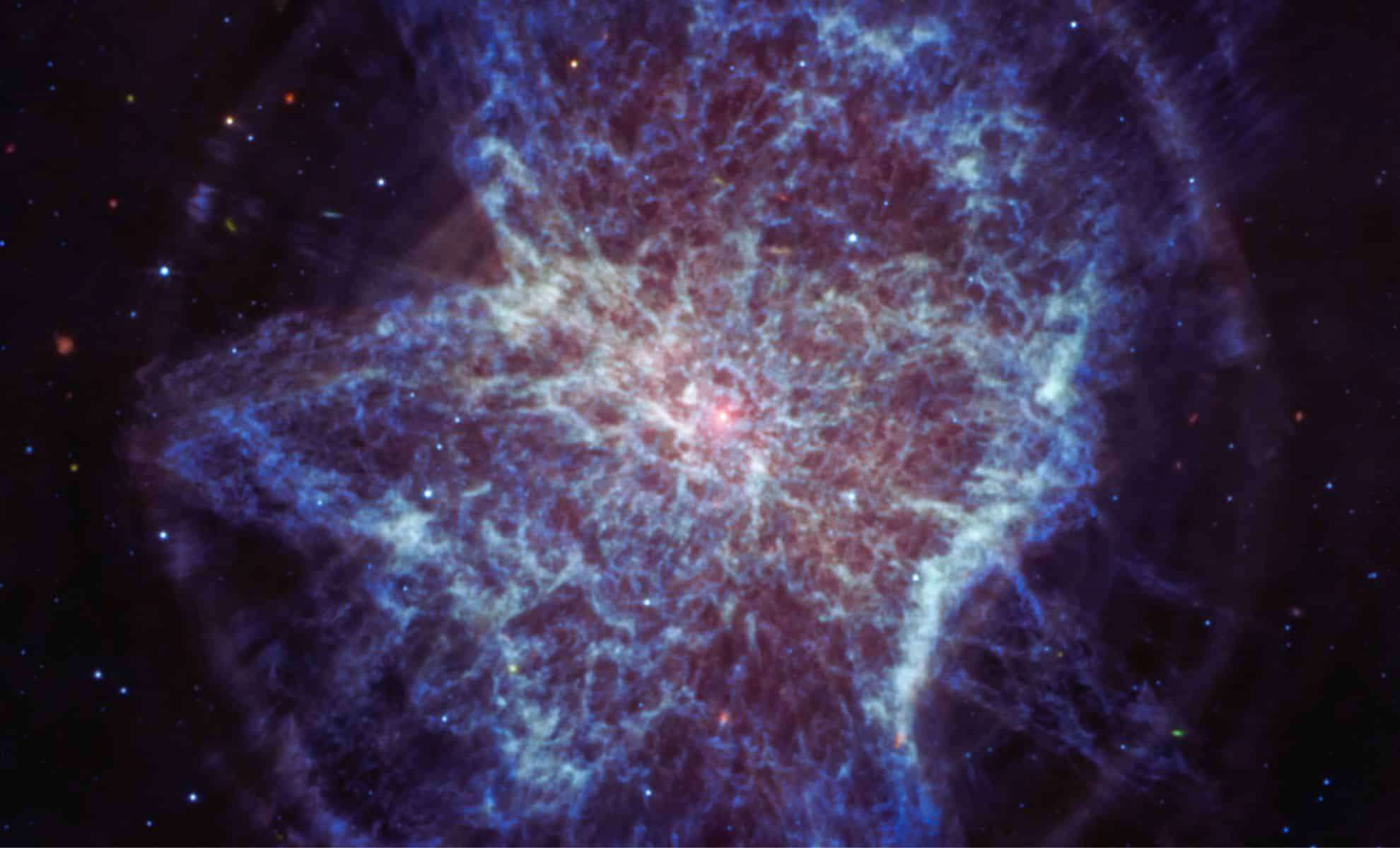
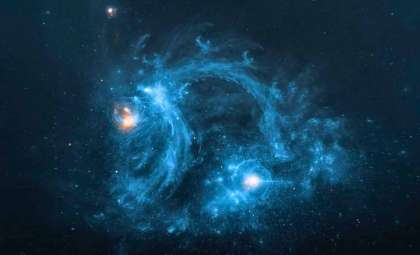
The James Webb Space Telescope (JWST), a collaborative project involving NASA, ESA, and the Canadian Space Agency, has delivered remarkable images that enhance our comprehension of cosmic phenomena. Webb’s latest observations of NGC 6072, a planetary nebula situated roughly 3,300 light-years away in the Scorpius constellation, reveal complex features that suggest a companion star may be influencing the dying star at the core of the nebula. In addition, Webb’s updated imaging of the Hubble Ultra Deep Field (HUDF), initially captured by Hubble in the late 1990s, provides fresh insights into distant galaxies, shedding light on the universe’s infancy. These cutting-edge findings, detailed in a NASA Spaceflight report, highlight Webb’s growing role in advancing our knowledge of the cosmos.
Unraveling the Mysteries of NGC 6072 Through Webb’s Eyes
Planetary nebula NGC 6072 offers a rare window into the final stages of a star similar to our Sun. Stars weighing between one and eight solar masses end their life cycles by expelling their outer envelopes over thousands of years. What remains is a white dwarf, a dense, luminous remnant at the center. The intense ultraviolet radiation from this core energizes the expelled material, illuminating the nebula in vivid colors.
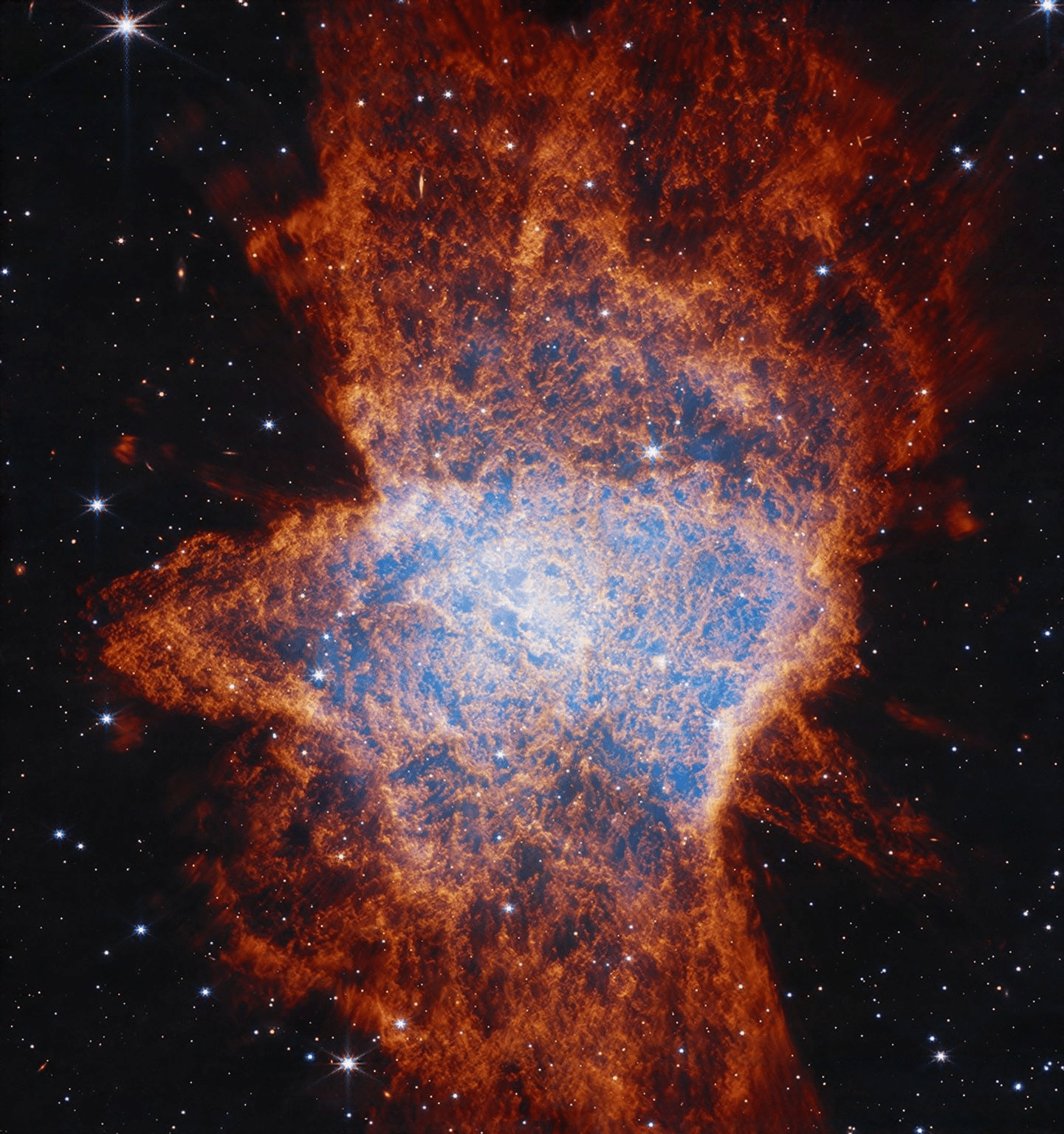
Thanks to Webb’s Mid-Infrared Instrument (MIRI) and Near-InfraRed Camera (NIRCam), astronomers have captured detailed views of NGC 6072, exposing intricate streams of gas emanating from the star. These observations imply that the nebula’s shape may result not only from the central star’s death throes but also from its gravitational dance with a potential companion star. This idea aligns with a 2021 European Space Agency Gaia mission study, which proposed NGC 6072 as a likely binary star system.

Webb’s unprecedented resolution reveals concentric rings within the nebula, which are probably shaped by the influence of the secondary star orbiting the primary. Although this companion has yet to be directly detected, its presence offers a convincing explanation for the nebula's patterns. Webb’s images represent the sharpest look yet at this celestial object, enabling researchers to probe the processes that shape the fate of Sun-like stars.
Revisiting the Hubble Ultra Deep Field With Webb: Unveiling More of the Early Universe
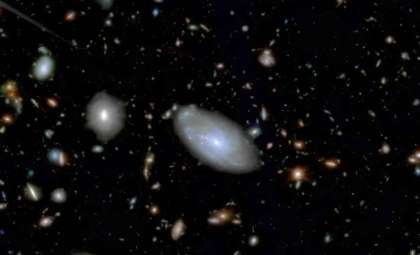
The Hubble Ultra Deep Field (HUDF) continues to be a cornerstone in astronomy, representing one of the deepest views into the early cosmos. Captured by the Hubble Space Telescope in 2004, the HUDF revealed thousands of distant galaxies, some dating back only a few hundred million years post-Big Bang, offering vital clues about galactic birth and cosmic evolution.
Recently, the James Webb Space Telescope has revisited this iconic patch of sky, utilizing its powerful MIRI and NIRCam instruments to capture even clearer, more detailed images. Webb’s deep field observations surpass those of Hubble by detecting even fainter galaxies—many among the oldest ever recorded—providing a richer context for studying the universe’s formative epochs.
Webb’s sensitivity to faint, distant objects invisible to ground-based telescopes allows scientists to explore the birth and growth of galaxies, stars, and black holes in the universe’s early stages. These deep observations stem from the MIRI Deep Imaging Survey (MIDIS), which explores the HUDF and other deep space sectors to investigate galaxy formation and large-scale cosmic structures. Gathering close to 100 hours of exposure, Webb’s observations have identified over 2,500 objects—primarily galaxies—each holding potential keys to unraveling the cosmos’ origin and evolution.
Facing Obstacles and Achieving Success: The MIDIS Survey’s Journey With Webb
Webb’s mission, while groundbreaking, has had its share of challenges. The MIDIS deep field program, originally scheduled for six observation sessions in December 2022, encountered technical setbacks including multiple safe mode occurrences. These interruptions caused temporary shutdowns of Webb’s instruments, delaying data collection and affecting some results. However, the science team adapted their plans, resuming and expanding observations in subsequent years.
Though initially hindered, the MIDIS survey delivered exceptional results, affirming Webb’s capability to capture extremely faint signals from the distant universe. The data collected through this program will be crucial for astronomers aiming to chart the origins of the earliest galaxies, stars, and black holes—fundamental components for reconstructing the history of cosmic evolution.
- Categories:
- News




0 comments
Sign in to Comment