
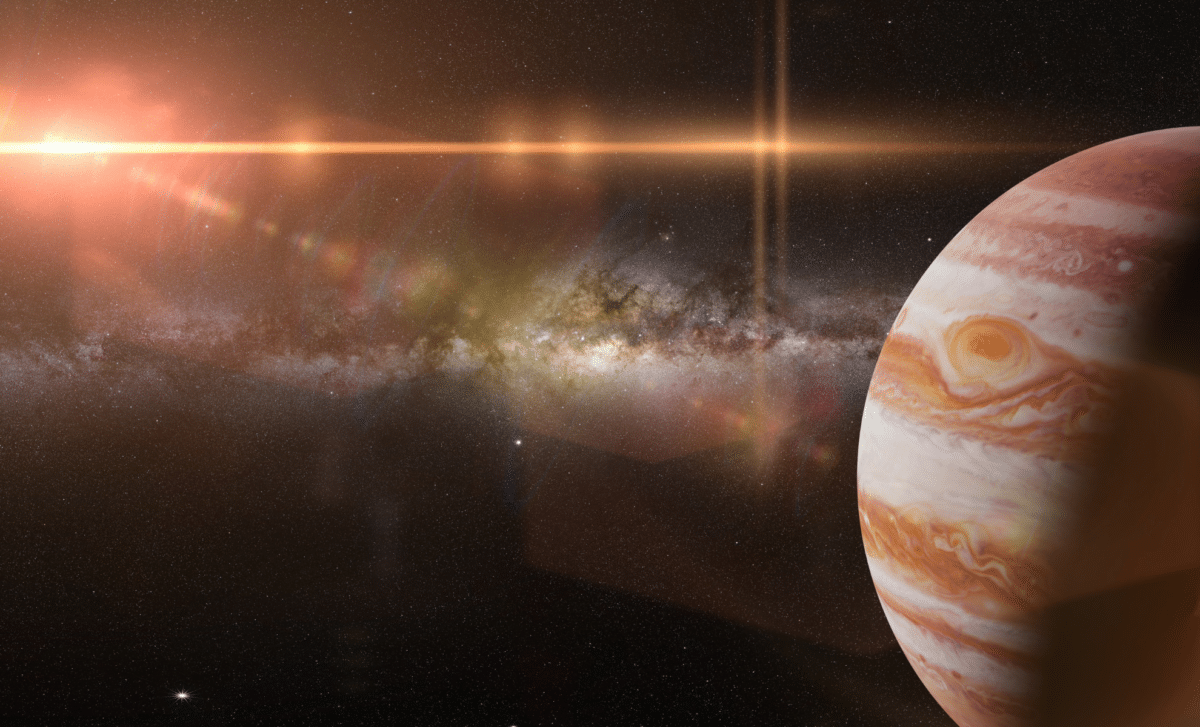
NASA’s Juno spacecraft has observed electrons moving close to light speed within Jupiter’s magnetic field, offering groundbreaking proof of the mechanisms behind the acceleration of energetic particles such as cosmic rays in space. This research, featured in Nature, supports theories long held by astronomers and points to a universal process that could be occurring throughout the galaxy.
Jupiter’s Foreshock: A Natural Particle Accelerator
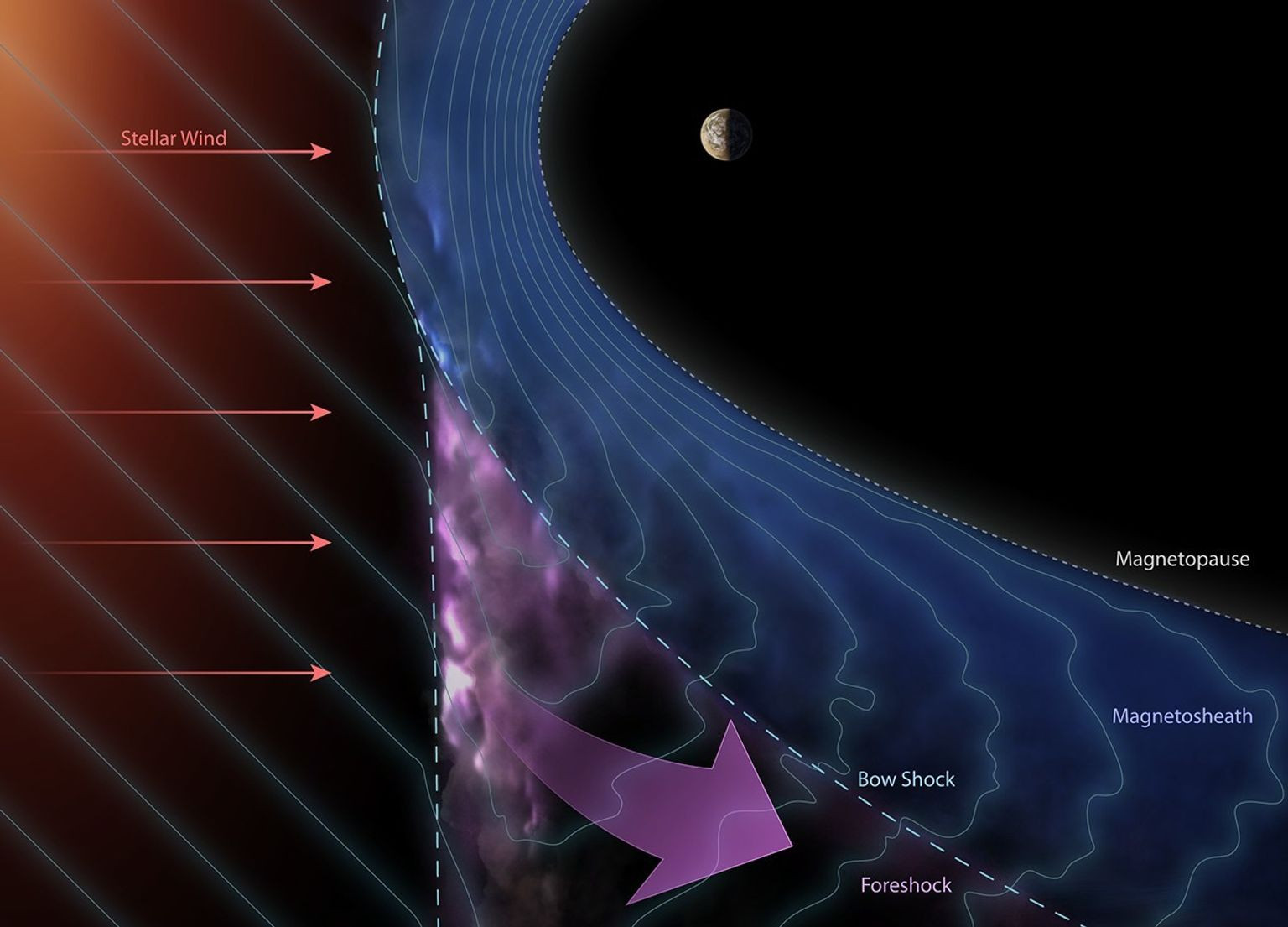
Scientists have theorized for years that foreshocks—regions where solar particles first encounter a planet’s magnetic field—could naturally accelerate particles. While Earth missions like MMS and THEMIS have studied these energetic electrons up close, definitive evidence beyond our planet has been lacking until Juno’s recent findings.
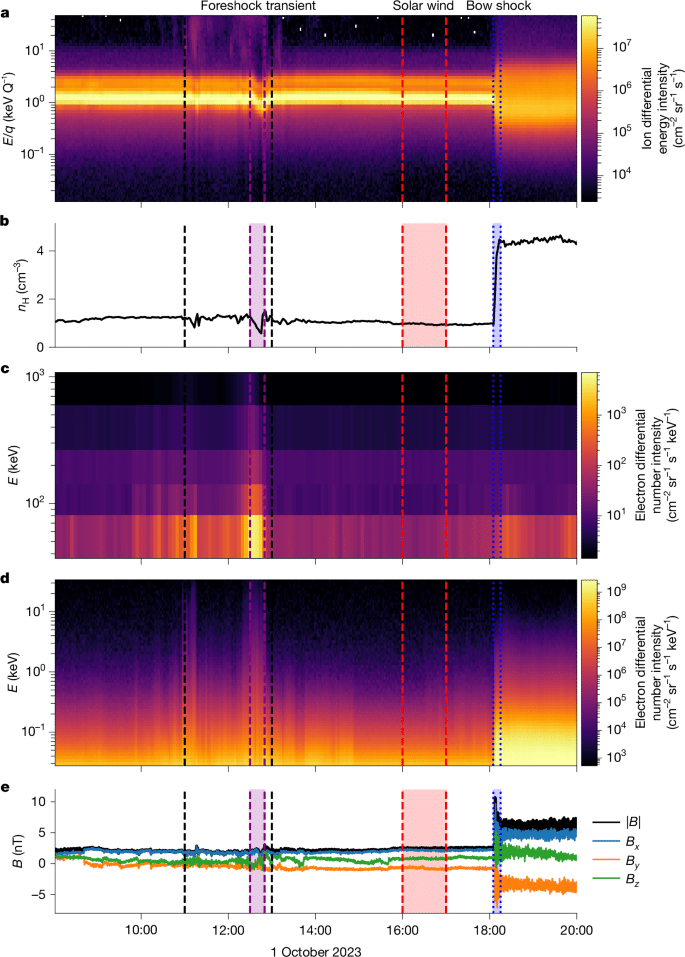
Juno’s close orbit around Jupiter detected electrons traveling faster than those near Earth, revealing just how immense Jupiter’s bow shock is. This shock forms where the planet’s intense magnetic field clashes with the solar wind, spanning a far larger area than Earth’s bow shock, enabling electrons to gain significantly higher energies.

These insights verify that foreshock regions not only accelerate particles but also serve as valuable cosmic laboratories for probing fundamental universal physics.
Linking Solar System Particle Acceleration to Cosmic Rays
The data from Juno illuminate a major astrophysical mystery: the origins of high-energy cosmic rays. Discovered over a century ago, these particles may stem from sources including supernovae and solar outbursts. By assessing particle velocities and comparing them with the size of Jupiter’s foreshock, researchers found acceleration patterns matching those observed in cosmic rays across the galaxy.
This scaling relationship indicates that the acceleration processes witnessed within our solar system could also operate in much larger magnetic settings, implying similarities between phenomena occurring near Jupiter and those around distant supernovae and other energetic cosmic environments.
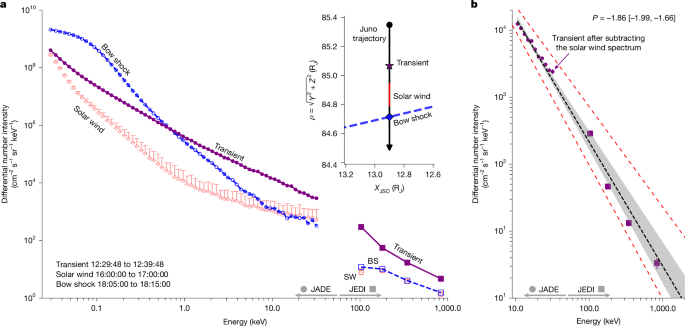
These observations bridge the gap between planetary space physics and energetic astrophysics, linking localized measurements to processes happening millions of light-years away.
Relevance for Space Weather and Technology Protection
Deciphering how electrons accelerate to extreme speeds around planets is crucial for forecasting space weather and safeguarding our technology. High-energy particles can disrupt satellites, hinder communications, and cause power outages on Earth. By confirming particle acceleration mechanisms in Jupiter’s foreshock, scientists improve their capacity to anticipate similar effects closer to home.
Juno’s data equips researchers to enhance prediction models, helping satellite operators and power grids better prepare for space weather challenges. Additionally, this information aids mission planners as they chart future explorations of Jupiter and its radiation-intense moons, ensuring more precise monitoring of hazardous environments.
Uniting Planetary Science with Universal Physics
The study, published in Nature, stands as a major advancement in astrophysics by confirming that foreshock regions can accelerate particles universally, offering natural testbeds for examining extreme physical phenomena.
Observed scaling behaviors at Jupiter’s bow shock, now linked to cosmic rays from supernova explosions, demonstrate a continuity in particle acceleration phenomena from our solar system to interstellar space. This breakthrough promises refined cosmic ray models, better predictions of particle fluxes, and valuable guidance for missions targeting other planetary environments.
Juno’s remarkable data underscore the importance of deep-space exploration in uncovering the long-standing mysteries of high-energy particles, revealing fundamental cosmic truths that even giant planets in our backyard can disclose.
- Categories:
- Space


0 comments
Sign in to Comment