

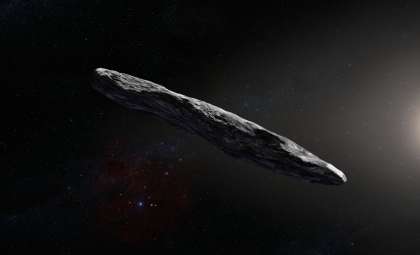
NASA’s SPHEREx observatory has tracked a dramatic flare-up of interstellar comet 3I/ATLAS several months after it passed closest to the Sun. As the third identified visitor from beyond our solar system, 3I/ATLAS provides a rare glimpse into the chemical makeup of material born around another star. These fresh observations build upon data collected since the comet’s discovery in July 2025.
The SPHEREx mission, officially named the Spectro-Photometer for the History of the Universe, Epoch of Reionization and Ices Explorer, launched on March 11, 2025. Operated by NASA’s Jet Propulsion Laboratory, its goal is to survey the entire sky in 102 infrared bands to study galaxy formation and hunt for life's building blocks.
Delayed Yet Intense Cometary Activity
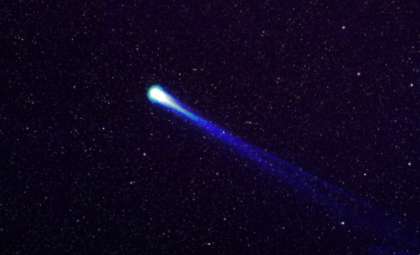
As comets near the Sun, their surface ice vaporizes directly into gas, creating a glowing atmosphere called a coma. Maximum heating typically happens near the closest solar approach, though peak activity can sometimes occur later.

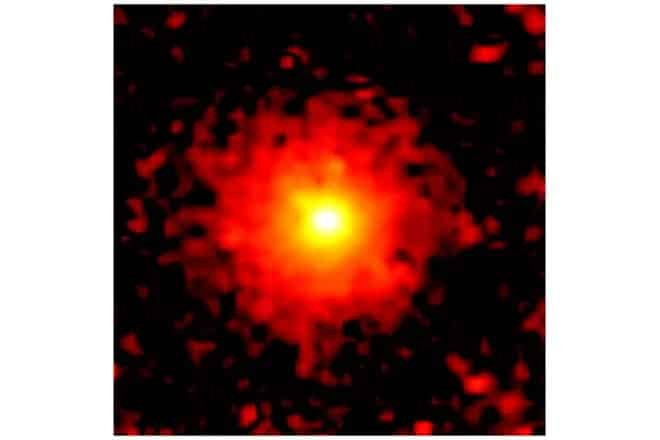
This time delay seems characteristic of 3I/ATLAS. A recent NASA-cited study reported that in December 2025, the comet was "actively erupting into space," says study leader Carey Lisse from the Johns Hopkins Applied Physics Laboratory. She noted:
“Even water ice was quickly sublimating into gas in interplanetary space. And since comets consist of about one-third bulk water ice, it was releasing an abundance of new, carbon-rich material that had remained locked in ice deep below the surface.”
The surge in brightness seen two months post-perihelion matches the expected time for sunlight to warm deeper layers beneath the comet’s surface.
Detection of Complex Organic Compounds
SPHEREx initially observed the comet’s coma in August 2025, identifying abundant carbon dioxide, lesser carbon monoxide, and traces of water. Data from December revealed an even richer chemical environment.
According to information shared by NASA, organic substances like methanol, cyanide, and methane were definitively detected within the comet’s gaseous envelope. On Earth, these compounds play key roles in biology, although they may also form through abiotic chemical processes.
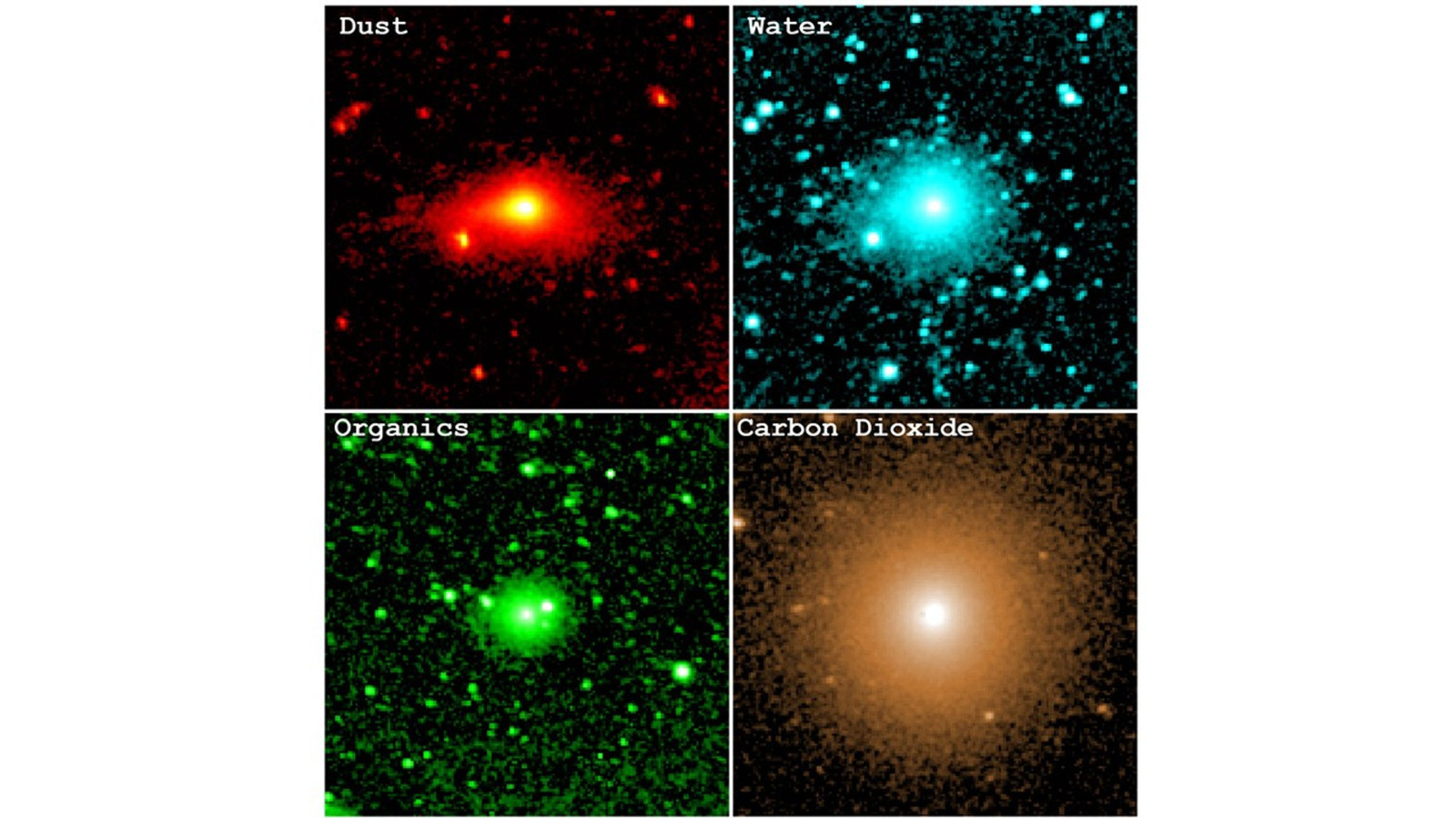
Caltech instrument scientist Phil Korngut remarked that the comet probably developed a radiation-altered crust after its extended journey through interstellar space. Cosmic rays with high energy could have chemically changed its surfaces over time. Once solar heating penetrated this hardened layer, it unleashed what Korngut called a “cocktail of chemicals” previously shielded for billions of years.
Large Debris and Uncommon Tail Shape
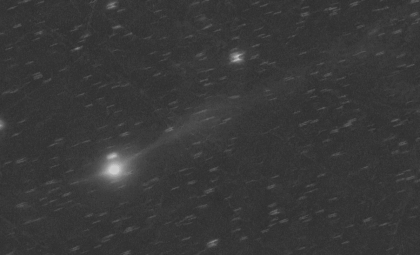
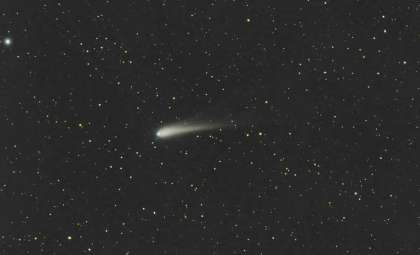
Evidence suggests 3I/ATLAS is ejecting sizeable particles. The comet exhibits a relatively short pear-shaped dust tail. The SPHEREx team explains that this indicates the released material is dominated by larger grains and pebble-sized chunks instead of fine dust, as heavier fragments are less affected by solar radiation pressure.
Discovered on July 1, 2025, by the NASA-supported ATLAS (Asteroid Terrestrial-impact Last Alert System) in Chile and reported to the Minor Planet Center, 3I/ATLAS was promptly classified as interstellar based on its rapid speed and trajectory.
SPHEREx finalized its inaugural all-sky infrared survey in late 2025, the first of four planned scans. Deputy study lead Yoonsoo Bach from the Korea Astronomy and Space Science Institute pointed out that the telescope’s timing was especially fortunate as the comet ventured into the solar system’s inner regions. “Sometimes, science works out that way,” he observed.
- Categories:
- Space




0 comments
Sign in to Comment