
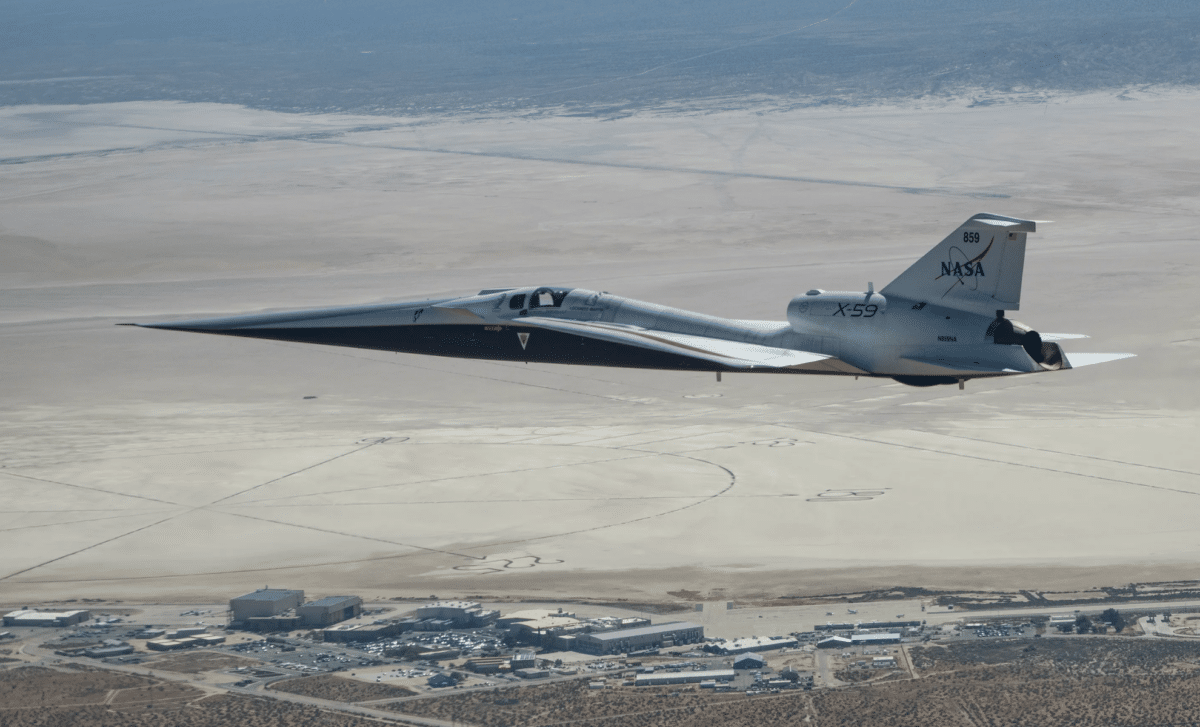
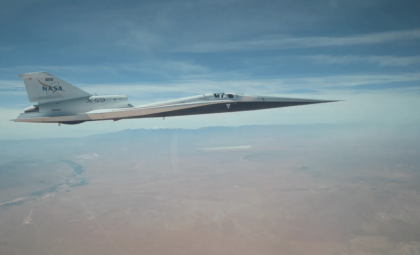
NASA's innovative X-59 aircraft is advancing supersonic aviation by undergoing a wide range of flight experiments to assess its capabilities in various flight conditions. Although designed for speeds faster than sound, recent flight efforts emphasize slower velocities and lower altitudes to ensure complete readiness for its forthcoming missions. These evaluations are integral to NASA’s vision for revolutionizing commercial supersonic travel.
Exploring a Full Spectrum of Flight Conditions
The X-59 has already completed initial testing at high altitude and near-supersonic speeds, setting the stage for more extensive assessments. The engineering team is now focusing on flying at reduced speeds and altitudes to simulate actual flight scenarios, rather than extreme conditions. This methodical approach enables precise evaluation of structural forces, flutter tendencies, and aerodynamic handling across a broad range of operation.
“Our priority was to get as high and fast as we could to allow the team to investigate the higher-risk portion of the envelope, then to work through the lower-altitude and lower-speed region while the team worked through the findings,” said Cathy Bahm, Low Boom Flight Demonstrator project manager at NASA’s Armstrong Flight Research Center.
Add Cosmo Herald as a Preferred Source

This tiered testing ensures that safety and accuracy are scrutinized at every flight stage, from initial ascent through supersonic cruise.
Refining Flight Dynamics
Specialized test flights are being performed, including operations as low as 500 feet above the runway, with the landing gear alternately deployed and retracted. These low-level flights are vital for examining the air data systems, giving detailed feedback on the X-59’s responses to different aerodynamic pressures. Some previously conducted flights are replicated using strain gauges to monitor stress distribution on the aircraft’s frame.
Gathering this data helps the team analyze subtle influences on flight performance, covering everything from minor speed shifts to structural strain impacts on the wings and fuselage.
Advancing Toward Supersonic Overland Travel
The insights gained from these lower-speed and altitude tests will inform the X-59’s forthcoming stage, featuring supersonic passes over inhabited areas. The vision is to develop a low-noise sonic boom aircraft capable of supersonic speeds without the typical disruptive sound effects.
These detailed investigations not only propel NASA’s efforts to create quieter supersonic technology but also chart a course for the revival of commercial supersonic flights over land. Through thorough analysis of its performance across all operational variables, NASA guarantees that the X-59 meets the rigorous standards of safety, efficiency, and regulatory compliance.
- Categories:
- Aircraft







0 comments
Sign in to Comment