
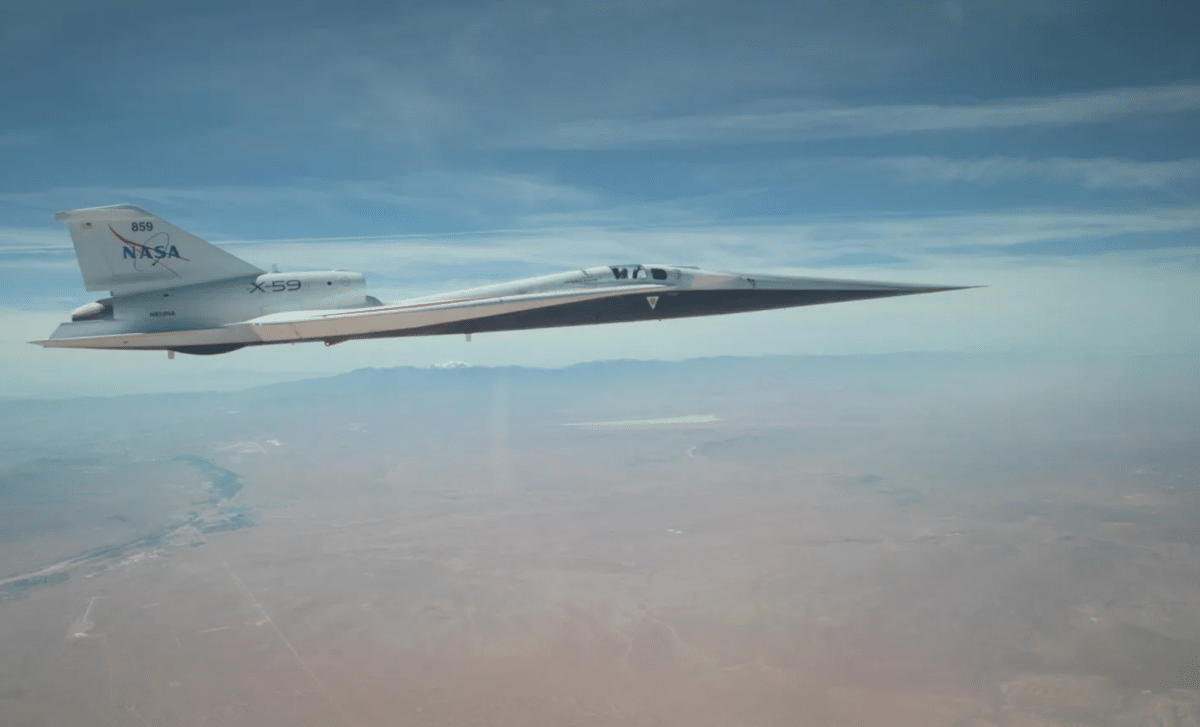
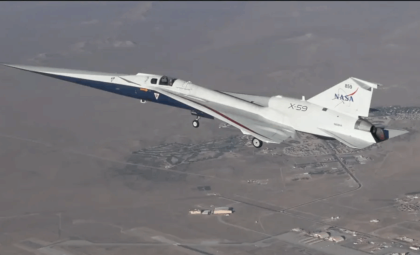
NASA’s innovative X-59, engineered to achieve supersonic speeds without the traditional loud sonic boom, has successfully completed its inaugural flight with wheels retracted—an essential proof of its aerodynamic capabilities. On April 3, 2026, the sleek aircraft took to the skies over California’s Mojave Desert, climbing to an altitude of 20,000 feet and hitting speeds of 460 mph. This achievement represents a major step forward in NASA’s quest to revolutionize commercial air travel through quieter, faster jet technology.
ushering in a new chapter for supersonic aviation
The April 3 wheels-up flight signifies a crucial breakthrough for NASA’s Quesst program (Quiet Supersonic Transport), a pioneering project aimed at enabling supersonic flight over land without the disruptive noise historically associated with such speeds. Conventional supersonic jets produce a loud sonic boom audible for miles, which has limited their use to routes over oceans. NASA’s X-59 aims to soften this boom into a gentle “thump,” making supersonic travel over populated regions feasible and less intrusive.
Incorporating groundbreaking design and cutting-edge technology, the X-59 showcases the evolution of aerospace innovation. Its aerodynamic form reduces drag while enhancing speed and noise reduction. During the test flight, NASA pilot Jim “Clue” Less verified the aircraft’s ability to fly with its landing gear stowed—a critical milestone supporting further assessments and potential public demonstrations.

The science powering the quiet supersonic jet
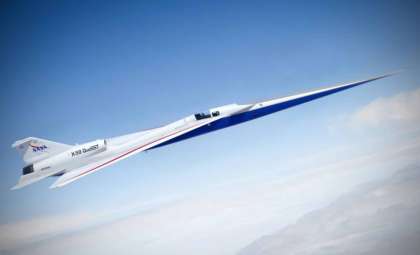
Central to the X-59’s design is a suite of technologies that diminish the loud sonic booms typical of supersonic travel. Its elongated body and pointed nose are engineered to minimize shockwave impact, transforming what would normally be a sharp boom into a subtle thump. This discreet sound can scarcely be heard on the ground, allowing the plane to fly supersonically over inhabited areas without causing major disturbances.
This advancement is vital for the future of commercial aviation, where supersonic flights have been constrained to oceanic routes due to noise concerns. The X-59’s near-silent sonic signature could unlock widespread supersonic overland flights, cutting travel durations while enhancing passenger comfort and community acceptance.
Wheels up for NASA’s X-59. ✈️
— NASA Aeronautics (@NASAaero) April 15, 2026
In its first wheels-up flight, the aircraft revealed its sleek, streamlined design—key to reducing sonic booms to a quiet thump.
See how this milestone moves us closer to quiet supersonic flight over land:https://t.co/GZ6BvYWwX3 pic.twitter.com/DIllDfQYiI
The Quesst project’s impact on commercial supersonic travel
The X-59 serves as the flagship vehicle for NASA’s Quesst project, which seeks to prove that supersonic flights can be conducted without disturbing communities below. NASA will gather data on how people perceive the quiet sonic thump during upcoming test flights, with the goal of informing U.S. and global aviation authorities about potential rule changes that would permit supersonic travel over land.
Quesst isn’t just about speed — it’s about sustainability. By drastically reducing noise pollution, NASA hopes to enable a new generation of supersonic commercial flights that are both environmentally mindful and operationally flexible. This could radically change air travel, slashing coast-to-coast flight times and making quick, comfortable journeys the norm.
Looking forward: Next phases for the X-59
As of April 10, 2026, the X-59 has logged eight successful test flights, with additional tests scheduled to expand the envelope of its performance capabilities. These ongoing flights will evaluate its handling across various speeds, altitudes, and supersonic conditions to ensure stability and safety.
NASA’s upcoming goal includes flying the X-59 over populated areas to demonstrate its near-silent sonic performance to the public. The feedback from these missions will be crucial in validating the aircraft’s potential to transform commercial supersonic aviation.
- Categories:
- Aircraft





0 comments
Sign in to Comment