
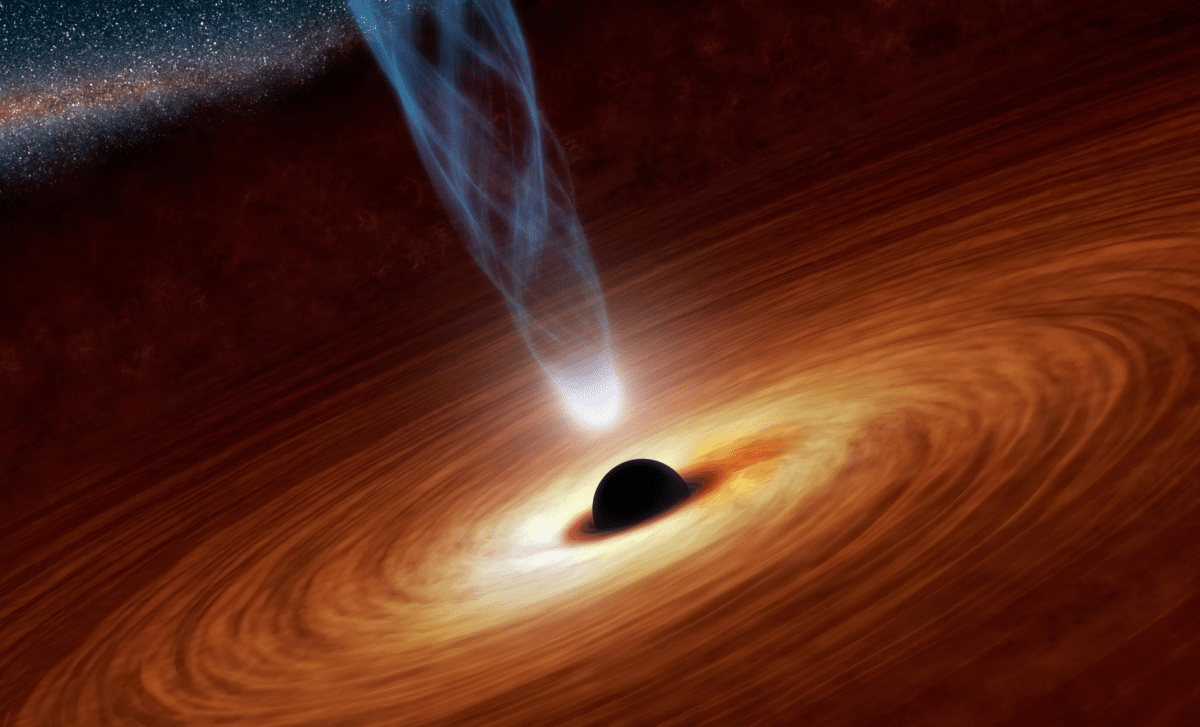
A global collaboration of astronomers has detected subtle yet crucial evidence indicating that the mechanisms energizing quasars—among the universe's most radiant phenomena—might have transformed over billions of years. Reported in the Monthly Notices of the Royal Astronomical Society, this discovery questions a decades-old belief regarding the constancy of supermassive black hole properties across cosmic history. The breakthrough centers on an unexpected variation in the link between ultraviolet and X-ray emissions.
The Mystique of Quasars and Their Intense Luminosity
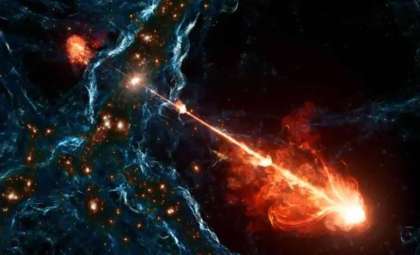
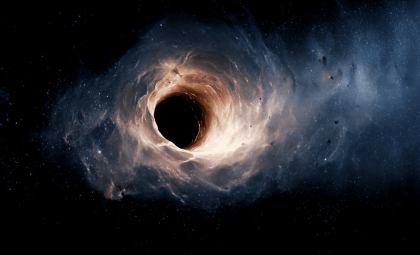
Since their discovery in the 1960s, quasars have intrigued astronomers. These cosmic beacons are fueled by supermassive black holes drawing in surrounding material, creating accretion disks that shine brighter than entire galaxies. The immense friction within these disks heats matter to extreme temperatures, emitting energy across the electromagnetic spectrum.
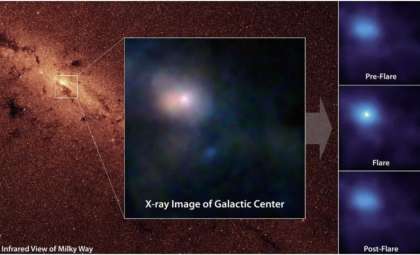
Ultraviolet (UV) light from this hot disk interacts with the corona, a halo of energetic particles around the black hole, producing high-energy X-rays. This connection between UV and X-ray emission has been a foundational aspect of quasar studies for decades.

Questioning a Long-Held Astrophysical Principle
A stable relationship between UV and X-ray emissions in quasars has been assumed for years, forming the basis for insights into black hole environments and cosmic distance measurements. However, recent research suggests this relationship may vary over cosmic time.
Analyzing data from the eROSITA and XMM-Newton telescopes, scientists studied a diverse set of quasars spanning billions of years. Their analysis revealed that quasars from about 6.5 billion years ago exhibit a notably different UV-to-X-ray emission pattern compared to those observed in more recent cosmic epochs.
“Confirming a non-universal X-ray-to-ultraviolet relation with cosmic time is quite surprising and challenges our understanding of how supermassive black holes grow and radiate,” said Dr. Antonis Georgakakis, co-author of the study.
The team employed varied statistical approaches to confirm this unexpected trend. “Across different analyses, the inconsistency persisted,” they reported.
The Methodology Behind the Breakthrough
The key advancement came through observations with the eROSITA X-ray telescope, whose extensive sky survey offered an unparalleled dataset of quasars. Despite the survey’s relatively limited depth, it detected numerous sources with only a few X-ray photons each.
To interpret these sparse signals, researchers utilized Bayesian statistical techniques, detecting nuanced patterns that previous methods may have overlooked.
“The eROSITA survey is vast but relatively shallow; many quasars are detected with only a few X-ray photons. By combining these data in a robust Bayesian statistical framework, we could uncover subtle trends that would otherwise remain hidden,” explained Dr. Maria Chira, the lead author of the study.
By merging eROSITA measurements with archived XMM-Newton observations, the scientists compiled a detailed dataset covering quasars from multiple cosmic eras. Their results, published in the Monthly Notices of the Royal Astronomical Society, challenge fundamental assumptions in black hole astrophysics.
Broader Repercussions for Cosmology and Black Hole Science
This revelation carries significant consequences beyond quasar physics. For years, quasars have served as “standard candles,” crucial for gauging cosmic distances and probing universe expansion. These uses depend on the premise that black hole properties remain unchanged through time.
If quasars’ UV and X-ray correlation shifts with redshift, some prior cosmological conclusions may warrant reevaluation. The impact could extend to theories about dark energy, cosmic acceleration, and the large-scale composition of the cosmos.
The researchers caution, however, that some observed deviations might arise from measurement biases or sample selection effects.
Upcoming observations, including future eROSITA all-sky surveys and new multiwavelength telescopes, aim to validate whether these variations represent genuine evolutionary changes or artifacts of current methodologies.
- Categories:
- Astronomy





0 comments
Sign in to Comment