
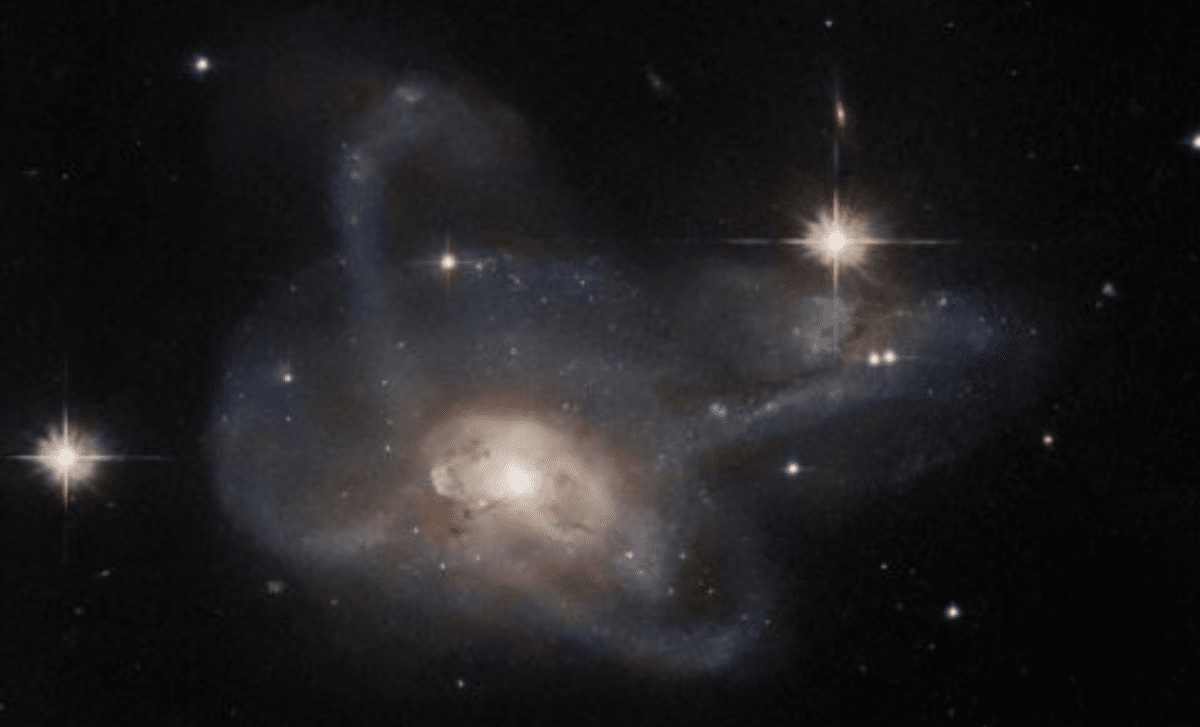
Recent observations have unveiled definitive signs of a merger between two supermassive black holes (SMBHs) within the galaxy NGC 4486B. Presented in a study featured in The Astrophysical Journal Letters, this exceptional discovery offers a detailed look at the consequences following such an extraordinary cosmic event. The finding challenges earlier perspectives on how galaxies evolve and highlights an offset black hole along with unusual stellar dynamics, providing valuable insights into the complex processes of colossal black hole mergers.
Unraveling the Mystery of NGC 4486B
Though NGC 4486B seems to be a serene galaxy nestled in the expansive Virgo Cluster, it hides an intriguing enigma beneath its calm appearance. At its core, the supermassive black hole, possessing a mass approximately 360 million times that of our Sun, is surprisingly displaced from the galaxy's center.
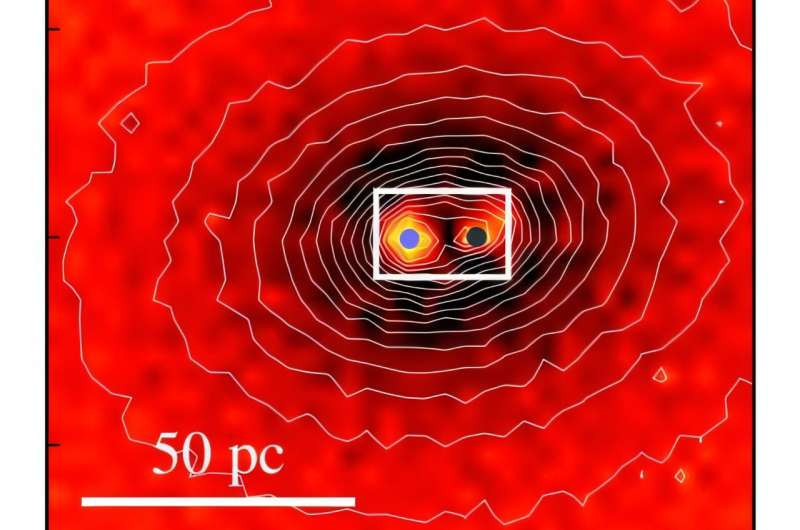
Rather than residing at the galaxy's midpoint, it is situated about 20 light-years off from that position. This unusual displacement, uncovered through detailed data from NASA's Webb Space Telescope, indicates a dramatic past collision that altered the galaxy's internal structure.

Consequences of a Black Hole Collision
Scientists attribute this offset to the fusion of two supermassive black holes, a phenomenon that has reverberated through the galaxy’s stellar environment. The galaxy exhibits behaviors consistent with such a merger, including peculiar stellar trajectories and an abnormal brightness distribution in its core.
“NGC 4486B appears to be the first system exhibiting multiple observable signatures of a recent SMBH merger,” said Behzad Tahmasebzadeh, a key researcher involved in the study published in The Astrophysical Journal Letters..
In cosmic terms, this merger happened relatively recently and has imparted a ‘kick’ to the black hole that continues to destabilize the galaxy's balance.
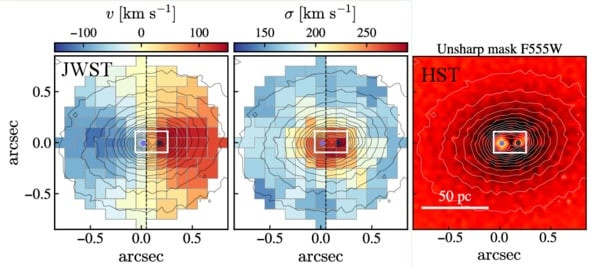
This recoil effect is a direct outcome of asymmetric gravitational forces during the merger. As the black holes spiraled inward, they emitted a powerful burst of energy, causing the resulting black hole to be propelled away from the galactic center, carrying with it a portion of the surrounding star disk. This rare insight enables astronomers to observe the live aftermath of such tremendous cosmic clashes.
Reviewing the Evidence
Researchers utilized multiple observational methods to decode NGC 4486B’s peculiar characteristics. High-definition images from the Webb Telescope revealed two luminous peaks within the galaxy’s core, a feature initially detected in 1990s Hubble images. These peaks are now attributed to the gravitational pull of the offset black hole rather than dust clouds or star clusters. One peak correlates with faster-moving stars, reinforcing the merger hypothesis.
Moreover, star motions in the galaxy exhibit a telling pattern: stars near the displaced black hole move notably faster compared to those farther away, indicative of an ongoing disturbance. This effect, known as a “gravitational-wave kick,” fits theoretical predictions about black hole merger aftermaths. Simulations estimate that the black hole is recoiling at approximately 210 miles per second, a considerable but expected velocity for such an event.
- Categories:
- Space


0 comments
Sign in to Comment