
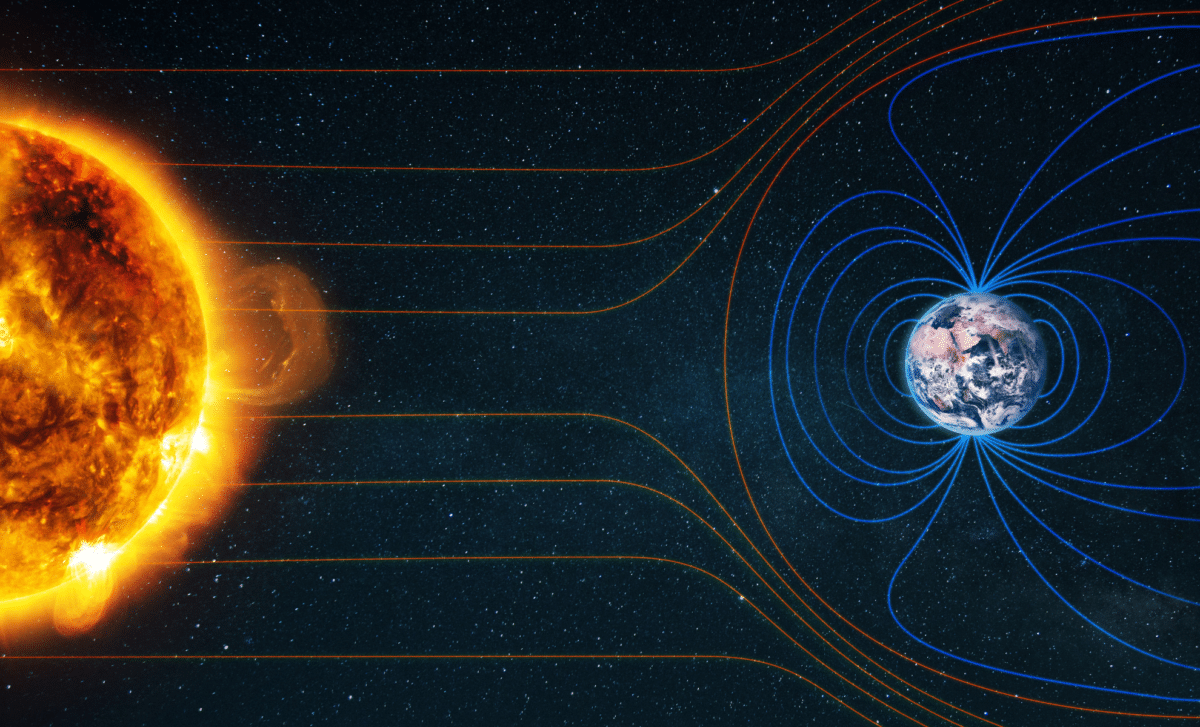
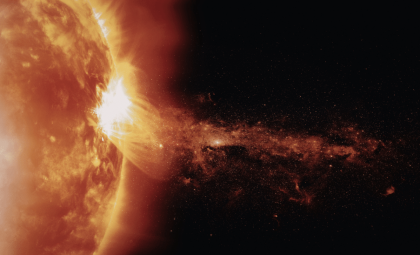
A group of scientists has introduced an innovative concept to fortify Earth's magnetic field against intense solar storms. This strategy envisions releasing ionized particles from spacecraft to form an additional protective plasma layer in space, which could lessen the effects of geomagnetic disturbances, according to findings published in the journal Space Weather.
Advancing Space Weather Protection
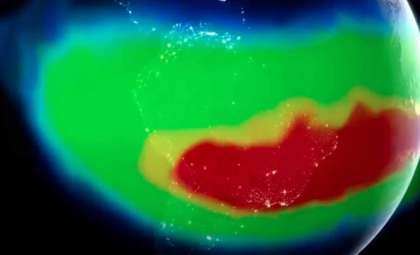
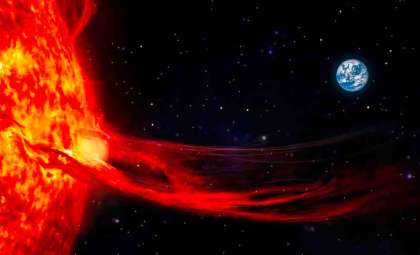
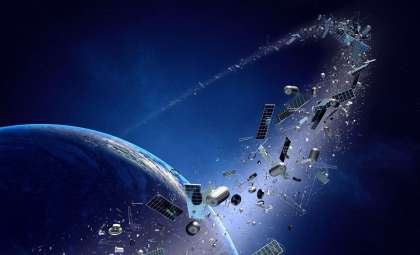
The magnetosphere acts as Earth's primary defense against the sun’s charged particles. However, during intense solar storms, this shield can be compromised, endangering satellites, GPS networks, power systems, and communication infrastructure worldwide. Traditionally, mitigation has relied on monitoring and preparedness, but Brian Walsh and colleagues from Boston University are exploring an active intervention method.
“People have always thought, ‘space is huge, the sun is massive, we just have to sit here and take whatever it gives us,’” Walsh said in a statement. “But what we found is that we can impact it.”
Add Cosmo Herald as a Preferred Source

The proposed StormWall system aims to weaken the incoming solar storm’s impact ahead of time instead of only responding after damage begins.
Mechanics Behind StormWall
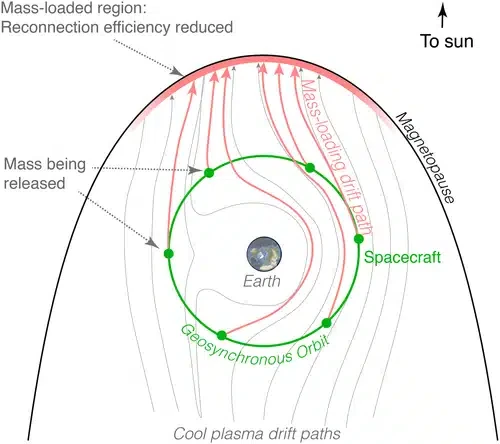
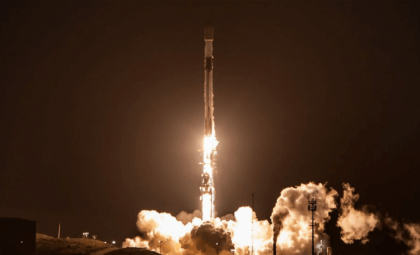
The concept suggests deploying six spacecraft stationed in geosynchronous orbit, each equipped with chemical agents like barium, lithium, sodium, or calcium. These compounds would be vaporized upon detecting a solar storm, with sunlight ionizing them into a charged plasma cloud.
This plasma cloud would drift to the sunward boundary of Earth’s magnetosphere, bolstering the planet’s natural defense. By interfering with the process called magnetic reconnection, which allows solar energy to penetrate near-Earth space, this artificial shield redirects harmful solar winds. Walsh likens the idea to terrestrial flood barriers:
“It’s like people in a village who see a river flooding, maybe they can predict when that will happen, but probably what’s even better is if they could build a storm wall,” he said. “That’s what we’re proposing here.”
Testing the Concept Against the Mother’s Day Storm
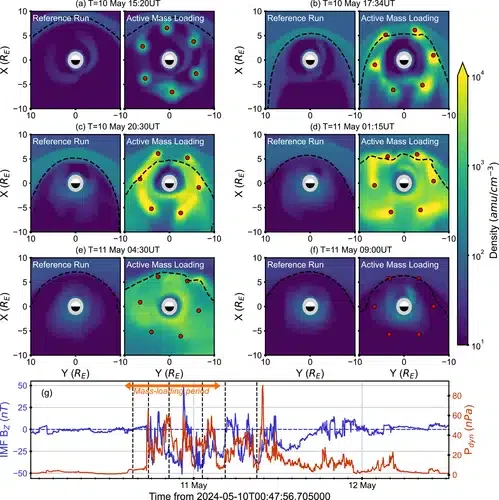
Using computer models to simulate the May 2024 geomagnetic event, also called the Mother’s Day storm, the team compared normal conditions with scenarios employing the StormWall plasma shield. Results showed the approach could cut storm intensity by over 50%, potentially preventing serious damage to satellites and Earth’s power infrastructure.
“Applying rigorous physics confirms its viability,” Walsh explained. “The mass requirements and launch technology needed are achievable today.” Published in Space Weather, the study notes the shield is a temporary solution, with the plasma dissipating within six hours, requiring replenishment for ongoing protection.
Planet-wide Defense and Prospects Ahead
StormWall’s capacity to provide global-level protection sets it apart from terrestrial defense methods, safeguarding all countries simultaneously. “If implemented, it would benefit all inhabitants, regardless of nationality or satellite ownership,” Walsh remarked.
With increasing commercial and governmental space activities, the scientists believe economic motivations could drive adoption. The research also emphasizes that environmental contamination risks from released particles are minimal, as they are swiftly carried away by solar winds.
- Categories:
- News





0 comments
Sign in to Comment