
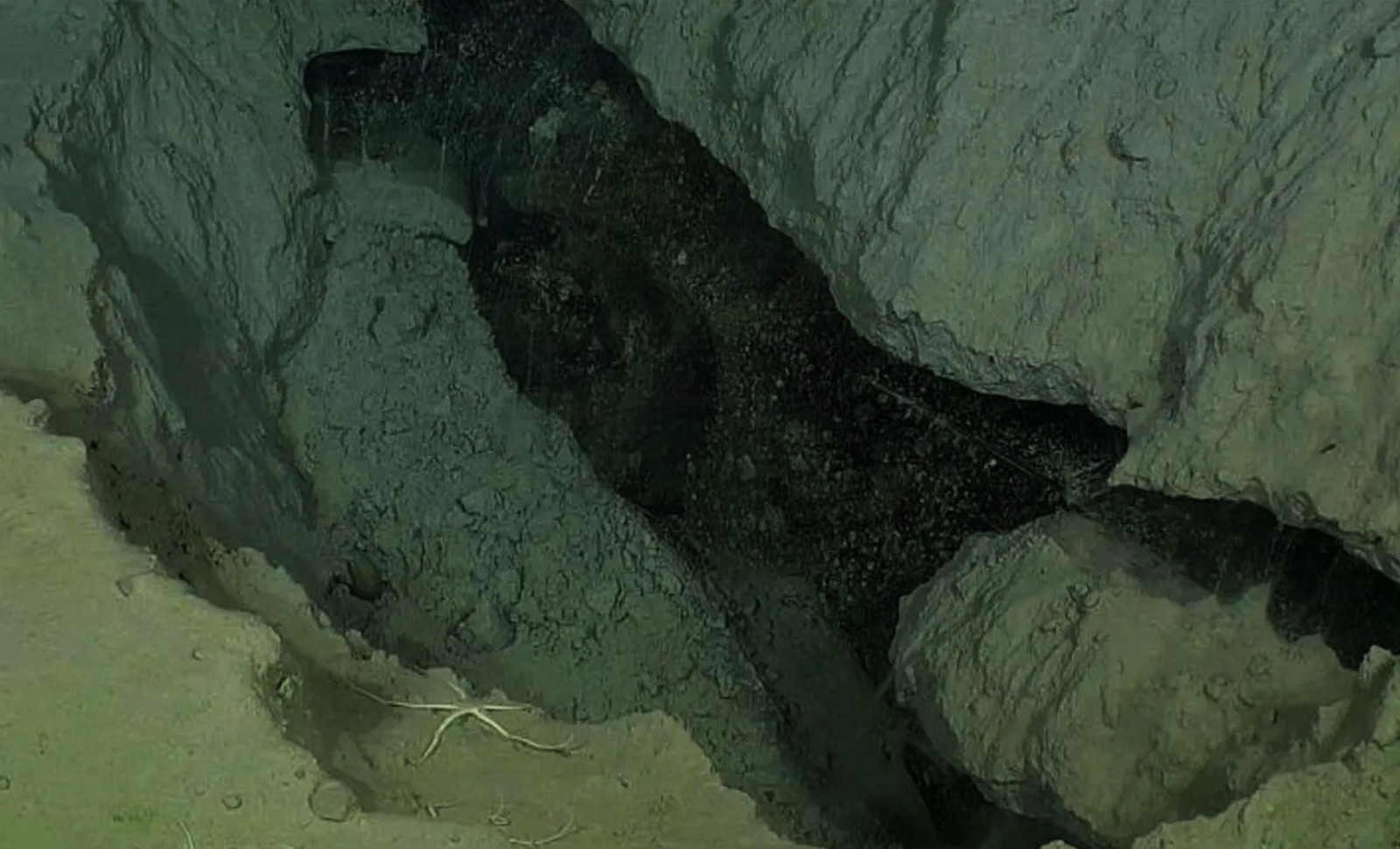
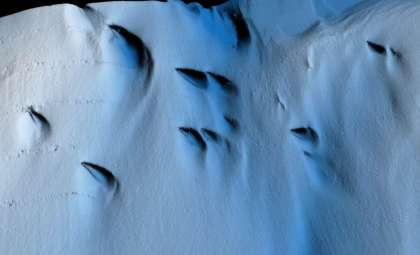
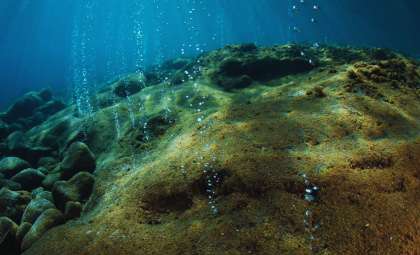
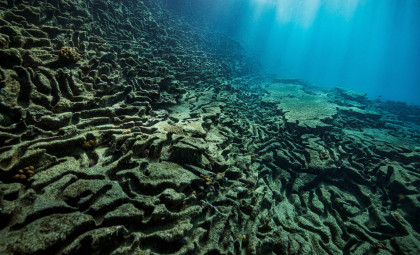
Across the Canadian Beaufort Sea's ocean bed, something remarkable is unfolding in the dark depths. Rather than progressing slowly or subtly, enormous ridges of ice surge upward through the sediment, erupt, and then collapse into vast sinkholes comparable to city blocks. The seafloor appears as if it has exploded from below.
After a dozen years of robotic exploration, five research missions, and investigations into newly formed depressions, scientists finally grasped the phenomenon at hand. Their findings challenge a core understanding of the Arctic environment.
The ice currently forming on this seabed isn’t remnants of the distant past—it is actively developing in the present.

Active Formation, Not Ancient Remnant
For years, experts believed all submarine permafrost was relic frozen ground from the last ice age, gradually thawing as global temperatures rose. However, a recent study published in the Journal of Geophysical Research by MBARI geologist Charlie Paull and colleagues presents a fundamentally different story.
Far beneath the seafloor, age-old permafrost is melting. The water released, which is brackish and chemically unique, migrates upwards. Upon reaching the near-freezing seabed, around -1.4 degrees Celsius, it refreezes. This ascending brackish groundwater generates ice layers beneath the sediment, gradually lifting the seafloor into mounds. Seawater infiltrates these icy blisters, melting them from above, resulting in ground collapses. This cycle perpetuates over time.
“Our findings indicate that permafrost ice is both building and breaking down near the seafloor across a broad area, shaping an active submarine landscape dotted with enormous sinkholes and sediment-covered ice mounds,” explained Paull. The primary cause isn’t atmospheric warming but geothermal heat slowly ascending from Earth’s interior, a process far older and more gradual than current climate change.
Exploring the Newly Discovered Craters
The unique seafloor terrain caught scientists’ eye in 2010 when Canadian teams mapped the area, revealing previously unseen features. Beginning in 2013, the Monterey Bay Aquarium Research Institute launched detailed surveys using autonomous underwater vehicles capable of one-meter resolution mapping. Across twelve years and five major campaigns, 65 fresh craters appeared where none existed before, with the largest matching the extent of a city block covered by six-story buildings.
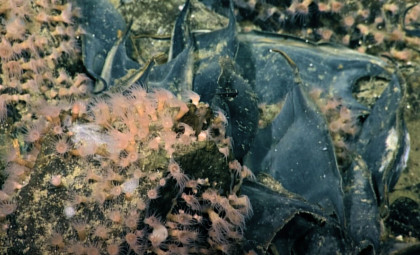
The 2022 expedition, aboard the Korean icebreaker Araon operated by the Korea Polar Research Institute, involved locating the newest craters with MBARI’s mapping AUVs. A MiniROV was deployed to inspect inside, capturing footage of dark ice layers slicing diagonally through sediment walls, with debris heaped beneath. Brittle stars were observed crawling over the rubble below.
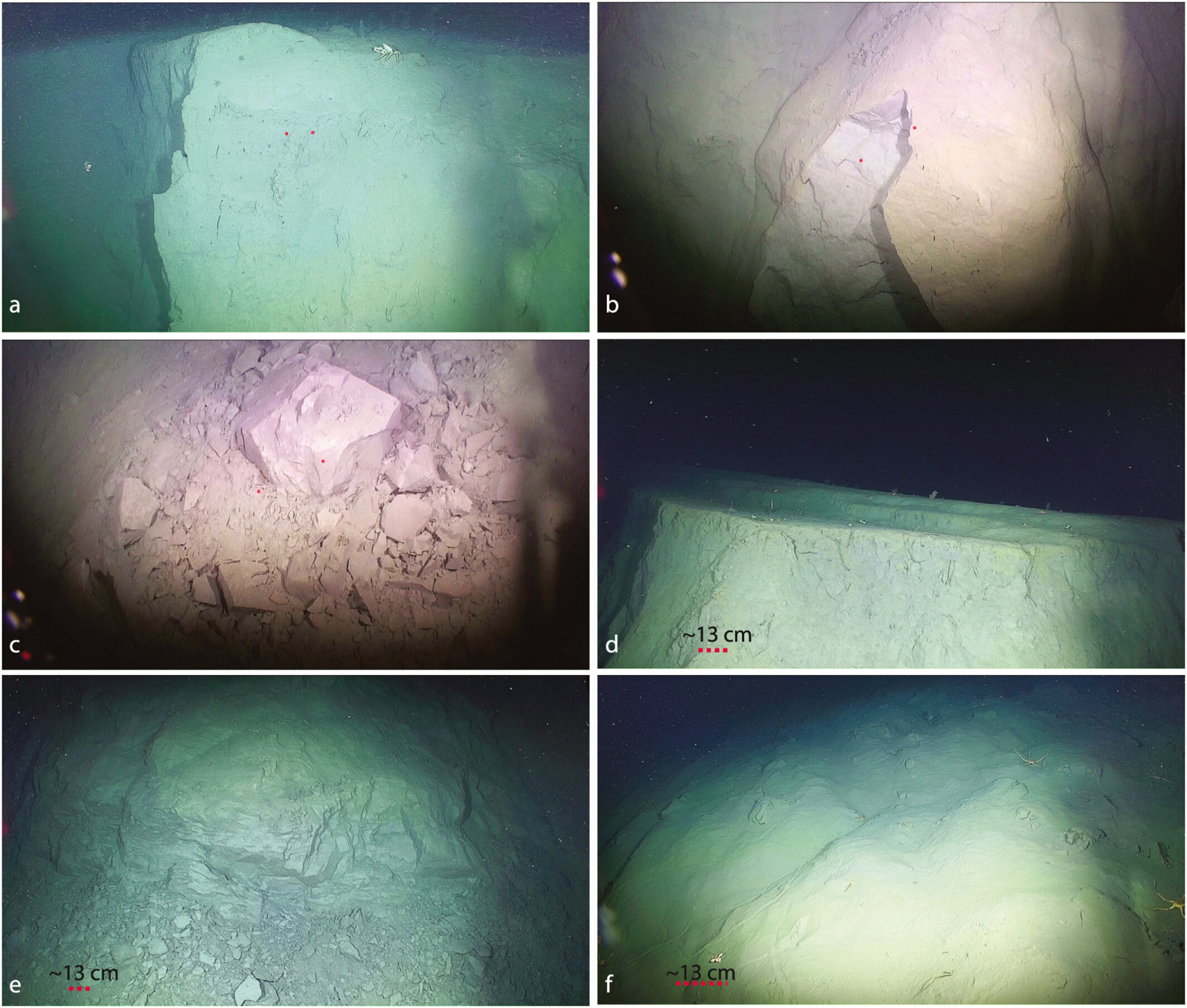
Isotopic studies confirmed these observations: the ice isn’t from the Pleistocene era. Instead, it originates from groundwater with a unique chemical profile different from seawater or glacial ice, marking an entirely new process.
An Unreliable Underwater Terrain
This revelation goes beyond geological intrigue; it has significant implications for any structures built on or near this seabed. Pipelines, communication networks, and other subsea facilities in the Arctic rely on permafrost assessments designed to identify ancient, stable permafrost. These traditional surveys overlook the near-seafloor ice forms revealed by Paull’s team.
“Our discovery means existing methods to detect submarine permafrost do not identify the recently found near-surface ice types now known to be widespread in the Arctic,” Paull emphasized. “We must reassess where permafrost exists beneath the Arctic continental shelf.” An actively changing seafloor, forming mounds and collapsing into sinkholes within decades, poses different engineering challenges than previously assumed slow, uniform degradation.
Moreover, these processes are not confined to the Beaufort Sea. They require only bottom-water temperatures below zero Celsius and the presence of ancient permafrost at depth—conditions common across the Arctic shelf.
Documenting a Rapidly Changing Seafloor
Since 2003, MBARI has participated in international efforts exploring this region, gaining increased access as retreating Arctic sea ice opened new navigation paths. Their surveys reveal a seafloor undergoing swift changes—new craters emerge, mounds develop where the bottom was once flat, and the underwater landscape continuously reshapes itself.
The 2022 team, including scientists from the Korea Institute of Geoscience and Mineral Resources, the Geological Survey of Canada, and the U.S. Naval Research Laboratory, conducted visual inspections that no prior expeditions had accomplished at such detail in this area.
The ice features inside these craters confirmed the team’s suspicions: this wasn’t prehistoric ice, but ice forming well within recent human history.
Changing the Fundamentals
“We once thought all underwater permafrost was relics from previous ice ages, but we now understand that submarine Arctic permafrost is actively developing and disintegrating even today,” Paull commented.
This updated perspective holds weight for estimating methane emissions, building infrastructure, and forecasting the Arctic shelf’s response to warming. If current permafrost maps exclude this newly discovered near-seafloor ice, their baseline data is incomplete.
This research received support from the David and Lucile Packard Foundation, the Korean Ministry of Ocean and Fisheries, the Geological Survey of Canada, and the U.S. Naval Research Laboratory.
- Categories:
- Science

0 comments
Sign in to Comment