
Researchers recently published a compelling study in Monthly Notices of the Royal Astronomical Society that highlights the most promising exoplanets for harboring alien life. By analyzing key planetary traits, astronomers have narrowed down thousands of known exoplanets to a select group with the highest potential for life beyond our solar system. This advancement is poised to reshape future space missions by focusing efforts on the most viable prospects for biosignatures. The study offers an in-depth look at what defines planetary habitability and strategies for detecting extraterrestrial organisms.
Identifying Prime Candidates for Extraterrestrial Life
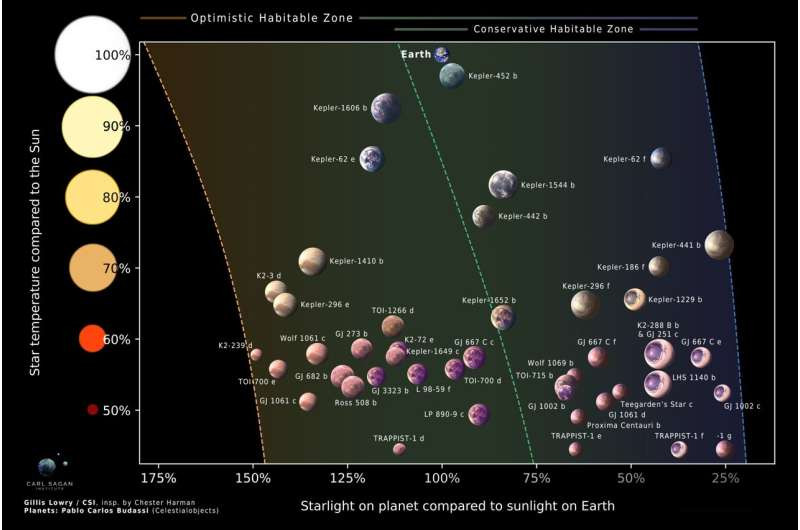
The team evaluated numerous factors influencing a planet’s potential to support life. Crucial elements included the planet’s position within the habitable zone, its orbital shape, and its energy absorption levels. Special attention was given to planets located near the habitable zone’s inner and outer edges, where conditions may sustain liquid water. The investigation also considered planets with eccentric orbits that, despite their irregular paths, might still maintain environments suitable for life.
Graduate student Gillis Lowry from San Francisco State University, who contributed to the research, noted,

“While it’s hard to say what makes something more likely to have life, identifying where to look is the first key step—so the goal of our project was to say ‘here are the best targets for observation.'”
The study, featured in Monthly Notices of the Royal Astronomical Society, underscores how factors like a planet’s energy equilibrium and its distance from its host star are critical to predicting life’s possible emergence. By concentrating observations on these select planets, astronomers aim to streamline the quest for extraterrestrial organisms and unlock transformative insights.
Defining What Makes an Exoplanet Habitable
This investigation not only pinpoints where potential life could exist but also explores how habitability evolves. It examines how energy input impacts planets near habitable zone thresholds, revealing that both excess and deficiency in energy can render a planet inhospitable. Grasping these dynamics is vital for guiding future exploration campaigns.
“Observing these planets can help us understand when habitability is lost, how much energy is too much, and which planets remain habitable—or maybe never were,” said Lowry.
Pinpointing these candidates allows scientists to better comprehend the fundamental environmental criteria required to sustain life.
James Webb Space Telescope’s Vital Contribution
The research highlights the crucial role of state-of-the-art instruments like the James Webb Space Telescope (JWST), capable of examining exoplanet atmospheres and determining their chemical makeup. JWST and similar observatories are set to greatly enhance our ability to detect life-supporting conditions or biological markers by providing unprecedented observational detail.
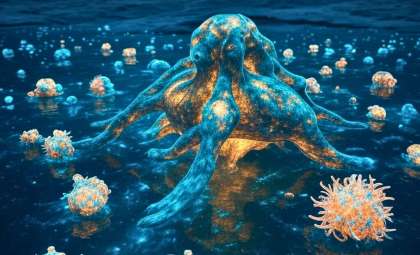
“As Project Hail Mary so beautifully illustrates, life might be much more versatile than we currently imagine, so figuring out which of the 6,000 known exoplanets would be most likely to host extraterrestrials such as Astrophage and Taumoeba—or Rocky—could prove critical, and not just to Ryan Gosling,” Professor Kaltenegger said.
Referencing Project Hail Mary, a renowned science fiction novel, this statement emphasizes the need for bold imagination alongside scientific rigor in our pursuit of alien life.
Advancing Toward Intergalactic Exploration
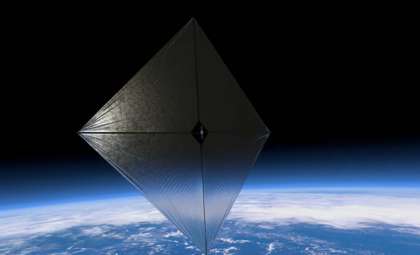
Beyond identifying promising life-hosting worlds, these findings offer a roadmap for future cosmic voyages. Should humanity develop the technology to journey to distant exoplanets, this research will provide essential guidance for mission planning, marking a crucial step toward true interstellar exploration.
“We identified the targets that are most observable with the James Webb Space Telescope (JWST) and other telescopes,” said Professor Kaltenegger. “Our paper reveals where you should travel to find life if we ever built a ‘Hail Mary’ spacecraft.”
This targeted approach promises to optimize resource use during space missions, ensuring that efforts focus on planets with the greatest potential for groundbreaking discoveries.
- Categories:
- Extraterrestrial life













0 comments
Sign in to Comment