
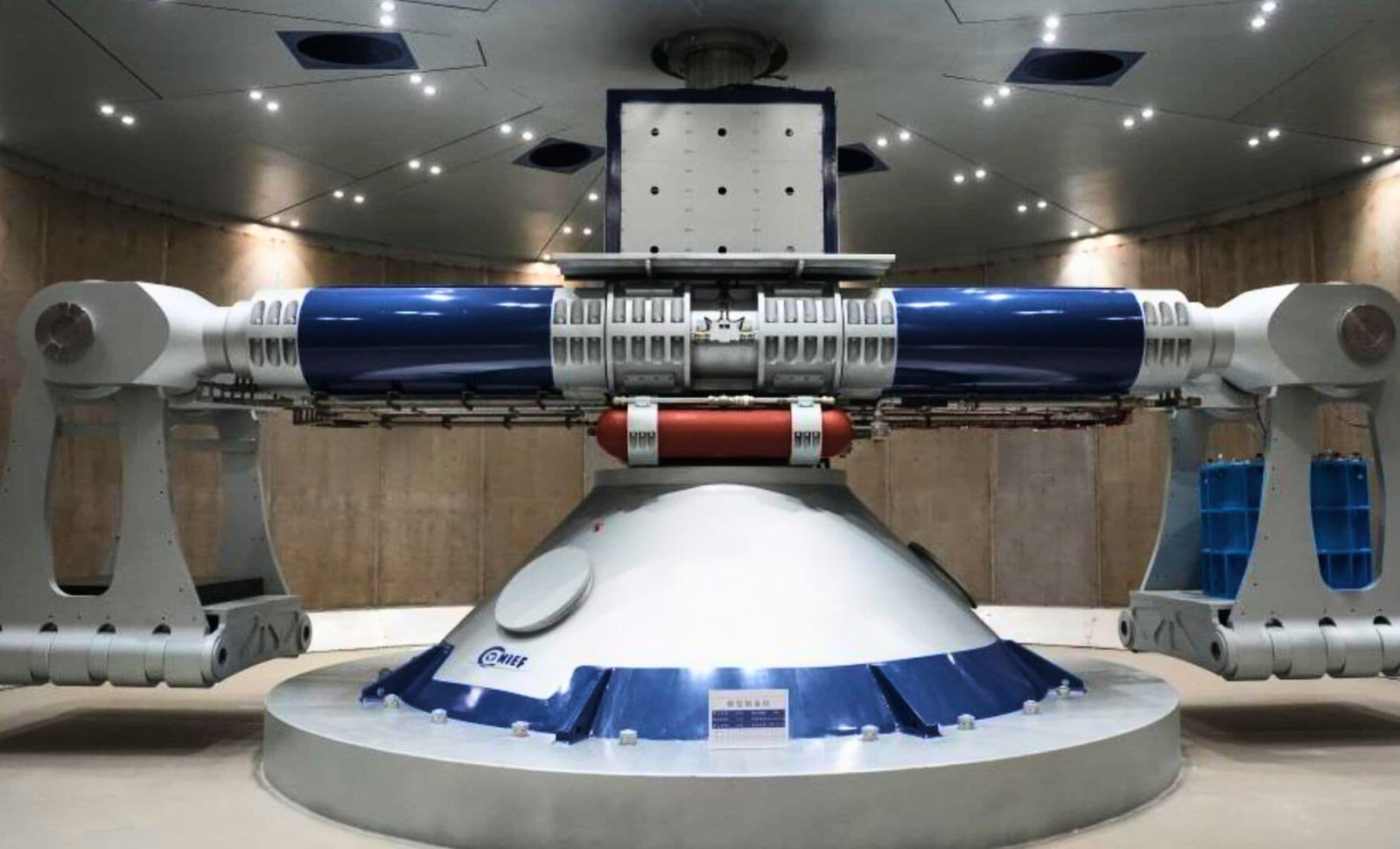
Buried beneath Hangzhou's surface, engineers have recently finalized the assembly of a colossal spinning apparatus. This machine operates inside a circular subterranean chamber spanning 230 square meters, located 15 meters underground to protect the local environment from the intense vibrations generated during its operation.
Functioning like a giant-scale spin system, the device rapidly rotates heavy experimental replicas on a massive arm stretching 6.4 meters in radius. Scientists employ this method to impose extreme mechanical stresses on materials, allowing them to systematically examine wear and deterioration processes under controlled conditions.
By spinning physical scale models at tremendous speeds, researchers accelerate natural phenomena that typically unfold across centuries, effectively condensing these processes into just a few days.

Breaking Records with Unprecedented Centrifugal Force
Known as CHIEF1900, this centrifuge is housed within Zhejiang University's Centrifugal Hypergravity and Interdisciplinary Experiment Facility. Developed by the Shanghai Electric Nuclear Power Group, it produces a staggering 1,900 g-tonnes of force. For comparison, a typical domestic washing machine generates roughly 2g of force during its spin cycle. CHIEF1900 subjects samples weighing several tonnes to forces thousands of times stronger than Earth’s gravity.
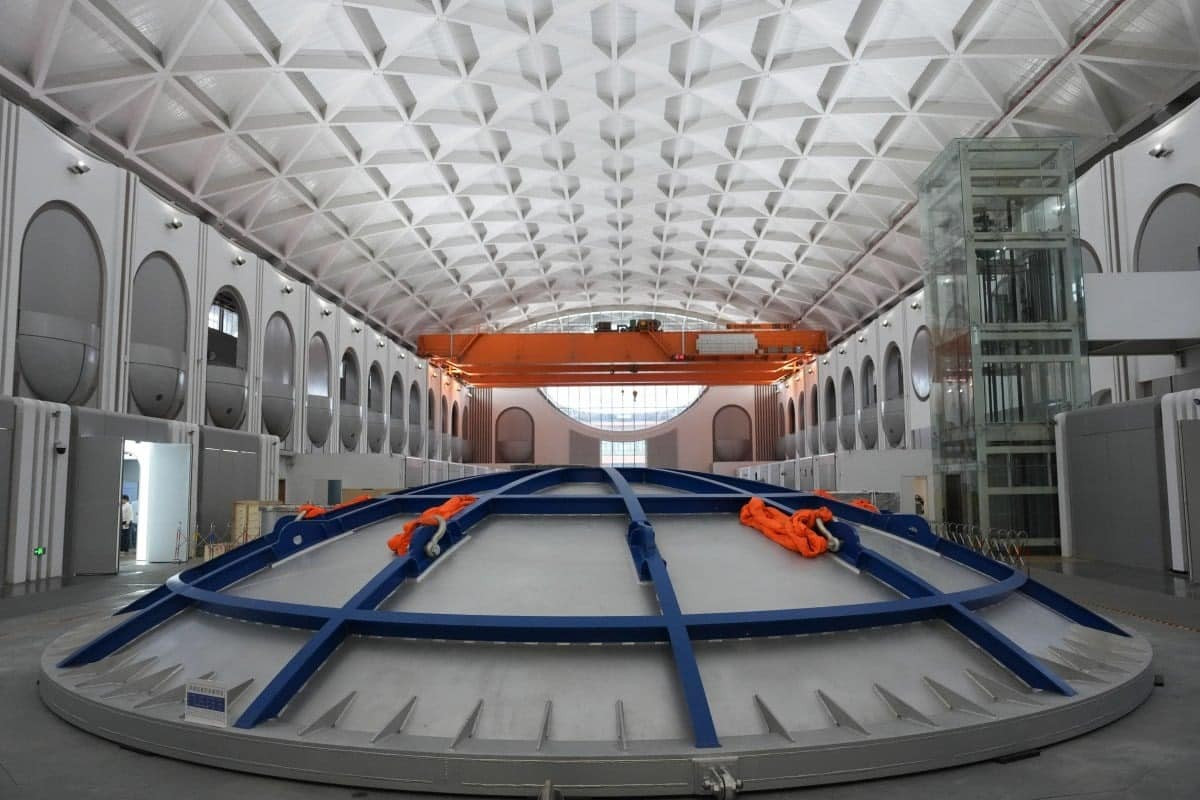
This advanced centrifuge outperforms the previous global leader, a 1,200 g-tonnes machine run by the US Army Corps of Engineers in Vicksburg, Mississippi, and also supersedes the earlier CHIEF1300 model at the same Zhejiang facility, as reported by Interesting Engineering.
To manage the enormous heat produced from intense friction and rapid mechanical movement at 1,900 g-tonnes, engineers implemented a vacuum cooling system combined with high-efficiency air ventilation. This cooling solution employs the largest flange diameter ever crafted for such applications, facilitating effective vacuum pumping alongside glacier-cold coolant circulation.
“CHIEF1300 was installed underground with vacuum and wall-cooling solutions to reduce air resistance and thermal stress,” explained Ling Daosheng, chief engineer at Zhejiang University’s facility.
Identical cooling strategies were adapted for the new, more powerful centrifuge. As the 6.4-meter arm accelerates, centrifugal forces soar, demanding precise temperature regulation to maintain operational stability.
Accelerating Natural Phenomena via Hypergravity Environments
The CHIEF1900 is primarily used to compress time and spatial scales in laboratory settings. For instance, placing a three-meter dam model inside the centrifuge at 100g replicates the internal stresses of a 300-meter full-scale dam. This scaling technique helps engineers identify potential failure points in large infrastructure like high-head hydroelectric dams and offshore platforms before actual construction begins.
In addition to engineering applications, the machine accelerates slow geological shifts. Researchers plan to study how high-speed rail track vibrations propagate and affect underground stability by simulating these conditions within the centrifuge. The high centrifugal speeds allow precise identification of ground failure thresholds caused by continual train vibrations.
Traditionally, monitoring the movement of contaminants in deep soil into groundwater requires decades or even millennia of natural observation. Within the spinning chamber, this migration is condensed into just 3.65 days.
Chen Yunmin, chief scientist at Zhejiang University, noted that these cutting-edge experiments can simulate environments spanning milliseconds to tens of thousands of years under various temperature extremes. This technique allows researchers to obtain empirical data rather than relying solely on simulations.
Advancing Research Infrastructure in Hangzhou
The creation of CHIEF1900 necessitated building many custom components from the ground up. The faster operational speeds combined with a large mechanical arm pushed conventional industrial materials beyond their usual limits.
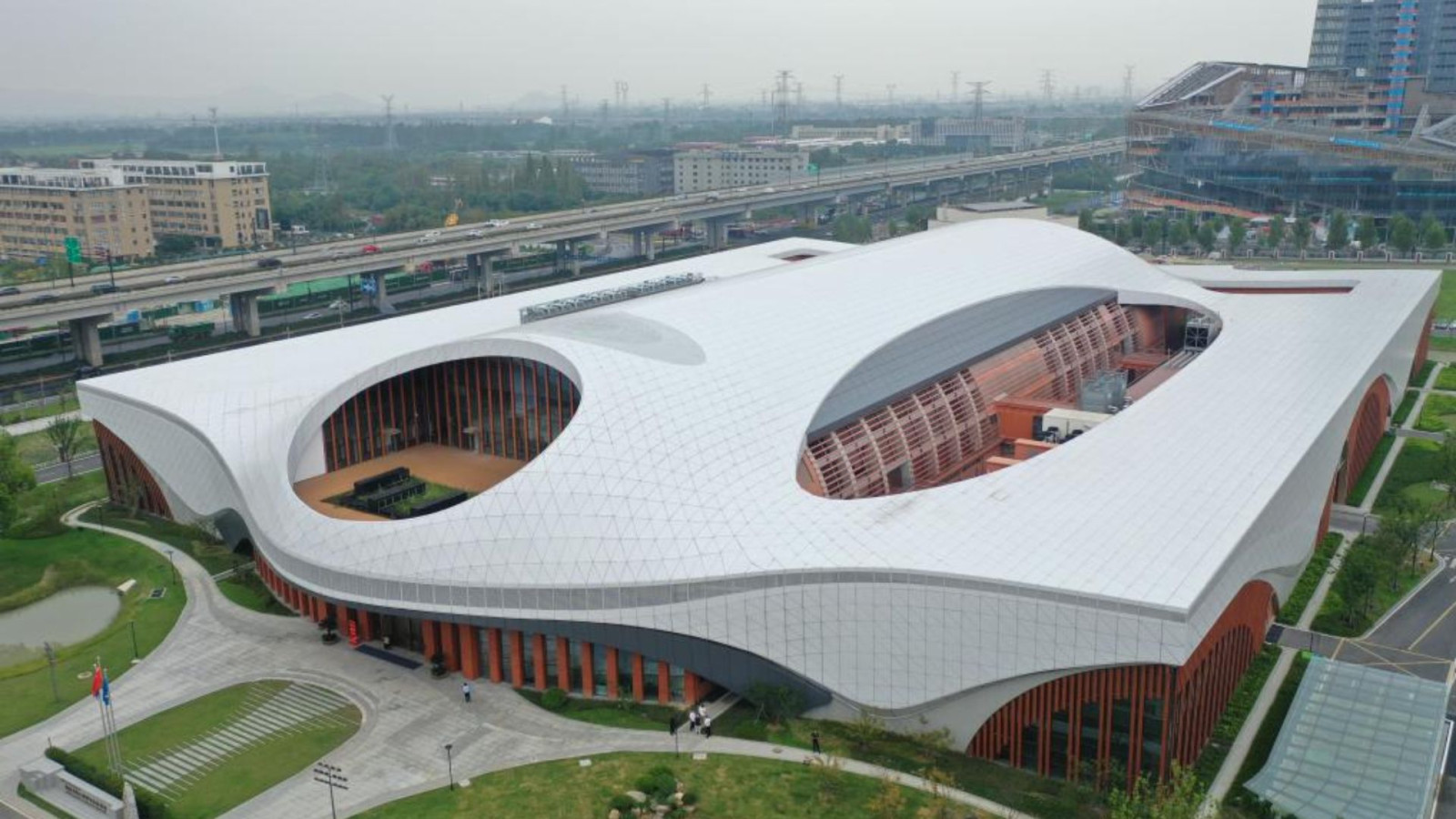
Situated underground, the facility represents a $285 million investment in physical sciences infrastructure. Approved by the National Development and Reform Commission in 2021, the Centrifugal Hypergravity and Interdisciplinary Experiment Facility contains six specialized labs focusing on areas including slope stabilization, dam engineering, seismic geotechnical studies, deep-sea exploration, and geological dynamics.
The facility is planned to operate as an international research hub, with scientists worldwide able to schedule time on CHIEF1900 similar to astronomers reserving telescope time. The complex encompasses three primary units and 18 in-flight experimental devices that support the research cabins, with two more units currently under construction.
Previous trials with the CHIEF1300 successfully simulated major earthquakes for testing hydropower dam foundations and replicated pressures found 2,000 meters underwater to assess methane hydrate extraction safety. The facility also contributed to developing metal alloys with enhanced strength and minimal defects.
“This equipment opens up new possibilities for discovering unknown phenomena or theories,” stated Chen Yunmin.
- Categories:
- Science




0 comments
Sign in to Comment