
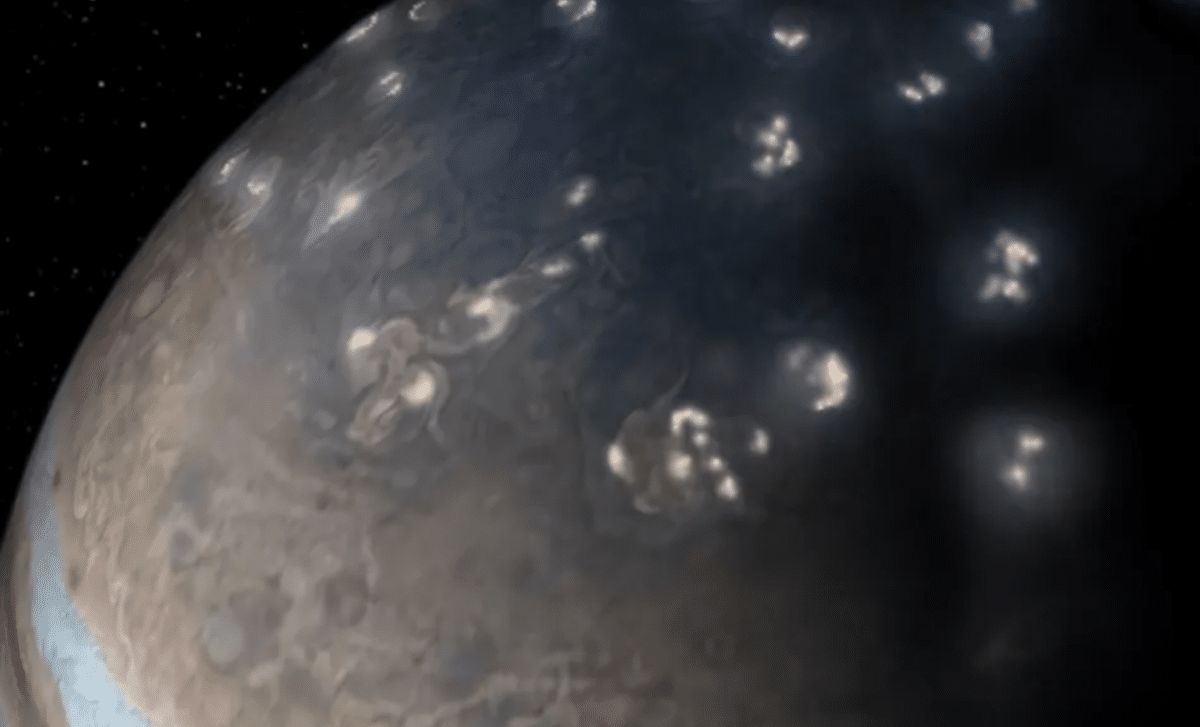
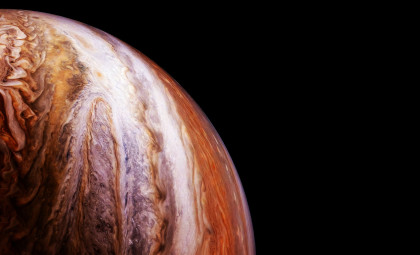
Jupiter's lightning bolts unleash astonishing energy levels, reaching intensities up to one million times stronger than those found on Earth. This remarkable revelation, derived from data gathered by NASA’s Juno mission, offers valuable understanding of the intense atmospheric dynamics of the gas giant. By studying the radio signals generated by lightning, researchers have gained fresh perspectives on the processes driving these magnificent electric discharges, enhancing knowledge of Jupiter’s weather systems and atmospheric makeup.
Delving into Jupiter’s Intense Electrical Storms
Lightning activity on Jupiter has intrigued scientists for years, but recent investigations have uncovered levels of power far beyond previous expectations. Analysis from the Juno spacecraft indicates that Jupiter’s lightning might pack a punch up to one million times greater than Earth’s most severe electrical storms. This forces a rethink about the origins and magnitude of lightning phenomena across different worlds.
Since commencing its orbit around Jupiter in 2016, Juno has been instrumental in capturing the radio waves emitted by lightning, allowing a detailed assessment of their true strength. Earlier studies primarily observed lightning during Juno’s close approaches by detecting visual flashes on the night side of the planet, often obscured by dense clouds. By focusing on the radio emissions, researchers achieved a more accurate and comprehensive capture of lightning strikes.

“It was so gratifying to work through the statistics and see that with our Juno data, we were really capturing the majority of lightning pulses at radio wavelengths,” said Michael Wong, the lead author of the study. “Before, there was some question about whether we might be catching only the strongest pulses and missing weaker ones.”
Investigating Jupiter’s 'Hidden Superstorms'
Central to this research is the identification of “stealth superstorms” – long-lasting, smaller-scale storms on Jupiter that generate significant lightning activity without the size of the giant ovals. These storms have been critical to pinpointing and characterizing lightning sources, as their relative isolation simplifies observation.
Jupiter’s storms differ drastically from Earth’s: they are vast in scale and can persist for centuries, with the largest reaching heights beyond 62 miles (100 kilometers), far surpassing Earth’s typical thunderstorm altitudes of around 6.2 miles (10 kilometers). This dramatic disparity in storm elevation likely contributes to the extraordinary power of Jovian lightning.
The paper, featured in the journal AGU Advances, proposes that Jupiter’s lightning owes its greater strength and frequency to the planet’s distinctive atmospheric makeup. The hydrogen-dominated air on Jupiter behaves differently than Earth's nitrogen-rich atmosphere, potentially amplifying the electric discharges seen on the giant planet.
“Could the key difference be hydrogen versus nitrogen atmospheres, or could it be that the storms are taller on Jupiter and so there’s greater distances involved?” Wong speculated. “Or could it be that greater energy is available because with moist convection on Jupiter, you have a bigger buildup of heat needed before you can generate the storm to create lightning?”
- Categories:
- Astronomy






0 comments
Sign in to Comment