
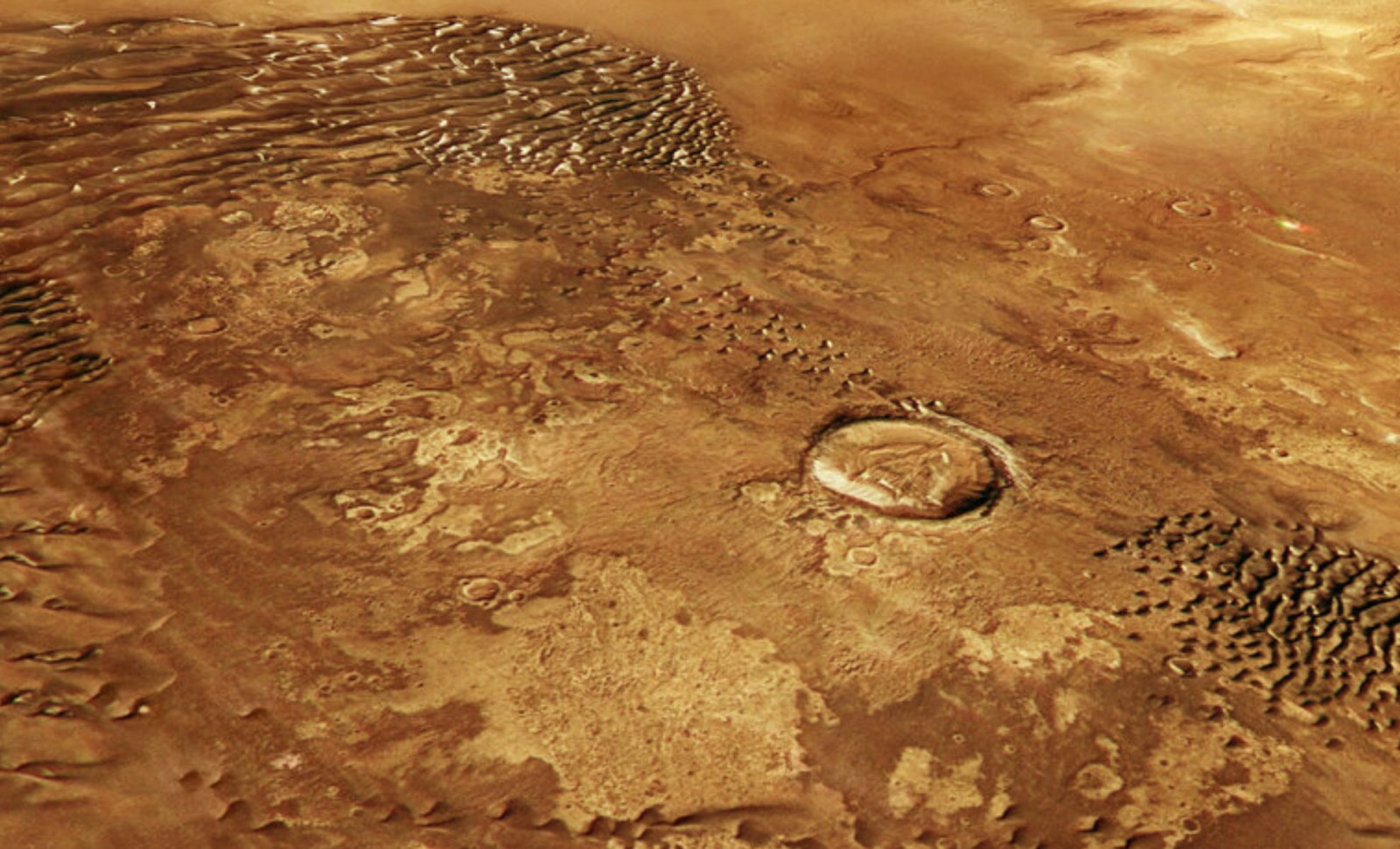
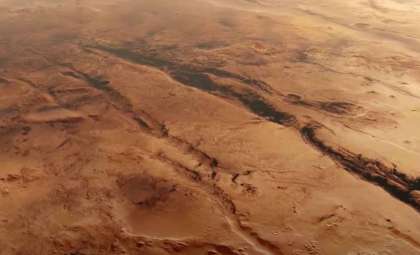
The European Space Agency’s (ESA) Mars Express spacecraft has captured breathtaking visuals of dark, rippling dune formations within the Kaiser Crater on Mars. These dunes rise to impressive heights of around 100 meters above the surrounding terrain and appear almost metallic from orbit due to frost sparkling along parts of their surfaces.
Mars offers more than just dusty plains and impact marks—its landscape bears evidence of wind, ice, and past environmental shifts. Owing to its thin atmosphere and limited geological activity, many ancient landforms remain largely unchanged, preserving Mars' history for billions of years.
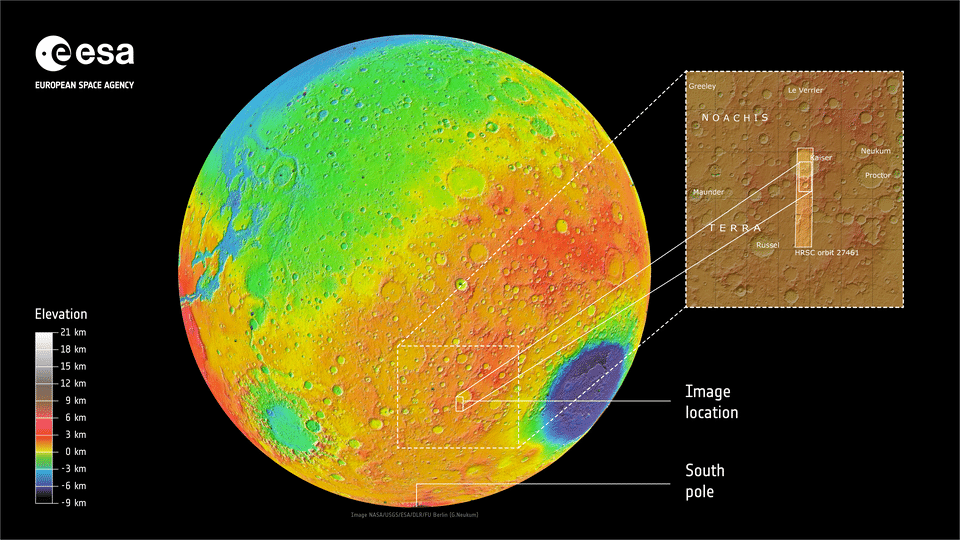
Located in the planet’s southern highlands, Kaiser Crater spans approximately 207 kilometers (129 miles) and holds a diverse mix of ancient impact scars, sand dunes, and features suggesting a wetter Martian era in its distant past.

Recent Mars Express imagery highlights an extensive dune field in the crater’s southeast area. Beyond their visual allure, these formations provide valuable clues about how Martian wind patterns have sculpted the landscape over ages.
Immense Dunes Formed by Mars’ Persistent Winds
The striking, wave-like structures found in Kaiser Crater predominantly consist of barchan dunes. These crescent-shaped dunes develop as winds transport sand up smoother slopes, depositing it down steeper edges, causing the dune’s tips to curve in the wind’s direction, as NASA outlines.
Barchan dunes typically emerge where sand supply is limited and the surface underneath is firm—conditions met on Mars. This formation showcases how even a thin atmosphere can gradually mold the planetary surface.
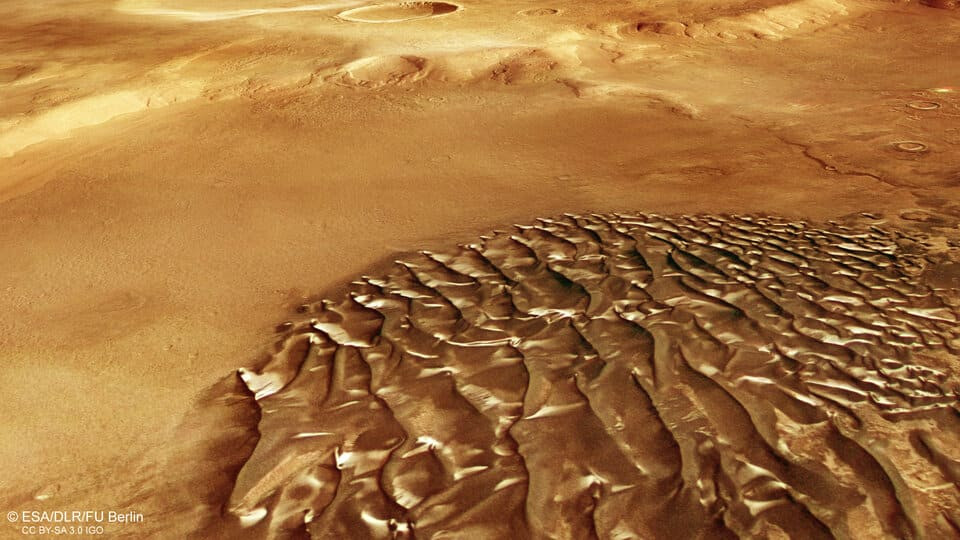
Within Kaiser Crater, some dunes stand isolated, while others cluster into fields stretching for several kilometers. Their elevations are notable, with certain dunes reaching roughly 100 meters (328 feet) above the crater floor.
From orbit, these dune formations produce a dark, rhythmic pattern that contrasts against a landscape peppered with older craters, giving this Martian region a unique visual character.
What Gives the Dunes Their Metallic Shine?
The most captivating aspect of these dunes is their unusual lustrous appearance. Mars Express images depict the dark dunes resembling sleek, metallic waves undulating across the crater surface.
According to a statement from the ESA, this effect arises due to bright frost deposits on the south-facing slopes of the dunes. The frost reflects sunlight uniquely compared to the dark sand, producing the striking metallic look visible from space.
Despite appearances, the dunes are composed of typical sand, with their metallic gleam resulting from a combination of dark sediment, sunlight, and frozen coatings.
This interplay of natural elements contributes to Mars’ reputation for harboring surprising and diverse terrains. Ordinary forces like wind and frost can create extraordinary appearances when viewed from orbit.
Evidence of Water in Mars’ Ancient Crater
The expansive dune field is only one feature within Kaiser Crater’s complex environment. Additional geological formations in the vicinity provide insights into Mars’ watery past.
“There are also signs of water-related activity here. Martian winds have stripped away the upper layers of the planet’s surface in places, revealing light-toned clay rock that likely formed in the presence of water,” the agency explained.
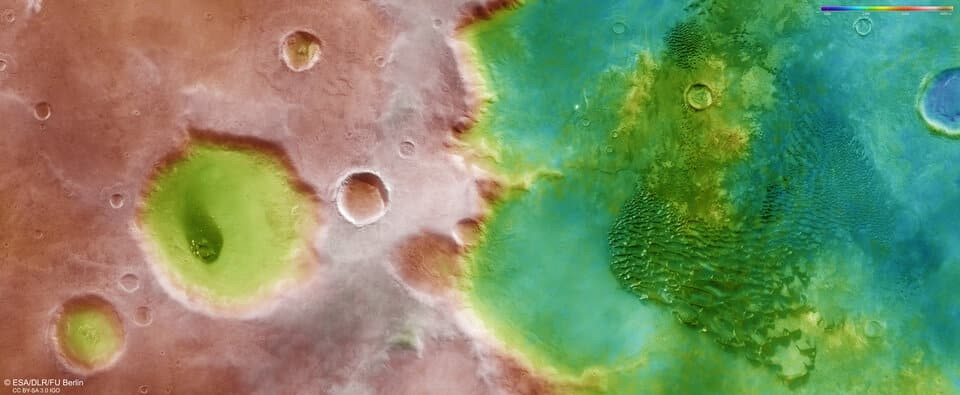
The landscape also features small gullies and narrow channels along the crater walls, many of which probably originated from dry landslides as loose material descended steep slopes. However, some older gullies might have been shaped by melting ice or subsurface water, indicating more complex geological processes.
These newly released Mars Express images provide a detailed snapshot of a terrain where wind-sculpted dunes, ancient impact structures, and possible water-related features coexist. The metallic illusion of these dunes highlights the fascinating, varied nature of the Martian surface.
- Categories:
- Science


0 comments
Sign in to Comment