
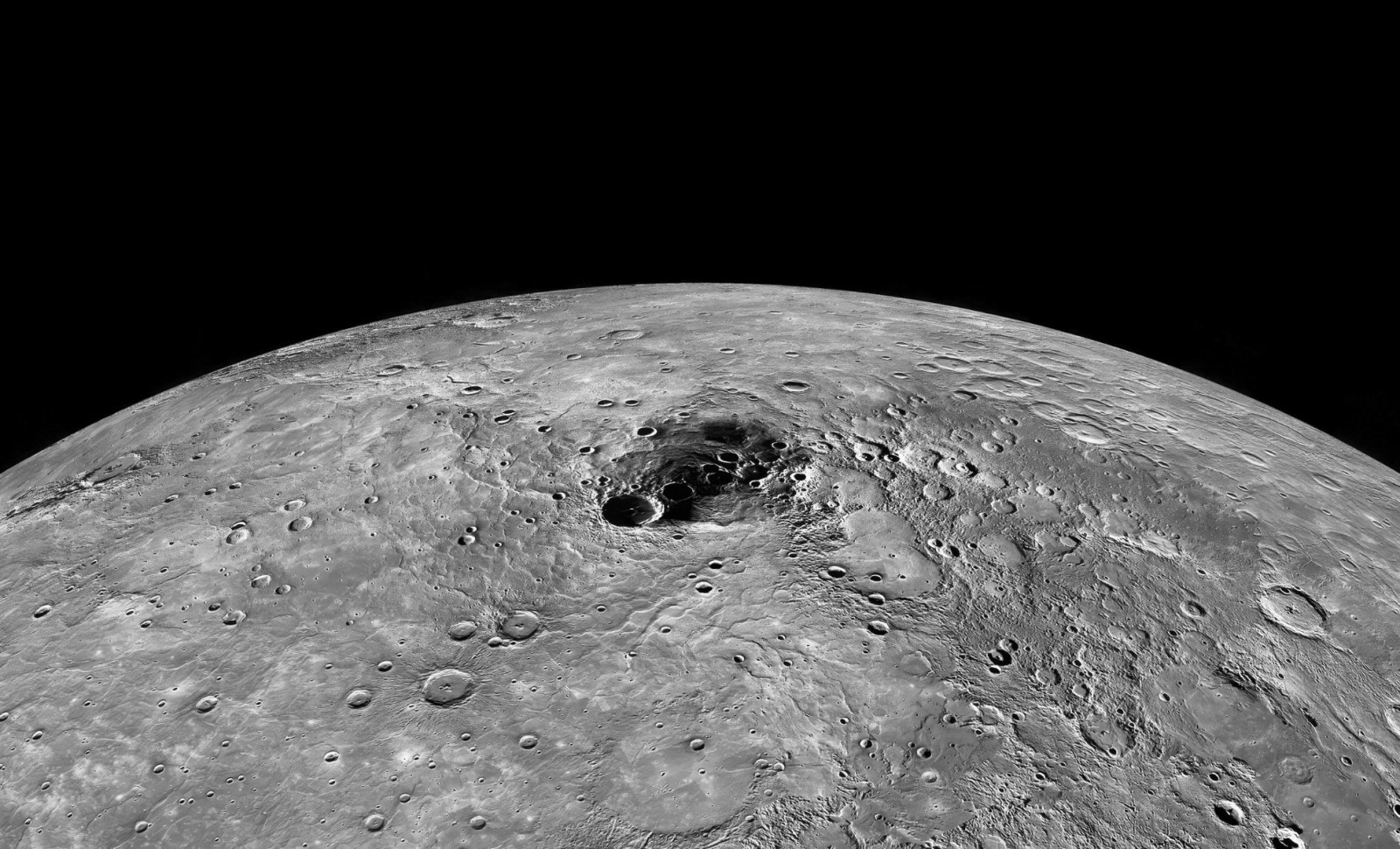
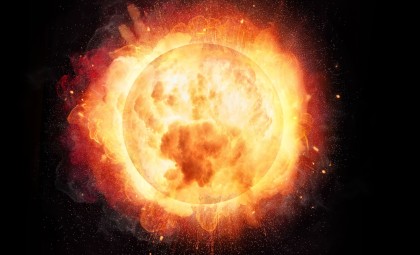
New research published in the Journal of Geophysical Research: Planets proposes that Mercury's polar ice deposits may have originated within a single Mercurian day following a colossal comet or asteroid impact. The event is believed to have generated a transient, water-rich atmosphere that spread vapor globally, with some becoming trapped in the planet’s shadowed polar regions.
For years, scientists have been intrigued by the presence of ice on Mercury, despite its proximity to the Sun. The planet experiences surface temperatures that can soar beyond 430°C and possesses only a tenuous exosphere, conditions seemingly hostile to water’s survival.
Nevertheless, radar and space probe data have consistently detected bright, reflective zones near Mercury’s poles. This study suggests that the impact responsible for the 97-kilometer-wide Hokusai crater may shed light on how water reached the permanently shadowed craters where temperatures remain sufficiently cold for ice to endure over geological timescales.

Exploring Mercury’s Vapor-Forming Impact
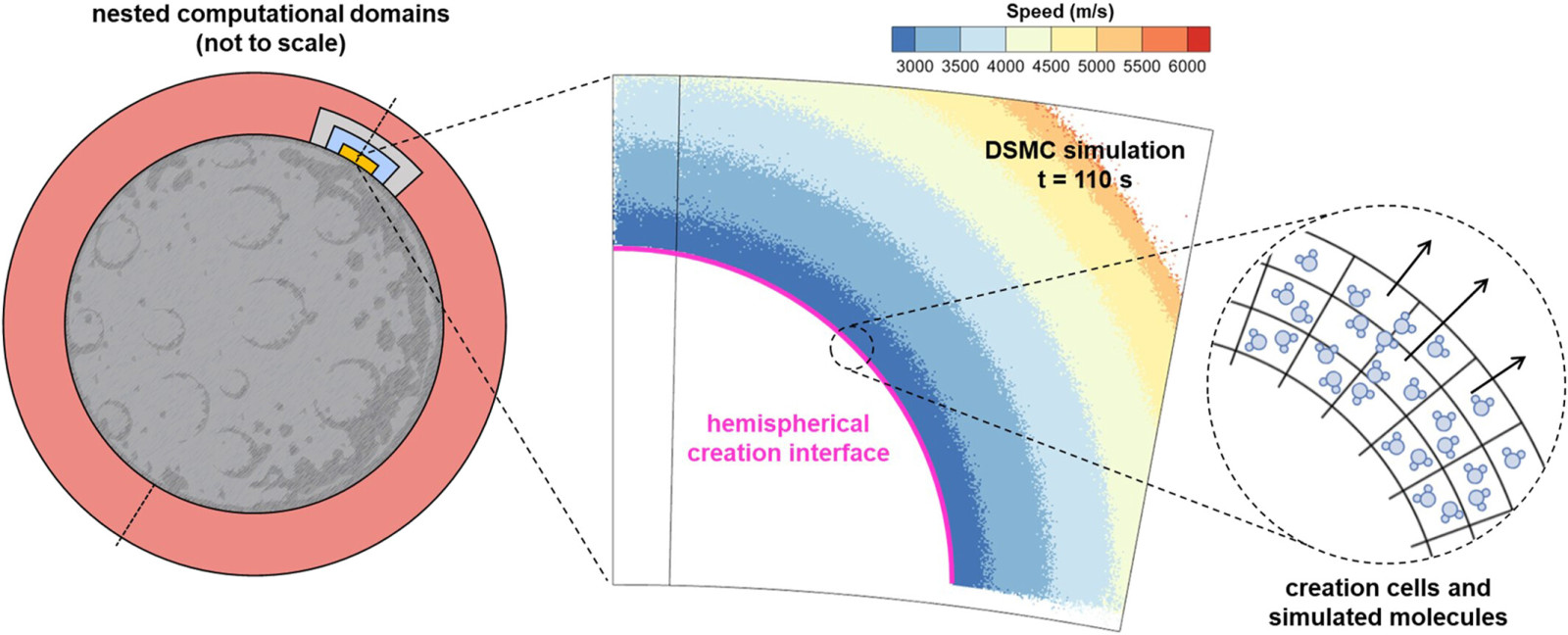
Researchers modeled the aftermath of an impact by an approximately 17-kilometer-wide comet or asteroid moving at 30 kilometers per second. The simulations incorporated the latest maps of Mercury’s permanently shadowed areas and refined surface temperature data.
Two scenarios were compared: one in which water released by the impact directly entered Mercury’s thin exosphere, and another where the collision generated a dense, short-lived atmosphere rich in water vapor. The latter scenario yielded markedly different outcomes.
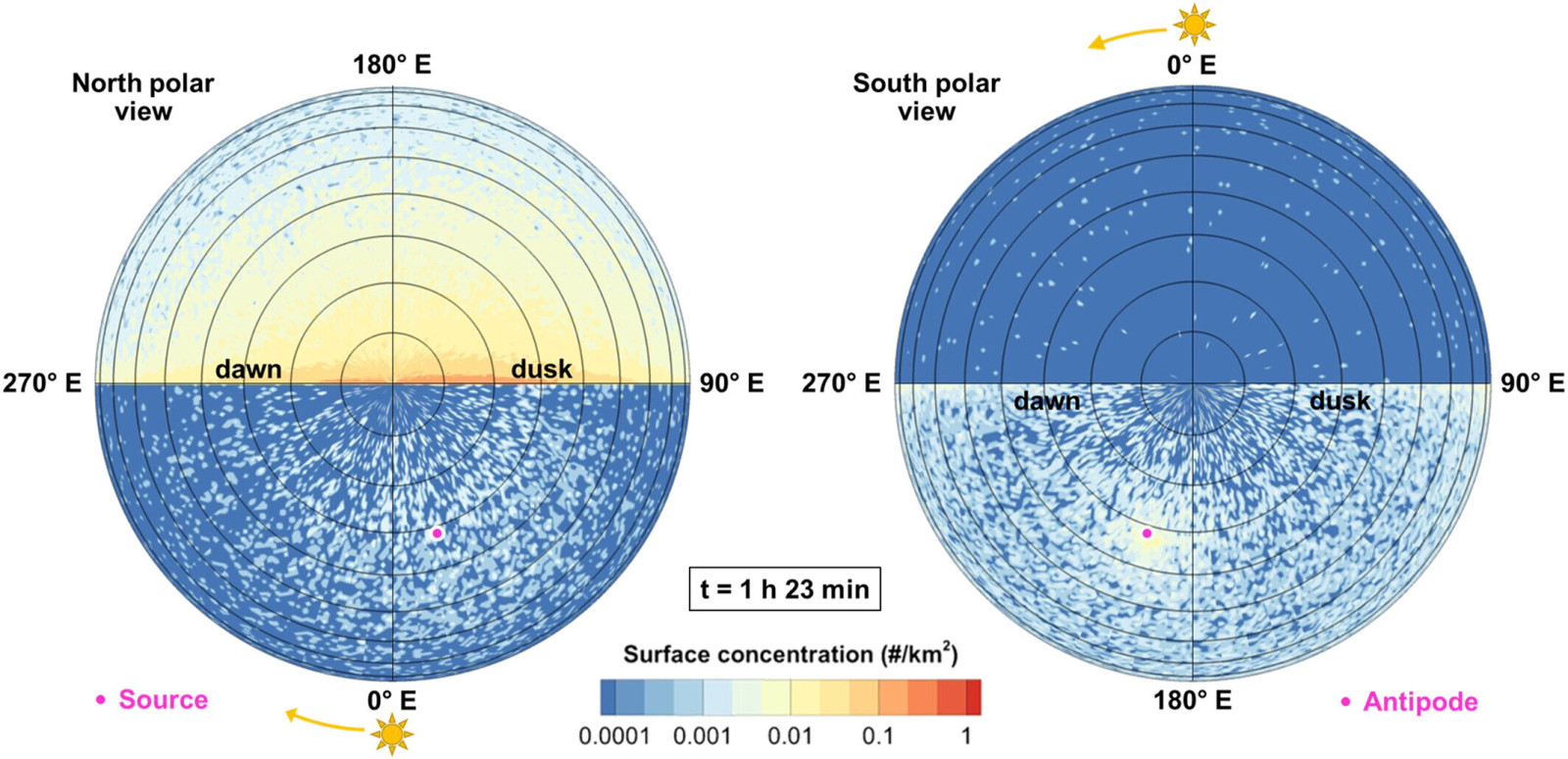
The study revealed that within an hour of the impact, a vapor cloud had encircled the planet.This water-rich blanket briefly formed an atmosphere, wherein sunlight rapidly split some water molecules through photolysis, yet a considerable portion survived and migrated toward the cold polar shadows.
The team also recognized the role of atmospheric self-shielding, a process where thick water vapor reduces solar radiation penetration, safeguarding other water molecules from destruction. According to the paper:
“The large amount of water released in a Hokusai-scale impact means that this self-shielding effect has a strong influence; by the end of one solar day, ∼96% of the water vapor released in the collisionless, optically thin simulation was photodestroyed, compared to ∼46% in the impact-generated atmosphere simulation.”
Ice Formation Simulations Suggest Vast Quantities Delivered
Results indicated that an impact on the scale of Hokusai could deposit approximately 2.3 × 10¹³ kilograms of water ice onto Mercury’s poles. This figure aligns with the minimal estimates for the planet’s existing ice volume.
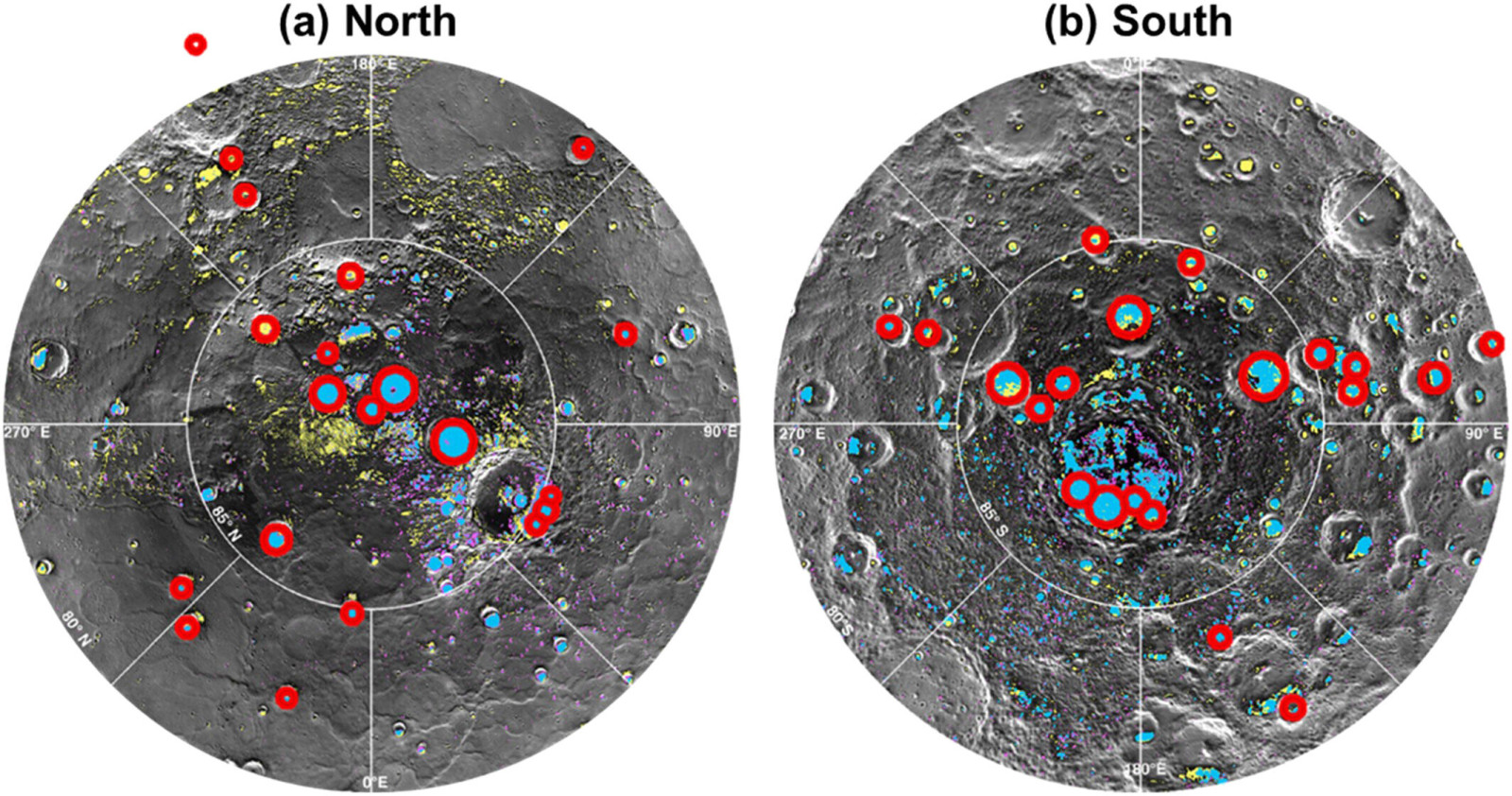
The models also produced a more even distribution of ice between Mercury’s northern and southern poles. In the denser atmosphere scenario, vapor persisted long enough to allow northern hemisphere water vapor to travel to southern cold traps.
Atmospheric self-shielding notably increased ice retention; with a thin atmosphere, only 3.4% of retained vapor was trapped in cold zones. In the dense atmosphere model, the retention rose to 22.4%.
The findings bolster the theory that Mercury’s ice arrived primarily from a brief, violent event as opposed to slow buildup over billions of years. Remarkably, these processes unfolded within a single Mercurian day, equal to 176 Earth days.
Ice Layers Produced Were Thinner Than Expected
Despite generating large quantities of ice in simulations, the predicted thickness fell short of the layers scientists observe on Mercury today.
The modeled ice deposits maxed out at around 37 centimeters, while radar data points to deposits several meters deep.
Consequently, researchers propose that the original impactor might have been larger and slower-moving than in the simulation, as a slower object would better preserve water before solar radiation breaks it down.
The study also notes certain limitations: the models focus solely on water and exclude other volatiles released during the impact. Additionally, longer-term effects like space weathering and surface gardening were not modeled.
Data from the ongoing BepiColombo mission is expected to provide further insight into Mercury’s hidden ice layers and their extent.
- Categories:
- Science





0 comments
Sign in to Comment