
NASA’s Psyche spacecraft recently executed a crucial gravity assist maneuver at Mars, advancing its journey toward the asteroid Psyche scheduled for arrival in 2029. This flyby also yielded extraordinary new images of the Red Planet from angles seldom seen.
The event was not just about modifying Psyche's flight path; it also allowed scientists to evaluate onboard instruments and acquire valuable Mars observations. During its close approach, the probe collected thousands of images providing fresh perspectives of the planet.
Mars Propels Psyche Closer to Its Destination
On May 15, Psyche skimmed the Martian atmosphere at a distance of just 4,609 kilometers (2,864 miles). This precision flyby utilized Mars’ gravitational force as a natural accelerator, altering Psyche’s speed and orbital path effectively.

NASA’s Jet Propulsion Laboratory noted the maneuver increased Psyche’s velocity by roughly 1,000 miles per hour and shifted its orbital plane by about one degree relative to the Sun.
“We’ve confirmed that Mars gave the spacecraft a 1,000 mile-per-hour boost and shifted its orbital plane by about 1 degree relative to the Sun. We are now on course for arrival at the asteroid Psyche in summer 2029,” said Don Han, the mission’s navigation lead at NASA’s Jet Propulsion Laboratory.
This maneuver marks a significant step for Psyche, which will travel approximately 3.5 billion kilometers (2.2 billion miles) to reach its target. The gravity assist optimizes the probe’s route for fuel efficiency and timing.
Fresh Perspectives of the Red Planet
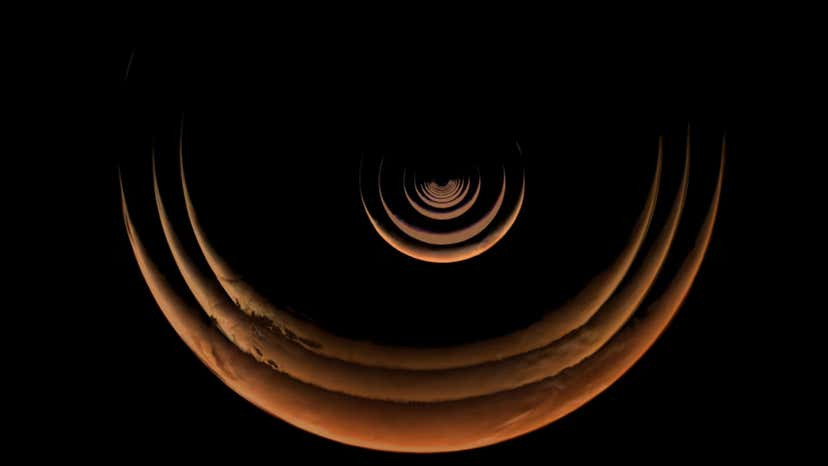
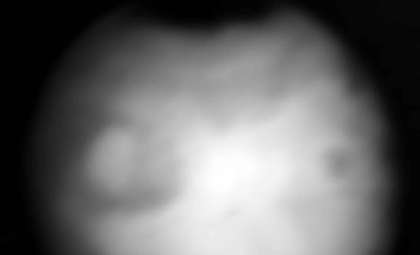
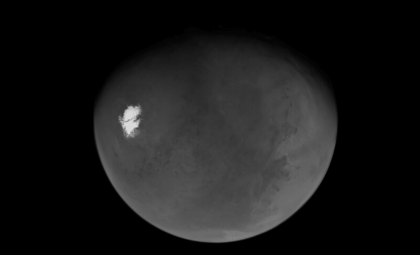
A standout feature of the Mars flyby was the imaging performed as Psyche approached from the planet’s night side, allowing the spacecraft to capture Mars as a crescent before it brightened to near full illumination.
With all instruments activated, the probe amassed thousands of photographs during the close pass. These data helped validate instrument functionality while providing valuable scientific insights.
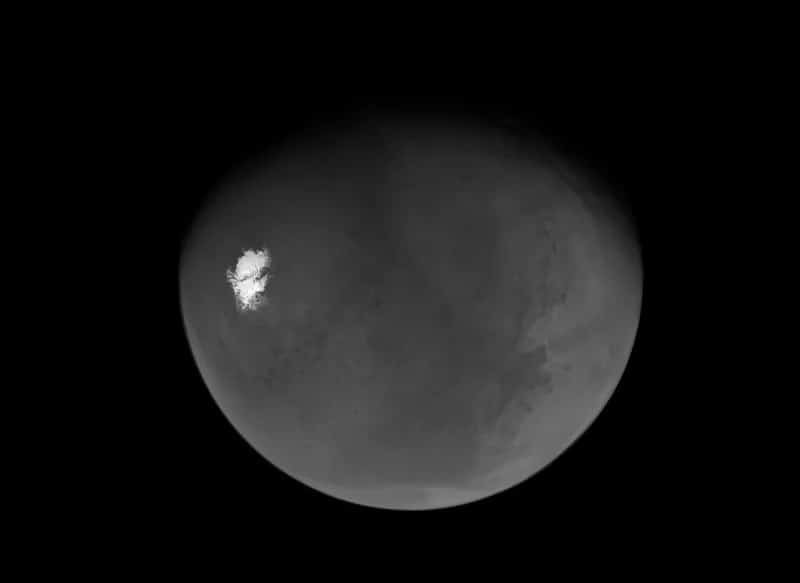
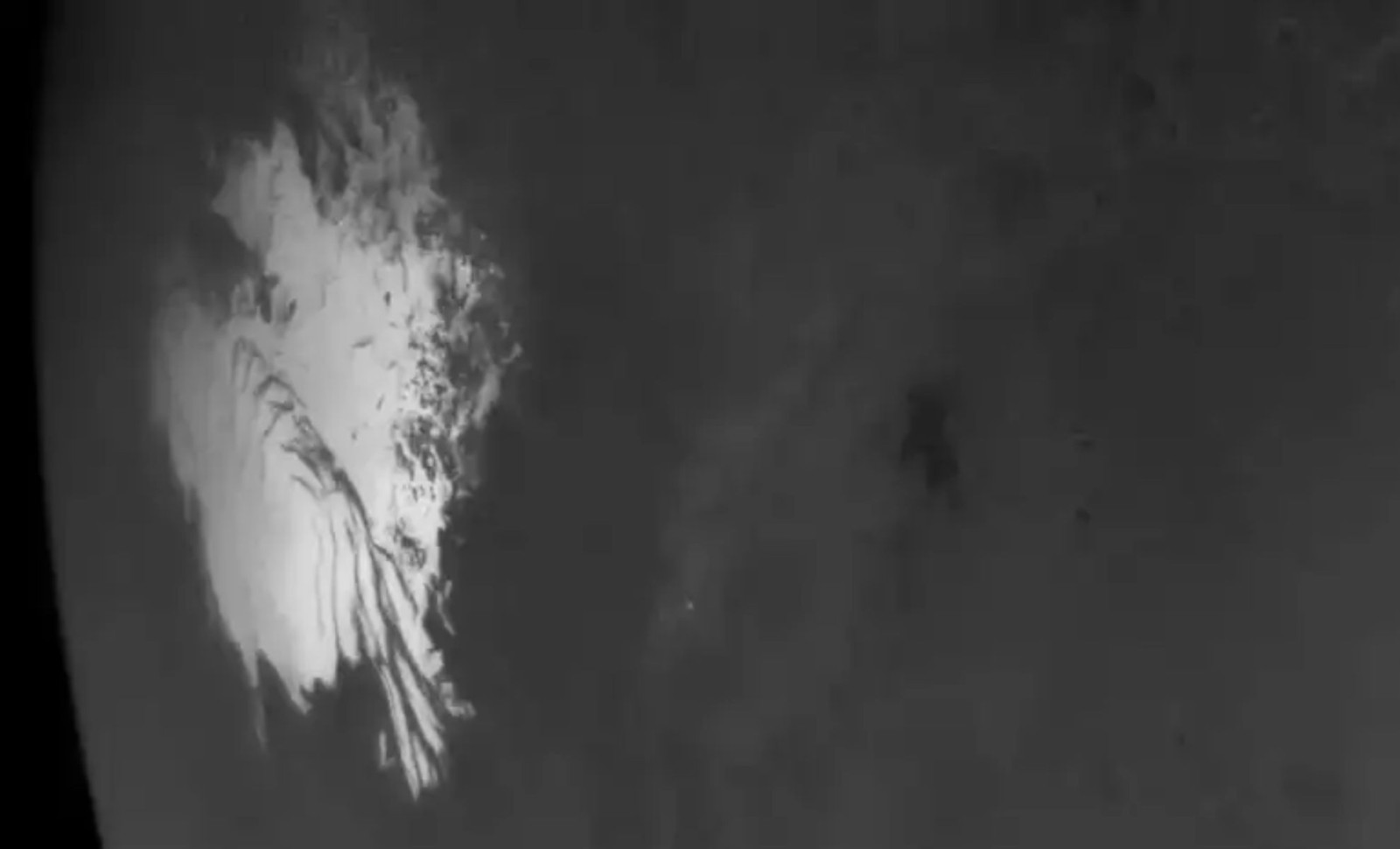
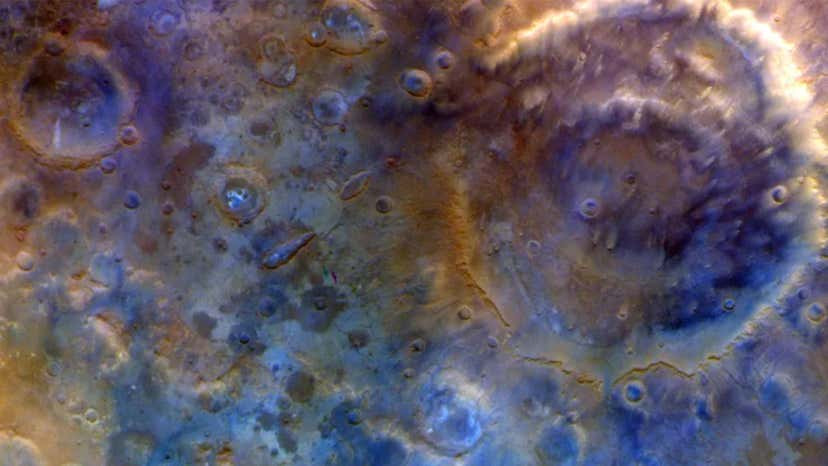
Among the images released is an enhanced color photo of the double-ring Huygens crater, taken shortly after closest approach. Another depicts Mars nearly fully illuminated but rotated sideways, with the south pole at one edge and the expansive Valles Marineris canyon visible on the right.
The spacecraft also imaged the Syrtis region, where winds have carved out distinct patterns on the surface. Some wind-formed streaks extend as far as 50 kilometers (30 miles), comparable to the size of the largest craters in the photos.
Investigating Mars During a Rare Encounter
Scientists utilized the flyby to search for a potential dust ring around Mars. It is theorized that micrometeorite impacts on its moons, Phobos and Deimos, might expel dust that forms a faint ring around the planet.
The team also sought out previously undetected small satellites, such as asteroid fragments or captured bodies near Mars’ moons. Comparable searches are planned for the asteroid Psyche once the probe arrives.
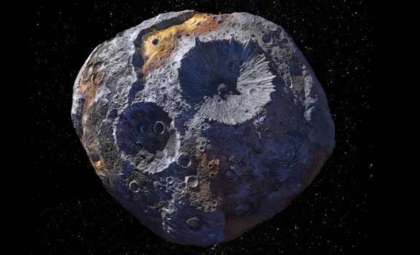
While Mars provided an essential gravity boost, Psyche remains focused on its primary objective. The metallic asteroid, believed to contain up to 60 percent metal by volume, was once suspected to be an exposed core of a shattered planetary body. The mission aims to clarify its intricate origins.
- Categories:
- Space



0 comments
Sign in to Comment