
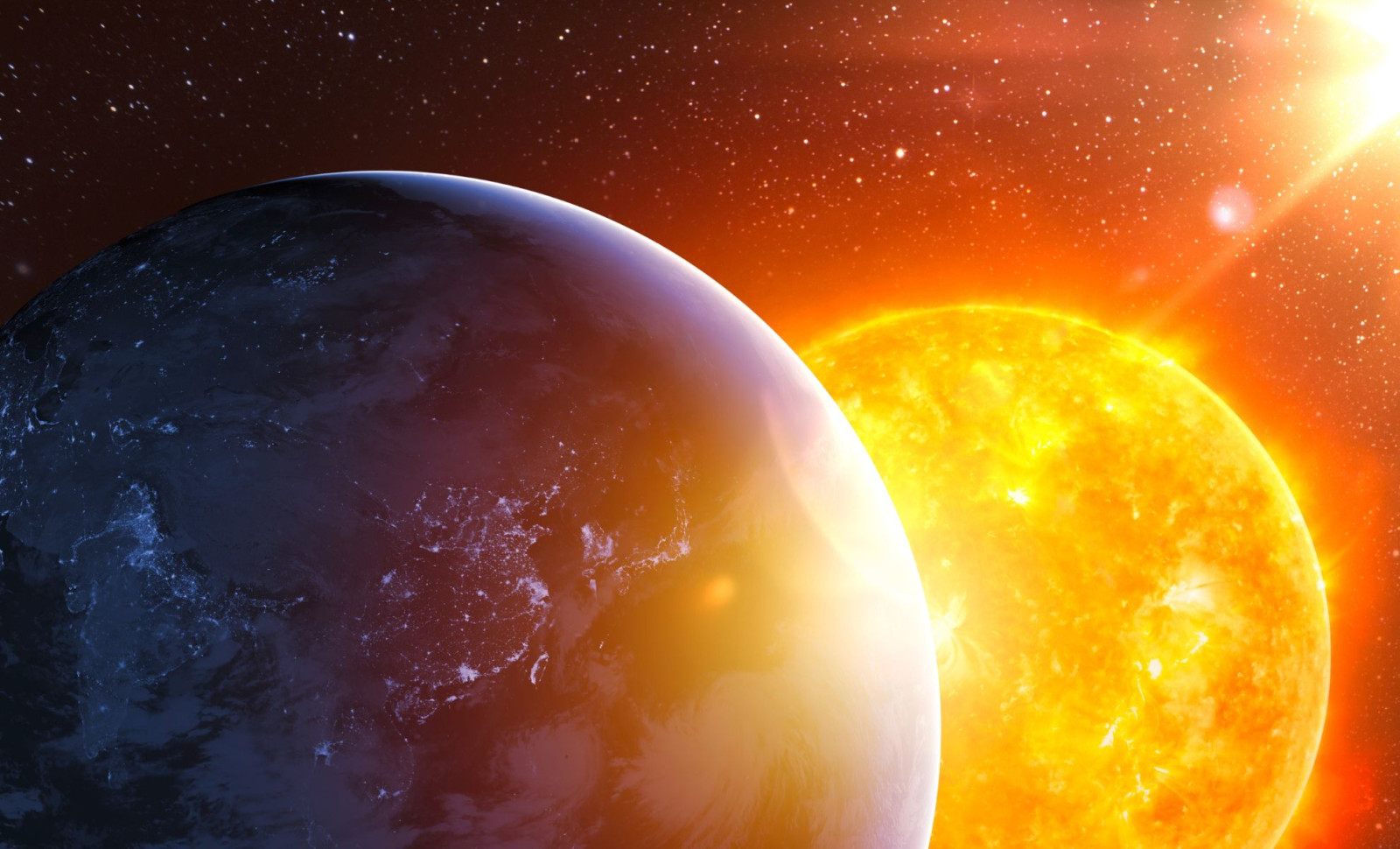
For decades, the common belief has been that Earth will be engulfed by the Sun as it grows toward the end of its life. Recent findings, however, reveal a different possibility: our planet might actually move farther away, escaping destruction during the Sun’s expansion into its final giant stages.
Scientists have closely linked Earth’s eventual destiny to the Sun’s long-term evolution. In roughly 5 billion years, the Sun will exhaust the hydrogen fuel at its core, triggering significant transformations that will reshape the solar system.
Previously, experts anticipated Earth’s demise, assuming that the Sun’s swollen outer layers would drag the planet inward. But fresh calculations featured in Astronomy & Astrophysics offer a more complex scenario.

The Battle Between Gravitational Pull and Stellar Mass Loss
As the Sun ages, it will first expand into a red giant before entering the asymptotic giant branch (AGB) phase. During these periods, the Sun’s size will increase dramatically, possibly extending well beyond its current boundaries.
Two main forces will influence Earth’s trajectory. The first involves tidal forces generated between the enlarging Sun and our planet, potentially causing Earth’s orbit to shrink.
Conversely, as the Sun sheds mass through stellar winds, its gravitational grip will weaken, allowing Earth and other planets to gradually drift outward.
“Earth’s fate depends on a delicate balance between these two effects,” lead author Mats Esseldeurs of Belgium’s University of Leuven said. “If tidal interactions predominate, Earth is engulfed by the sun. If the sun’s mass loss predominates, Earth escapes into an orbit larger than the radius of its star.”
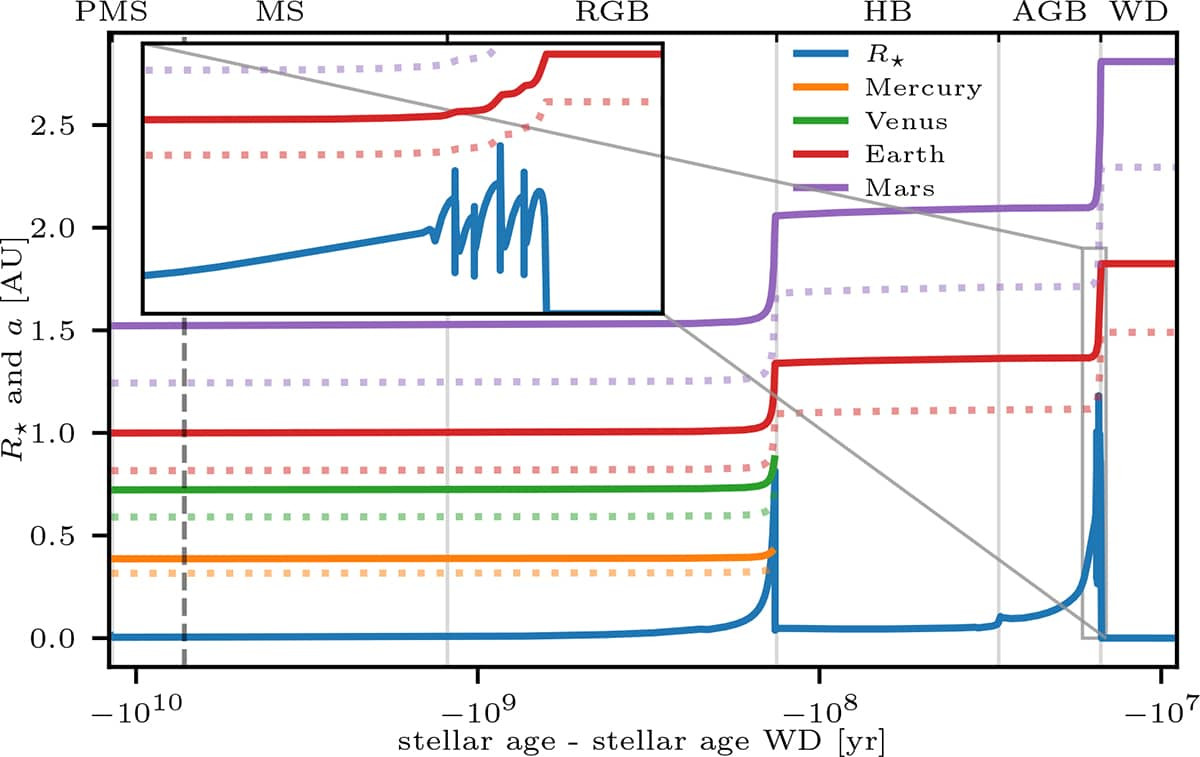
Most earlier studies leaned toward the idea that Earth would be pulled inward and engulfed by the growing Sun, but this new study reassesses that conclusion.
Enhanced Models Reveal New Perspectives
The latest research incorporates refined knowledge of tidal dynamics within aging stars, moving beyond the simpler models once used to describe tidal energy behavior during stellar evolution.
The authors contend that previous work likely exaggerated tidal dissipation, which means the inward pull on Earth might be weaker than assumed.
Co-author Stephane Mathis from CEA Paris-Saclay emphasized how advancements in tidal physics over the past 15 years, paired with revised estimates for solar mass loss, tip the scale between these competing influences.
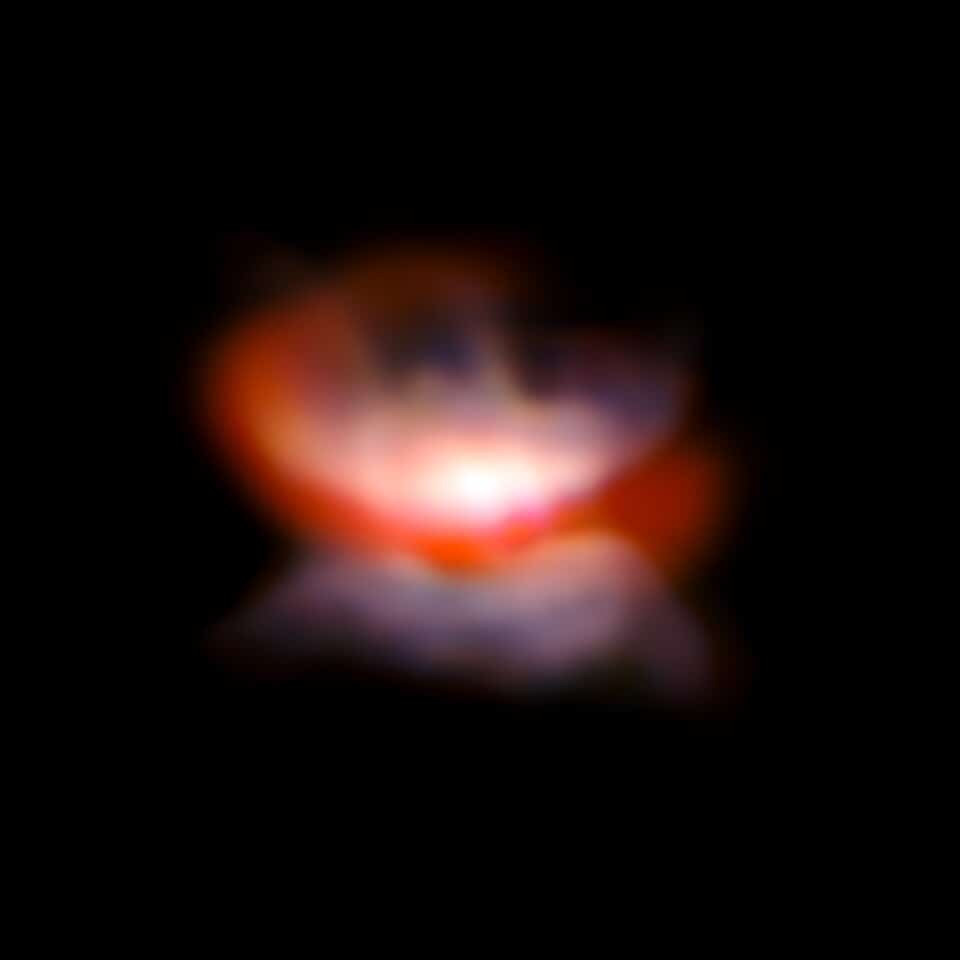
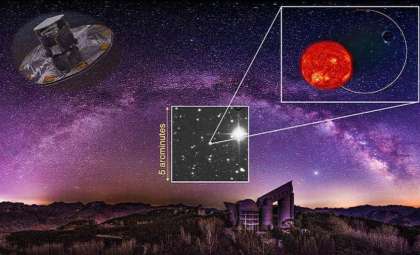
The team also studied L2 Puppis, a nearby evolved star considered a solar analog in its later life stages. Observations of this star helped tighten the estimates for how much mass the Sun might lose as it evolves.
Possible Survival for Earth and Mars
The study suggests that Earth might not be the only planet to avoid destruction; Mars could also evade being engulfed by the swelling Sun. The expansion of their orbits due to solar mass loss appears sufficient to counteract the inward tug caused by tidal forces.
However, inner planets like Mercury and Venus remain at high risk of being consumed during the Sun’s giant phases.
Ultimately, after shedding its outer layers, the Sun will become a white dwarf—a compact and dense remnant that will gradually cool and fade as fusion ceases.
- Categories:
- Science




0 comments
Sign in to Comment