
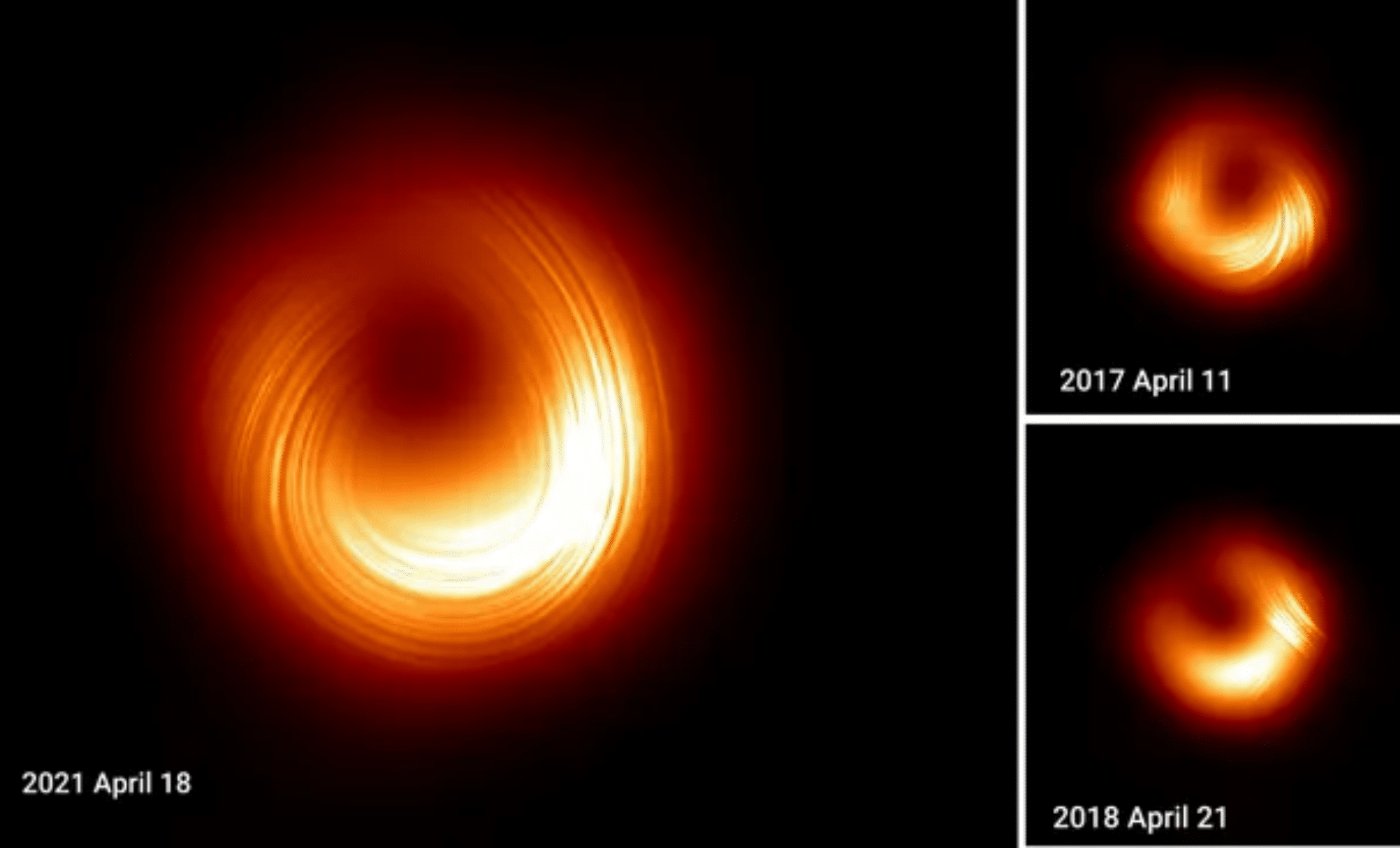
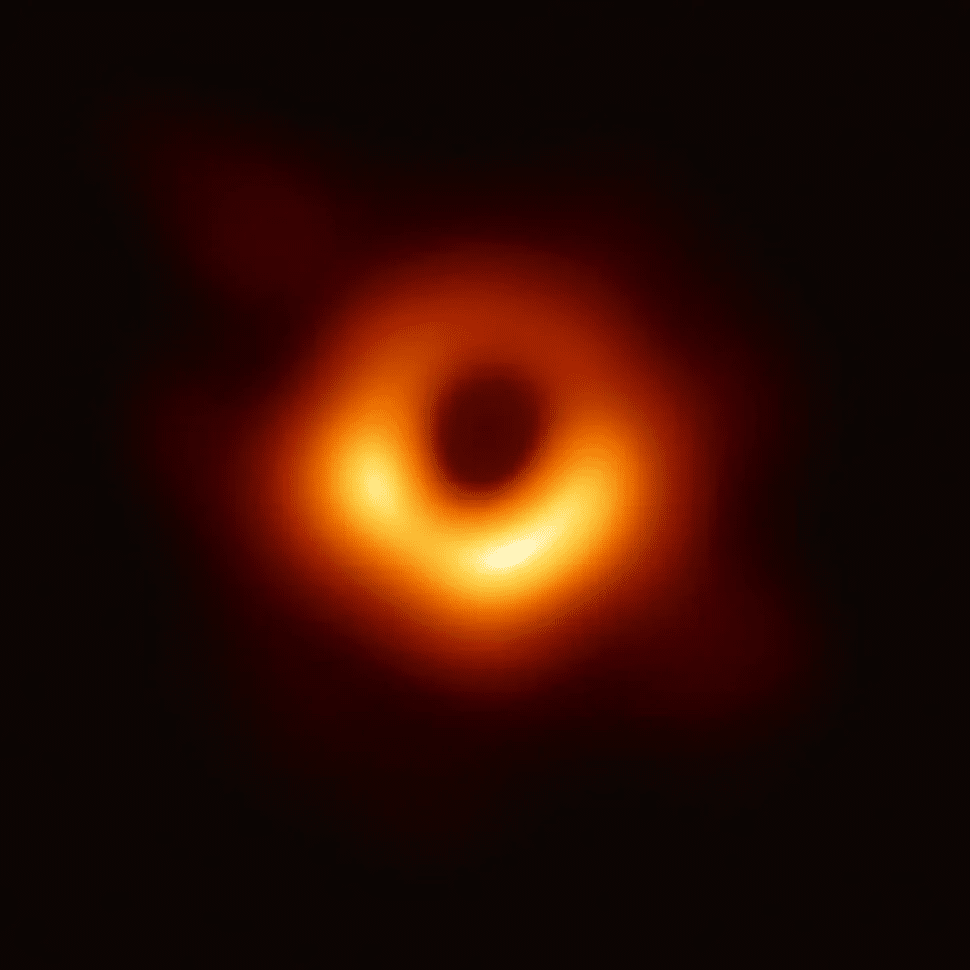
Back in April 2019, humanity achieved a milestone by unveiling the inaugural image of a black hole, revealing the supermassive entity named M87* at the core of the galaxy M87. This groundbreaking effort, fueled by the Event Horizon Telescope (EHT), has since unlocked further revelations. Recently released images and analyses disclose surprising transformations in M87*’s magnetic field, prompting scientists to reconsider long-held theories and gain fresh perspectives on black hole dynamics, as detailed in a recent Astronomy & Astrophysics study.
Unexpected Shift in Polarization Unveiled
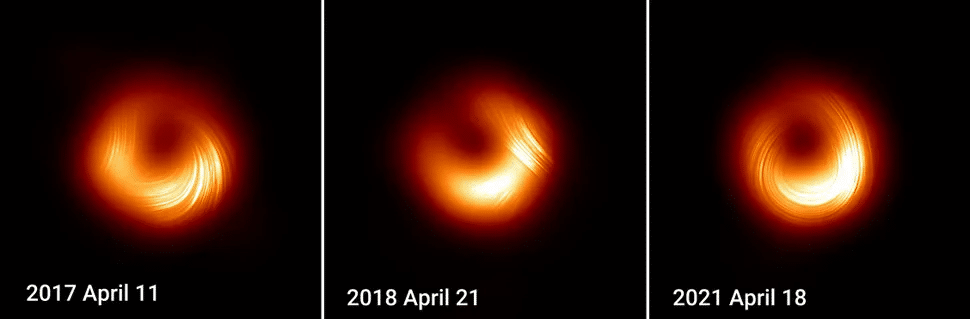
One of the most startling findings is a dramatic change in the polarization pattern of the magnetic fields encircling M87*. Observations from 2017 through 2021 reveal that the magnetic polarization orientation flipped significantly within a few short years. This reversal was unforeseen, challenging prior expectations about the behavior so close to a black hole’s event horizon.
“Seeing the polarization direction reverse between 2017 and 2021 was completely unanticipated,” explained Jongho Park, an EHT collaborator at Kyunghee University, South Korea. “It calls into question existing models and underscores how much remains to be discovered in the vicinity of the event horizon.” The event horizon marks the boundary where gravity is so intense that nothing, including light, can escape, making it especially difficult to investigate changes occurring there.

Although the precise mechanism driving this polarization flip remains a mystery, these observations emphasize the intricate nature of the magnetic fields near black holes. “Amazingly, while the radius of the ring has stayed consistent through the years, validating Einstein’s predictions about black hole shadows, the polarization pattern has exhibited substantial variations,” noted Paul Tiede, an EHT team co-leader. “This indicates the magnetized plasma swirling near the event horizon is highly dynamic, defying simpler theoretical assumptions.”
Investigating the Matter Jets and Their Galactic Influence
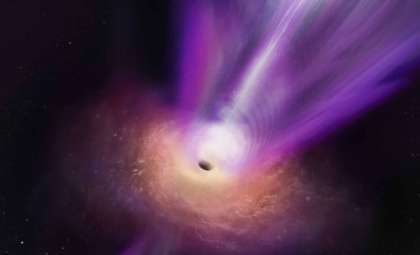
These latest images also grant an unmatched perspective of the powerful jets spewing from the area around M87*. Consisting of particles moving nearly at the speed of light, these jets are believed to be key agents in how massive black holes affect their surrounding galaxies. Capturing the jets close to their origin marks a major leap for the EHT, providing valuable clues about their immense impact on galactic structures.
Building on prior EHT discoveries, scientists are deepening their knowledge of how magnetic fields intertwine with these relativistic jets. Understanding this connection is vital for elucidating how black holes govern their environment and influence galactic formation and evolution.
The EHT's Growing Role in Black Hole Science
A pivotal element of these achievements lies in the EHT’s ongoing development as a premier scientific observatory. These images represent not only a technical triumph but also demonstrate the expanding capabilities of the EHT network in deepening our grasp of black hole physics.
Mariafelicia De Laurentis, an EHT researcher at the University of Naples Federico II in Italy, remarked, “These discoveries illustrate the EHT’s progress into a comprehensive scientific facility, delivering extraordinary imagery and fostering a continuous, coherent advance in black hole research.” As more telescopes integrate into the array and enhancements are made, the EHT is set to become an even more formidable instrument in black hole exploration.
Upgrades like the inclusion of the Kitt Peak observatory in Arizona and the NOEMA array in France have been crucial in boosting image detail and sensitivity, enabling unprecedentedly sharp views of M87*.
Michael Janssen, co-head of the EHT project, highlighted, “Each year brings new additions, refined technologies, innovative scientific approaches, and advanced algorithms that extract greater value from our data. This combination has yielded fresh scientific insights and posed new questions that will engage us for years to come.”
- Categories:
- News





0 comments
Sign in to Comment