
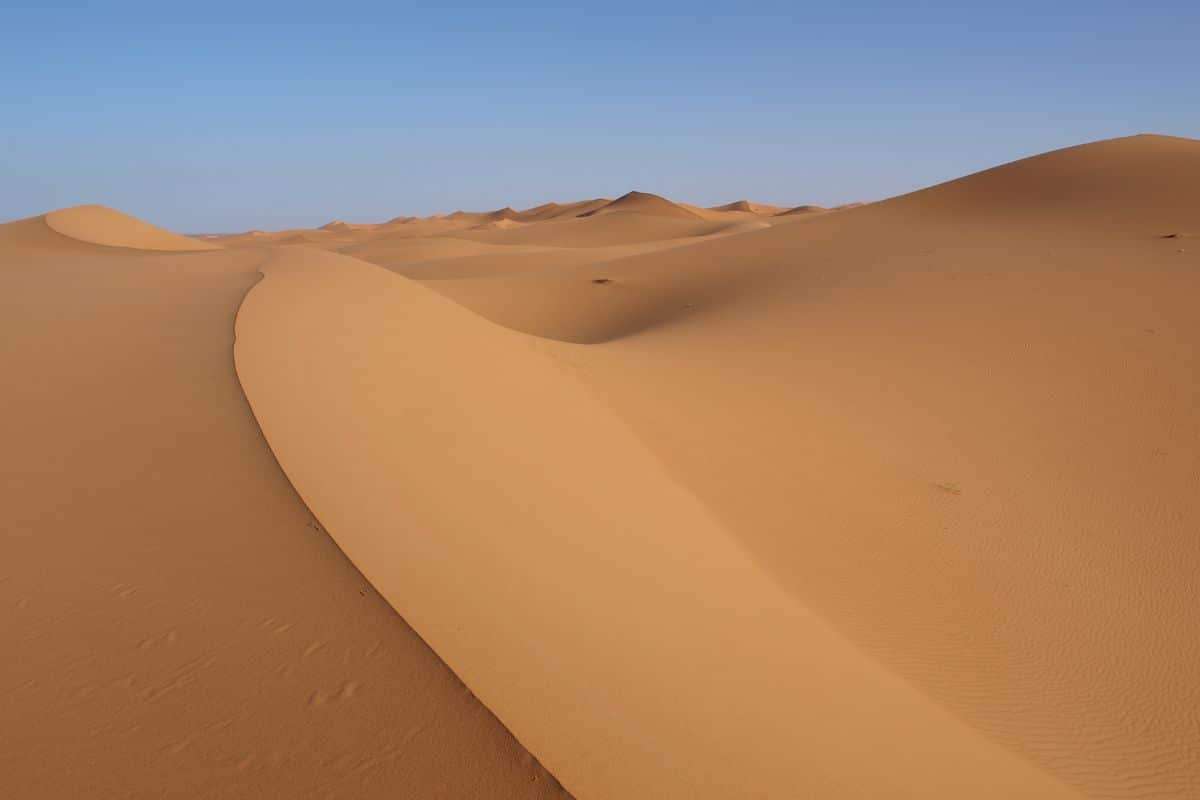
Recent studies have revealed how intense storms sporadically bring heavy rainfall to the Sahara Desert, leading to the formation of ephemeral lakes and uncovering unexpected links in climate behavior. These infrequent occurrences, often missed in long-term averages, challenge long-held views of the Sahara as an endlessly dry environment.
Unexpected Waters in the World's Largest Desert
While the Sahara is famed for its vast aridity, occasional episodes transform sections into temporary water bodies. One notable example is Sebkha el Melah, a normally parched lakebed located in northwestern Algeria.
Recently, intense storm events have caused this area to flood unpredictably. Researchers sought to understand the mechanisms behind this phenomenon.

Under the leadership of Dr. Moshe Armon from Hebrew University and Dr. Franziska Aemisegger at the University of Bern, the team analyzed two decades of storm records. Their focus was on identifying links between heavy precipitation events (HPEs) and the appearance of visible lakes.
Their findings were striking: among hundreds of storms between 2000 and 2021, only six were strong enough to fill the basin.
A Noteworthy Occurrence in 2024
The rarity hinges on storm trajectories. Many storms weaken after passing over the Atlas Mountains, but some, influenced by extratropical cyclones from the Atlantic, curve around these elevations and enter the heart of the desert.
When this happens, moisture from the ocean is carried deep inland, resulting in several days of rainfall. This prolonged precipitation produces runoff sufficient to temporarily fill depressions like Sebkha el Melah.
Satellite images from September 2024 confirmed another such lake-forming event. The rains, driven by similar cyclone patterns, reached deep within the Sahara once again.
This recurring phenomenon indicates that these storms follow distinct atmospheric routes that bypass typical barriers to desert rainfall.
Insights into Prehistoric Wetlands
The research published in Hydrology and Earth System Sciences also considers the influence of global warming on future precipitation events. Models suggest that ongoing climate changes could enable increased moisture transport inland.
Although this won’t turn the Sahara into a lush landscape, intense rain episodes may become relatively more frequent, bringing temporary water and possibly supporting brief periods of life in dry areas.
The findings offer potential explanations for the Sahara’s historic wet intervals, previously inferred from evidence of ancient lakes and wetlands.
Scientists now propose that these wetter phases were largely shaped by sudden, intense storms rather than slow climate transitions, enriching the understanding of how life once persisted in this challenging environment.
Rethinking Rainfall Measurements
The study illustrates that yearly average rainfall is insufficient for capturing the complexity of desert hydrology. Averages tend to obscure extreme weather events that have the most significant environmental impact.
Researchers emphasize the necessity for advanced models tracking the strength, duration, and movement of individual storms—especially in arid regions like the Sahara.
These insights suggest that the immense Sahara Desert is a dynamic environment, markedly influenced by sudden shifts in atmospheric systems rather than a permanently static desert.
- Categories:
- Nature












0 comments
Sign in to Comment