
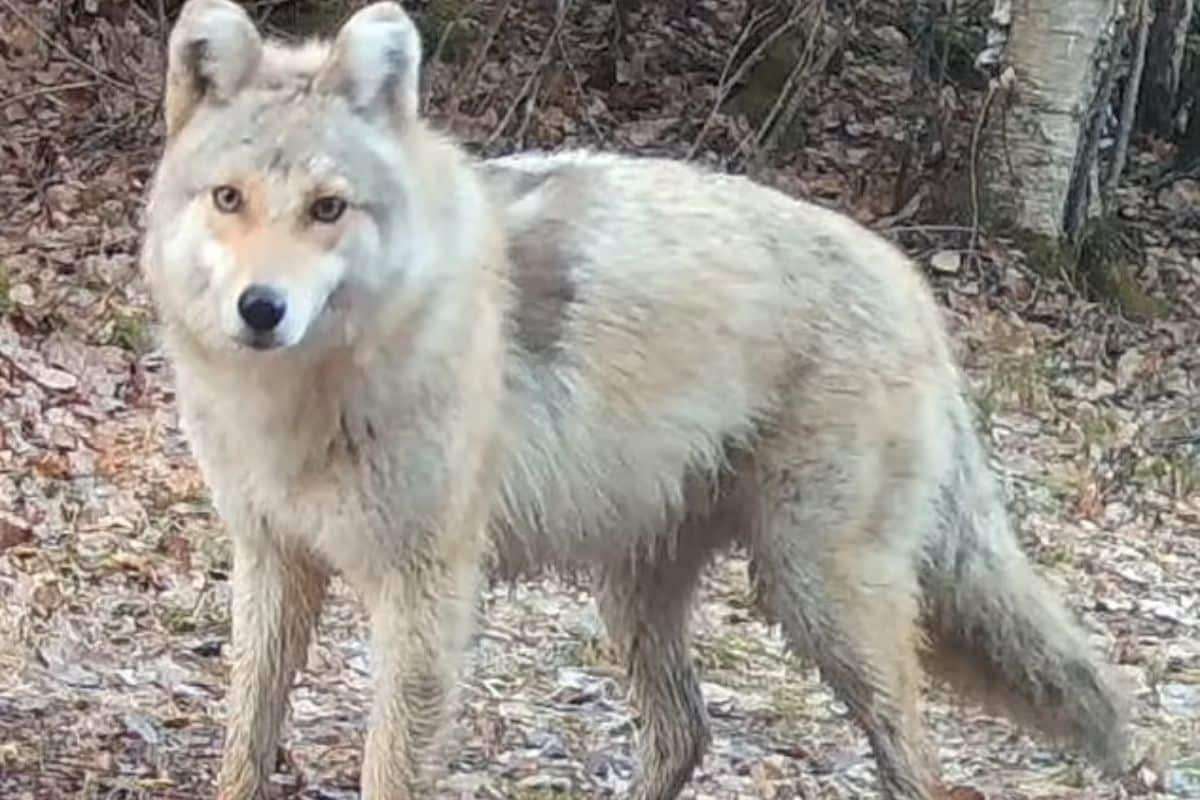
Deep within the forests of northern Minnesota, an unusual animal was recently recorded by motion-triggered cameras, captivating wildlife scientists. Captured by the Voyageurs Wolf Project, this intriguing creature exhibits traits reminiscent of wolves, coyotes, and domestic dogs, prompting questions about its true nature. Could it be a hybrid, or simply an uncommon specimen?
Decoding the Enigma: The Unknown Forest Dweller
The clip, shared by the Voyageurs Wolf Project on November 5, reveals an animal with light beige-gray fur, rounded ears, and a bushy tail. This unusual visitor was caught on a trail camera, a device primarily aimed at tracking wolf populations throughout northern Minnesota.
Although its stature and some features resemble a coyote, the rounded ears and sturdier frame suggest possible traits inherited from wolves or dogs.
Hybrid or Unique Individual?
The team associated with the project has suggested the possibility of a “woyote dog”—a colloquial term for an animal combining wolf, coyote, and dog characteristics. Typically, regional coyotes have pointed ears, making this creature’s rounded ears particularly intriguing.
Thomas Gable, who leads the Voyageurs Wolf Project, believes the animal is unlikely to be a pure wolf. Nonetheless, without additional sightings or genetic evidence, its specific classification remains uncertain.

“In the end, we may never be able to confirm its identity because this animal appeared only briefly during winter and hasn’t shown up on our trail cameras since,” Gable remarks, noting the missed opportunity for a genetic analysis.
Speculations and Theories About the Creature’s Identity
Once the video surfaced, it ignited a wave of curiosity online, with debates ranging from lighthearted nicknames like “Yotedoodle” to serious hypotheses about wolf-dog crosses.
One particular idea proposes that the animal’s ear shape might result from frostbite, potentially altering their usual form. Despite these theories, definitive proof is still lacking.
Comparing Canine Species in Northern Minnesota
The wild canine community in this region includes several species, each with distinguishing features. Gray wolves dominate the area with their larger build, contrasting with the smaller, leaner coyotes.
The animal in the footage, falling somewhere between these sizes and bearing atypical traits, defies straightforward classification, adding to the mystery.
Wildlife Cameras: Windows into Animal Behavior
The Voyageurs Wolf Project relies on a network of strategically placed cameras to observe and study wolves in the Greater Voyageurs Ecosystem. These devices offer valuable data on wolf diet, breeding habits, and behaviors during warmer months.
Occasionally, these cameras capture unexpected phenomena, such as this enigmatic animal. Such moments underscore the crucial role of wildlife monitoring in expanding our understanding of remote ecosystems.
Could Wolf-Dog Hybrids Be Present Here?
Since domestic dogs can interbreed with wolves and coyotes, some scientists have considered that hybrid canines might be more prevalent than previously recognized. Although this animal doesn’t seem to fit the profile of a pure wolf or coyote, the possibility of a wolf-dog hybrid adds complexity to the situation.
This potential hybridization raises significant questions for conservation efforts, as these animals may not align neatly with established species designations.
The Voyageurs Wolf Project's Conservation Endeavors
Operated by researchers at the University of Minnesota, the Voyageurs Wolf Project aims to deepen understanding of gray wolf populations locally. Key objectives include studying their hunting tactics, reproductive patterns, and interactions with humans.
Such research is vital, particularly because gray wolves receive protection under the Endangered Species Act across much of the United States. The project helps guide strategies designed to support the species' survival in this region.
An Ongoing Wildlife Mystery
For now, the true identity of this unusual canine remains unknown, sparking both intrigue and speculation. Since the animal hasn't reappeared on any monitoring devices, researchers may never conclusively uncover its lineage. However, this event highlights the complexities of life in remote ecosystems and nature’s capacity to surprise even seasoned experts.
While the mystery endures, the Voyageurs Wolf Project persists in unraveling the secret lives of wolves and their elusive neighbors.
- Categories:
- Nature















0 comments
Sign in to Comment