
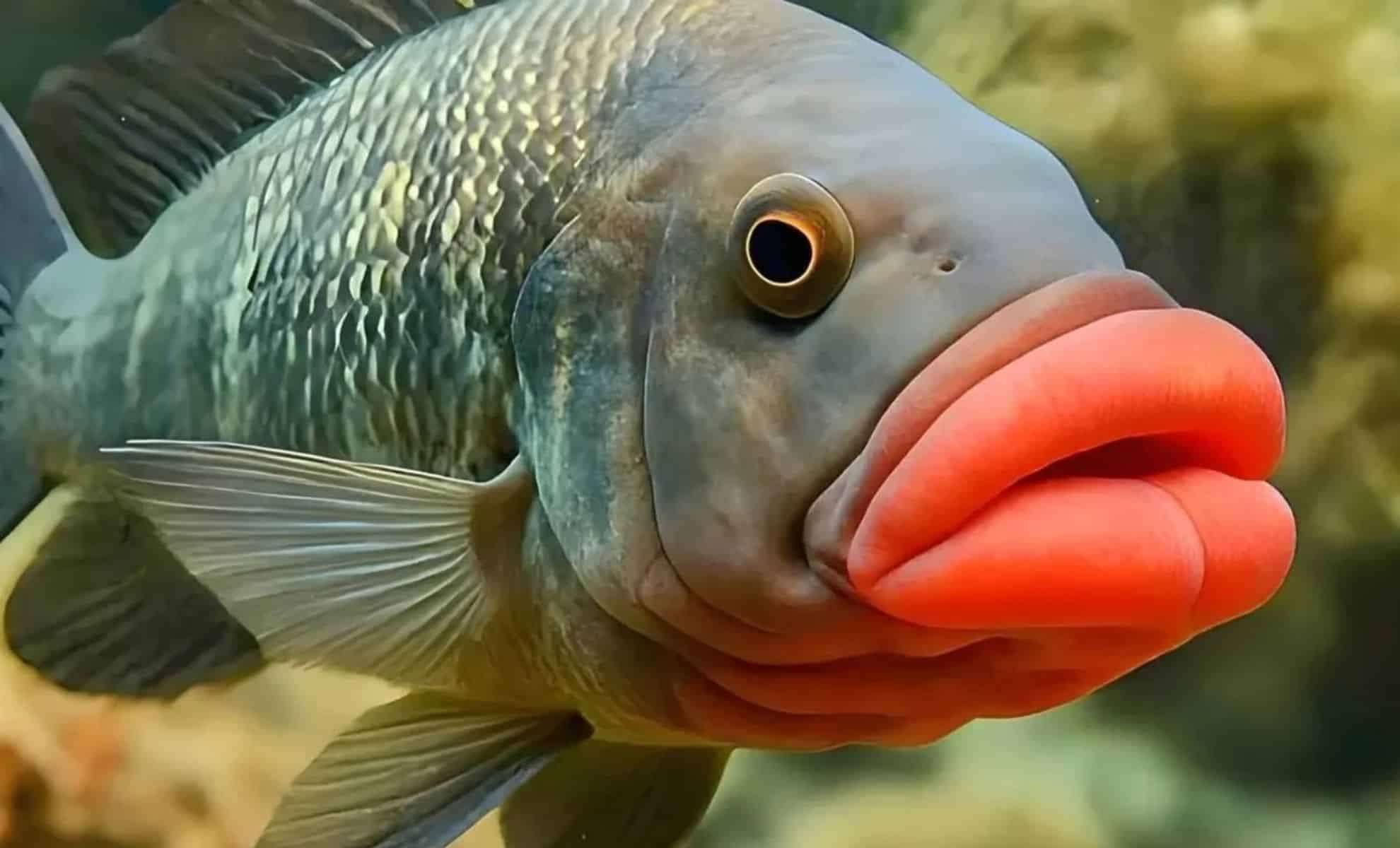
Among fish species, certain cichlids stand out due to their remarkably thick and prominent lips, a trait that has fascinated both scientists and aquarium enthusiasts.
For a long time, the reasons behind this unusual lip enlargement remained unclear, sparking curiosity about the evolutionary forces shaping this feature.
New findings from Dr. Nagatoshi Machii’s team at the Tokyo Institute of Technology have now identified the genetic and molecular factors responsible for this distinctive trait in cichlids.

Understanding Parallel Evolution in Cichlids
The large lips seen in these fish are not coincidental but arise through a phenomenon called parallel evolution.
This evolutionary pattern describes how distinct species independently develop similar features when exposed to comparable environmental challenges.
In the case of cichlids inhabiting Lakes Victoria, Malawi, and Tanganyika, these isolated water bodies provide unique conditions that promote repeated evolution of similar lip structures across different species.
Each lake hosts its own distinct cichlid populations, yet many have independently evolved padded lips as a shared adaptive trait.
As noted by Harvard evolutionary biologist Jonathan Losos, “Parallel evolution exemplifies how natural selection shapes species to adapt similarly to their environments.”
For cichlids, thick lips are likely beneficial adaptations aiding in feeding strategies and maneuvering through rocky underwater habitats.
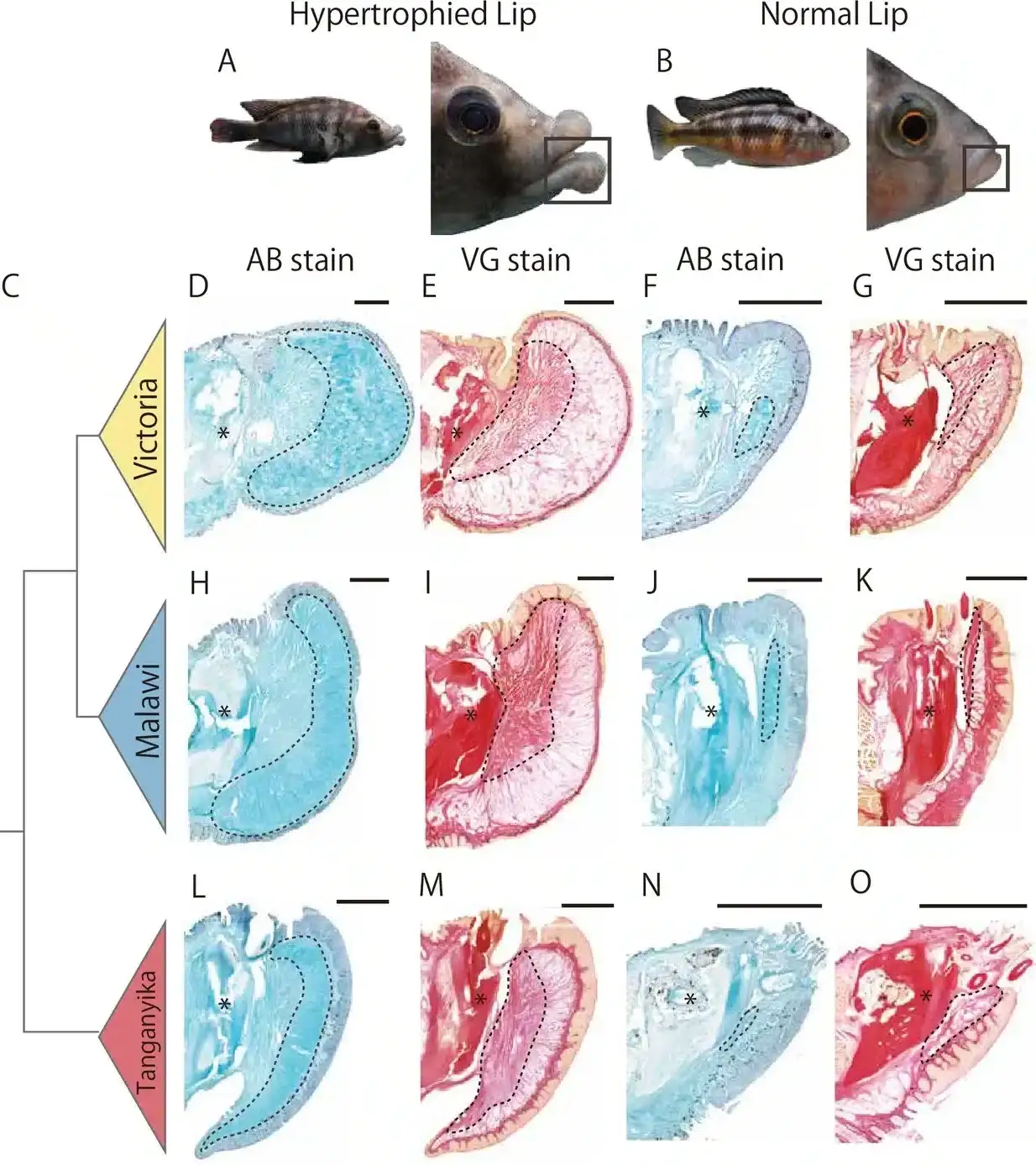
Molecular Components Behind Lip Enlargement
The research team discovered that the enlarged lips are rich in proteoglycans, macromolecules formed by proteins bonded to sugar chains.
These molecules are essential in preserving the physical structure and elasticity of tissues such as bone, cartilage, and skin.
Proteoglycans contribute to moisture retention and provide tissues with their characteristic mechanical properties, resulting in the cichlids’ swollen lip appearance.
Specifically, species with large lips show elevated levels of chondroitin sulfate proteoglycans, which attract water molecules and cause tissue volume expansion.
This insight unveils the biochemical basis for the species’ distinctive lip morphology, highlighting how water retention intertwined with protein structures creates their pronounced lip shape.
The Role of Gene Activity in Lip Growth
Genetic processes driving lip enlargement start early in the fish’s development, with genes linked to extracellular matrix production active in young cichlids.
These genes, which govern the creation of connective tissues, are more highly expressed in species destined to develop thick lips compared to those with typical lip sizes.
This early gene activation suggests that lip overgrowth, or hypertrophy, is programmed from juvenile stages and continues as the fish grows.
Among important genetic mechanisms involved is the Wnt signaling pathway, a complex system of proteins regulating cell growth, division, and migration.
While crucial during embryonic development, the Wnt pathway also supports tissue maintenance in mature organisms.
Connections to Human Medical Conditions
The same proteoglycans contributing to cichlid lip swelling are implicated in human disorders like keloids, which are raised scars caused by excessive connective tissue following injury.
This overlap opens up fascinating possibilities for understanding similar tissue growth processes in humans.
Scientists hope that uncovering how these molecules influence lip formation in cichlids might lend new perspectives for treating human connective tissue diseases.
- Categories:
- Nature
















0 comments
Sign in to Comment