

Researchers have uncovered an immense fan-shaped geological feature hidden beneath the thick ice of East Antarctica. This structure links several prominent subglacial basins across the continent, concealed beneath ice layers exceeding three kilometers in thickness, revealing one of the largest instances of continental crust stretching ever identified.
Named the East Antarctic Fan-shaped Basin Province, this formation encompasses the Wilkes basin, the Aurora basin, and the basin containing Lake Vostok, the world's largest known subglacial lake. While these basins have been examined individually in prior studies, this marks the first time they have been recognized as components of a unified, expansive system.
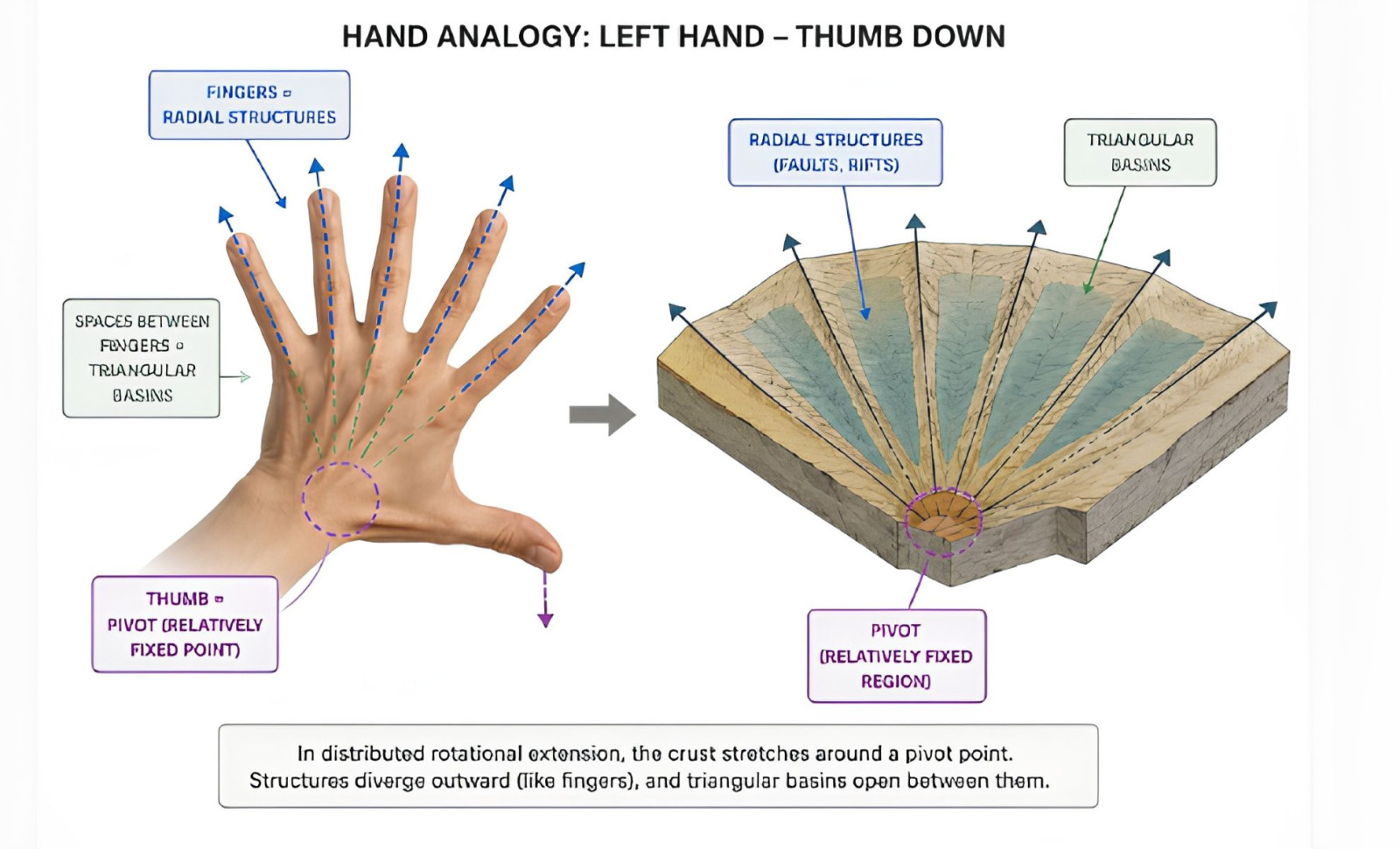
This finding extends beyond a simple update to Antarctic maps. The configuration influences ice dynamics across the continent and the distribution of subglacial lakes, potentially impacting the Antarctic Ice Sheet’s stability. The fan structure formed through a geological process called rotational extension, wherein the crust expands outward from a central pivot, generating the characteristic hand-like shape.

Charting East Antarctica’s Concealed Basins
The fan-shaped province consists of several vast subglacial basins arranged reminiscent of an outstretched hand, as detailed in a statement from Durham University. The central "palm" functions as the pivot, with the basins extending like fingers, separated by triangular gaps.
Key Antarctic features belong to this system. Lake Vostok, long studied as an isolated subglacial lake, is now linked to the Wilkes and Aurora basins as part of this vast formation.
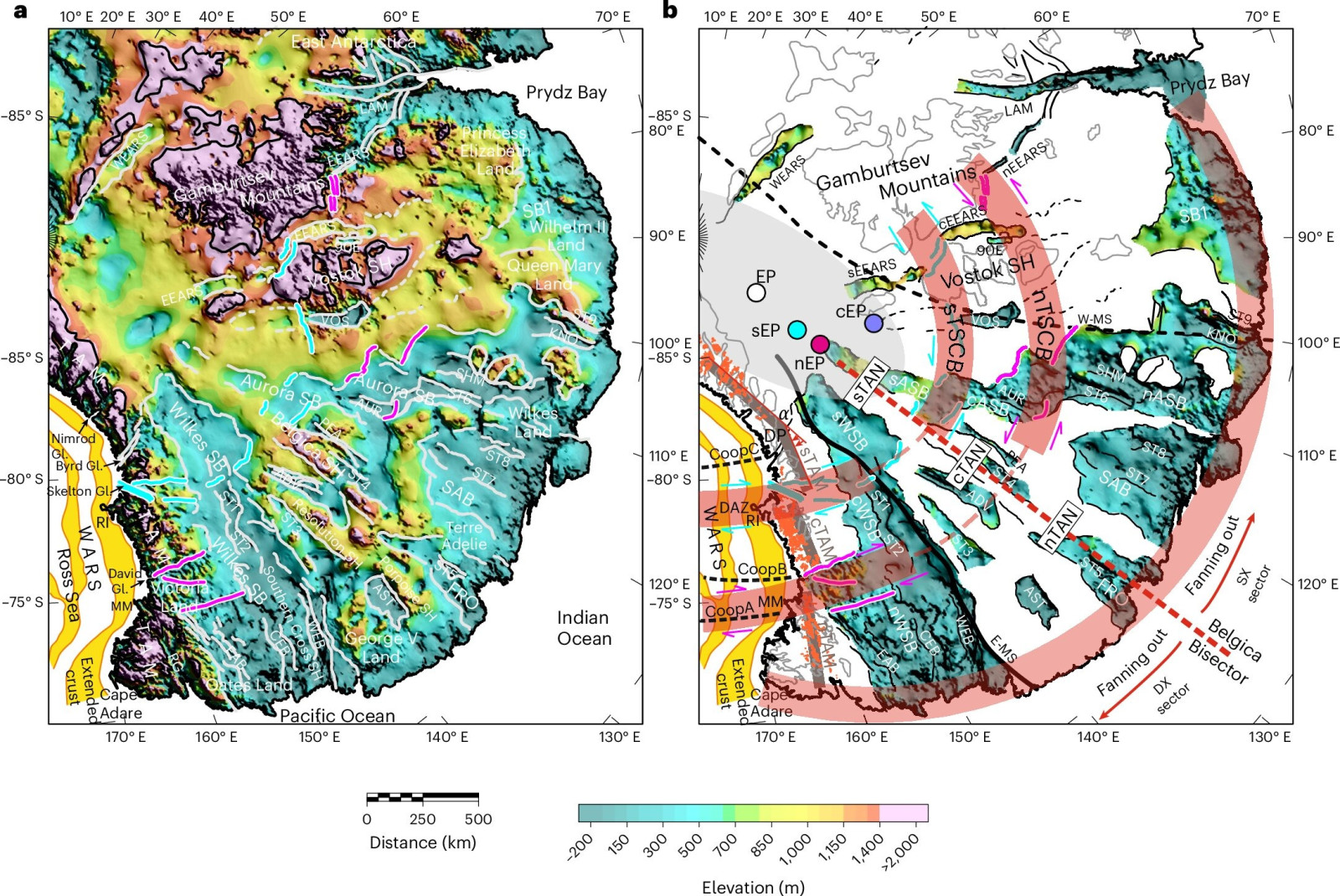
Viewing the basins as a single geological entity reveals previously hidden patterns of crustal stretching and provides a more comprehensive understanding of the terrain beneath Antarctic ice.
Formation Through Rotational Extension
The research team explains that the fan structure developed through distributed rotational extension, where continental crust spreads outward around a central rotational axis. This process led to the thinning and elongation of the crust, producing the fan’s distinctive pattern. Published in Nature Geoscience, the study suggests this could be among the most significant examples of rotational extension ever documented in continental crust.
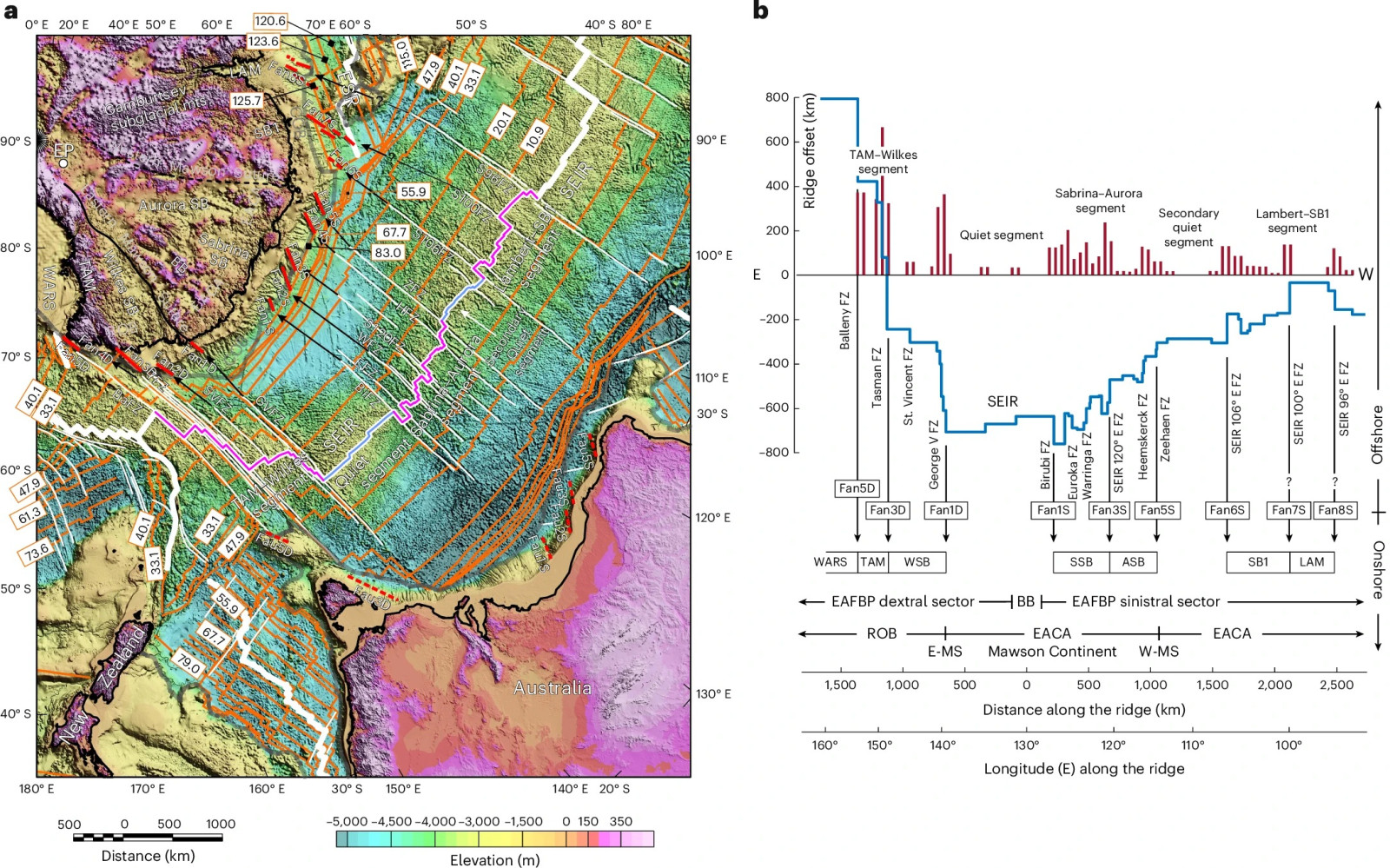
The formation likely evolved over multiple tectonic episodes associated with the Gondwana supercontinent and the eventual rifting between Antarctica and Australia. This implies the fan-shaped basin province not only chronicles ancient tectonic events but may have influenced how these landmasses separated over geological time.
Impact on Ice Flow and Land Elevation
To explore this formation, scientists integrated subglacial mapping with gravity, magnetic, and seismic measurements alongside geological models of crust and lithosphere structure. Dr. Guy Paxman, part of the research team, noted that if the entire ice sheet were removed, the underlying land in East Antarctica would rise by as much as one kilometer, a phenomenon known as isostatic rebound.
Such findings allowed researchers to better estimate the basins’ orientation and elevation. The team concluded the hidden structure continues to influence current ice flow patterns and subglacial lake distribution, connecting deep tectonic history with modern ice sheet behavior.
- Categories:
- Science










0 comments
Sign in to Comment