
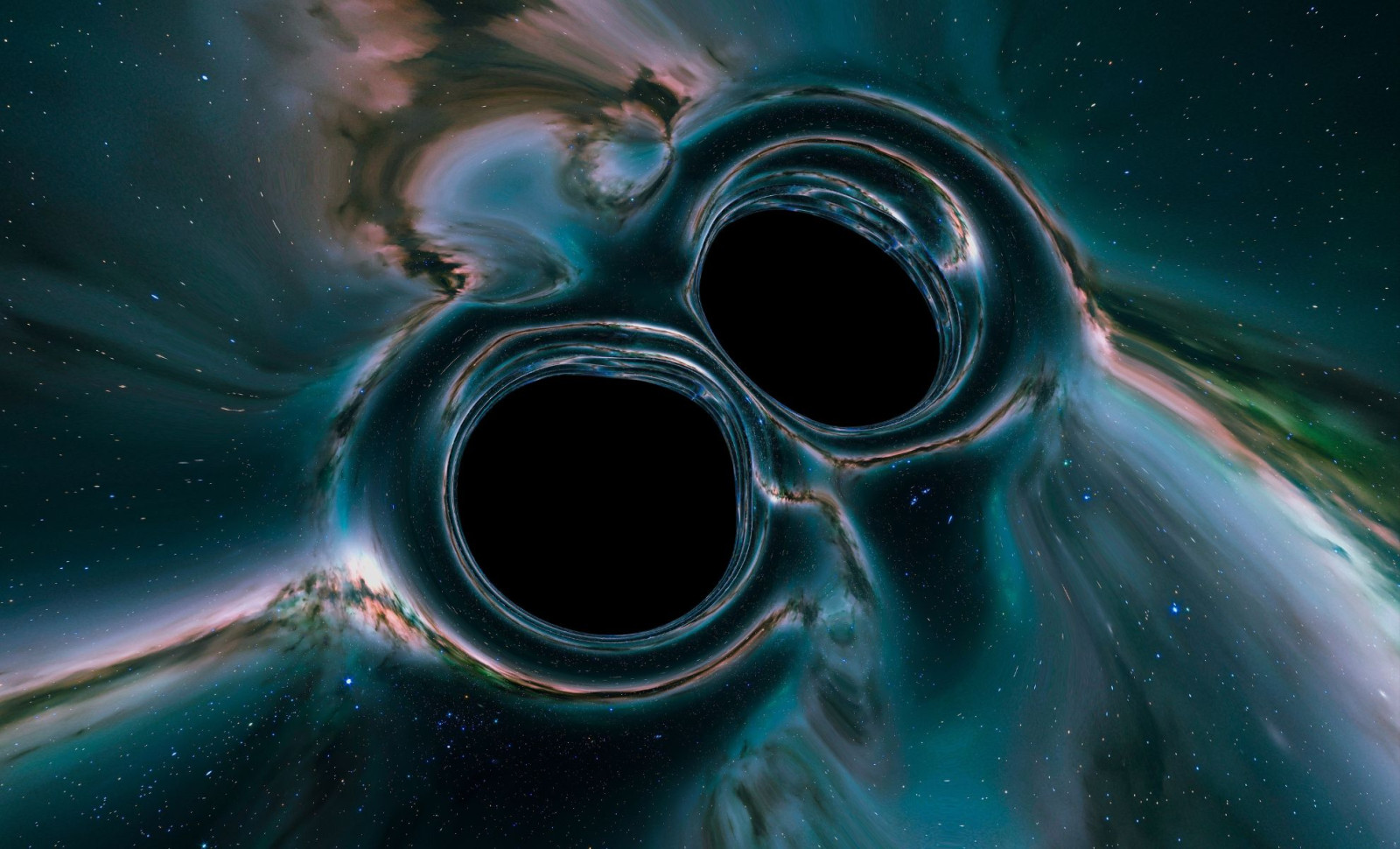
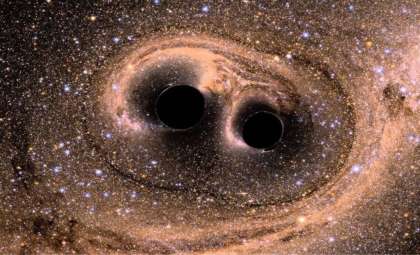
Scientists may have uncovered a novel approach to identify some of the universe's most secretive entities: supermassive black hole pairs locked in close orbital dances. Instead of relying solely on forthcoming gravitational-wave instruments, this technique exploits periodic bursts of starlight to reveal these elusive black hole binaries.
Developed by a collaborative team from the University of Oxford and the Max Planck Institute for Gravitational Physics, the findings detailed in Physical Review Letters propose that the intense gravitational attraction between two orbiting supermassive black holes can repeatedly amplify the light from stars positioned behind them, providing a unique detection signature.
Identifying such tight black hole duos has proven difficult. Although several supermassive black holes with vast separations have been observed, detecting the compact systems formed after galactic mergers remains a formidable task. These binaries hold crucial insights into the mechanisms behind galaxy formation and transformation.

Galactic Collisions Breed Supermassive Black Hole Binaries
It is widely accepted that nearly every substantial galaxy contains a supermassive black hole at its core. When two galaxies merge, their central black holes can become gravitationally bound, creating a supermassive black hole binary. Though these pairs are expected to be abundant throughout the cosmos, spotting them is challenging, especially as their separation narrows and direct observation becomes increasingly difficult.
As laid out in the paper available on Physical Review Letters, these binaries are anticipated to be significant sources of gravitational waves, awaiting detection by future space-based observatories. Meanwhile, astronomers are exploring alternative identification techniques.
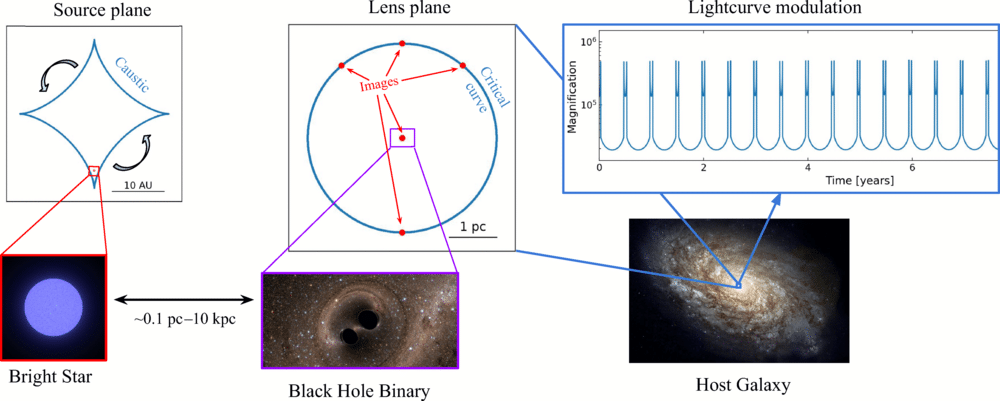
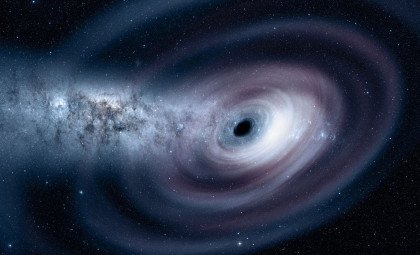
One such technique relies on gravitational lensing, which occurs when massive bodies bend and concentrate the light that passes nearby.
“Supermassive black holes act as natural telescopes,” said Dr. Miguel Zumalacárregui of the Max Planck Institute for Gravitational Physics. “Because of their enormous mass and compact size, they strongly bend passing light. Starlight from the same host galaxy can be focused into extraordinarily bright images, a phenomenon known as gravitational lensing.”
Gravity Creates a Dynamic Light Display
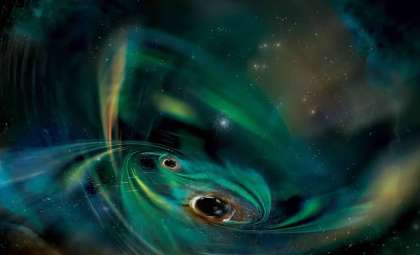
While a single black hole can amplify background starlight only under very precise alignments, the presence of a black hole pair significantly enlarges the strong lensing area. According to the study, their combined gravitational fields form a unique diamond-shaped region called a caustic curve.
As stars cross this zone, they experience sharp surges in brightness. Though theoretical models predict infinite amplification for point-like stars, real stars’ finite size naturally limits the magnification effect.
“The chances of starlight being hugely amplified increase enormously for a binary compared to a single black hole,” said Professor Bence Kocsis from the University of Oxford.
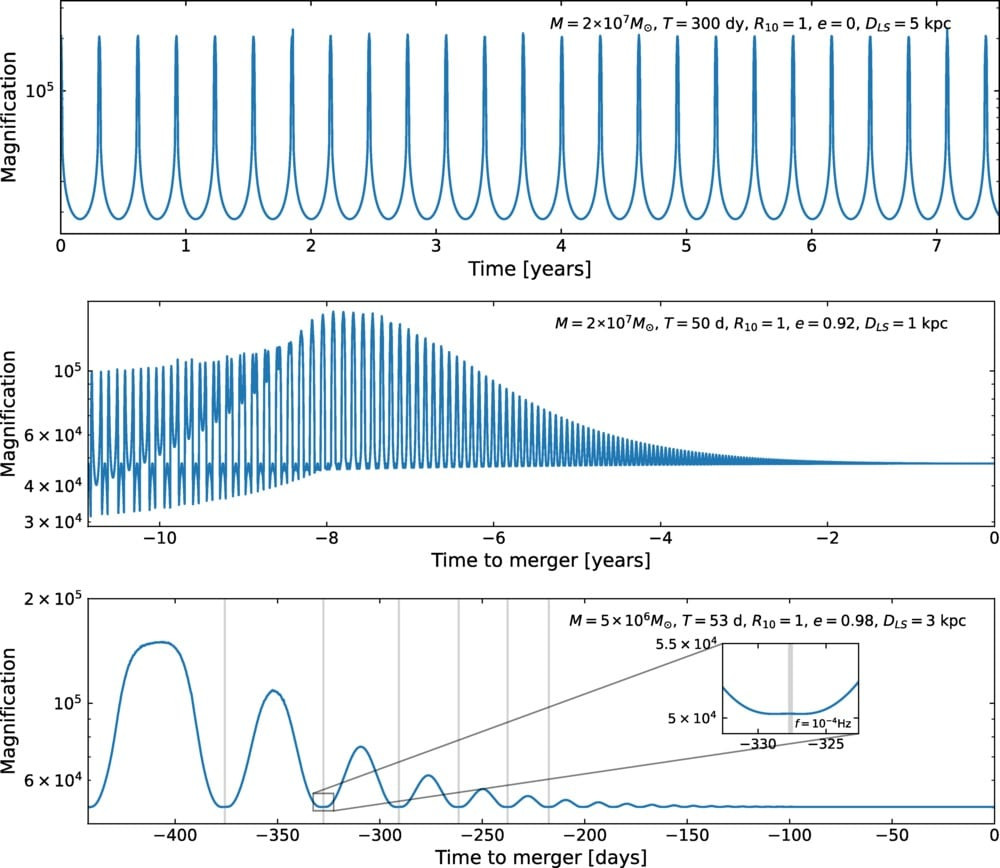
This phenomenon means astronomers stand a better chance of observing these lensing events produced by binary black holes than by solitary ones.
Periodic Luminous Flares Could Unmask Concealed Black Holes
A particularly intriguing aspect of this method is the expected repetition of light bursts. As the black holes orbit each other, they spiral closer due to energy loss from gravitational-wave emission. This causes the caustic curve to rotate and morph, sweeping across the stars behind them.
The lead researcher, Hanxi Wang, described how this moving lens structure triggers repeated bright flashes from stars caught in its path.
“As the binary moves, the caustic curve rotates and changes shape, sweeping across a large volume of stars behind it,” Wang said. “If a bright star lies within this region, it can produce an extraordinarily bright flash each time the caustic passes over it.”
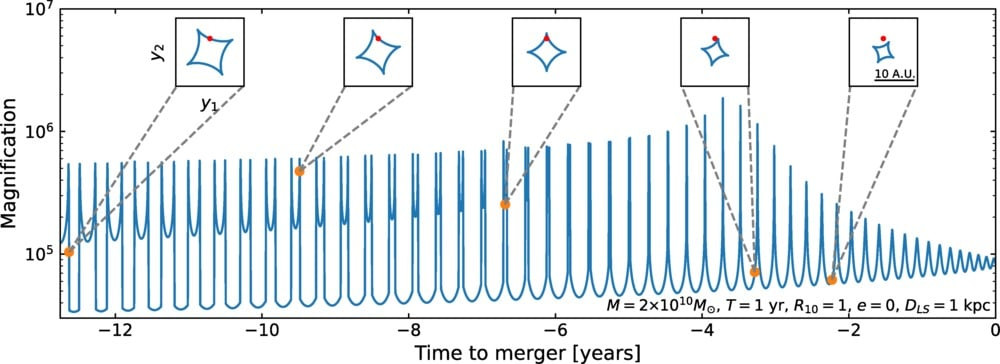
Instead of a singular occurrence, this mechanism results in a series of luminous flares. These bursts' timing and intensity should follow identifiable sequences, enabling astronomers to determine black hole masses and monitor orbital evolution.
Upcoming facilities such as the Vera C. Rubin Observatory and the Nancy Grace Roman Space Telescope will play key roles in hunting for these repetitive signals, potentially unveiling supermassive black hole binaries that have eluded detection until now.
- Categories:
- Astronomy

0 comments
Sign in to Comment