
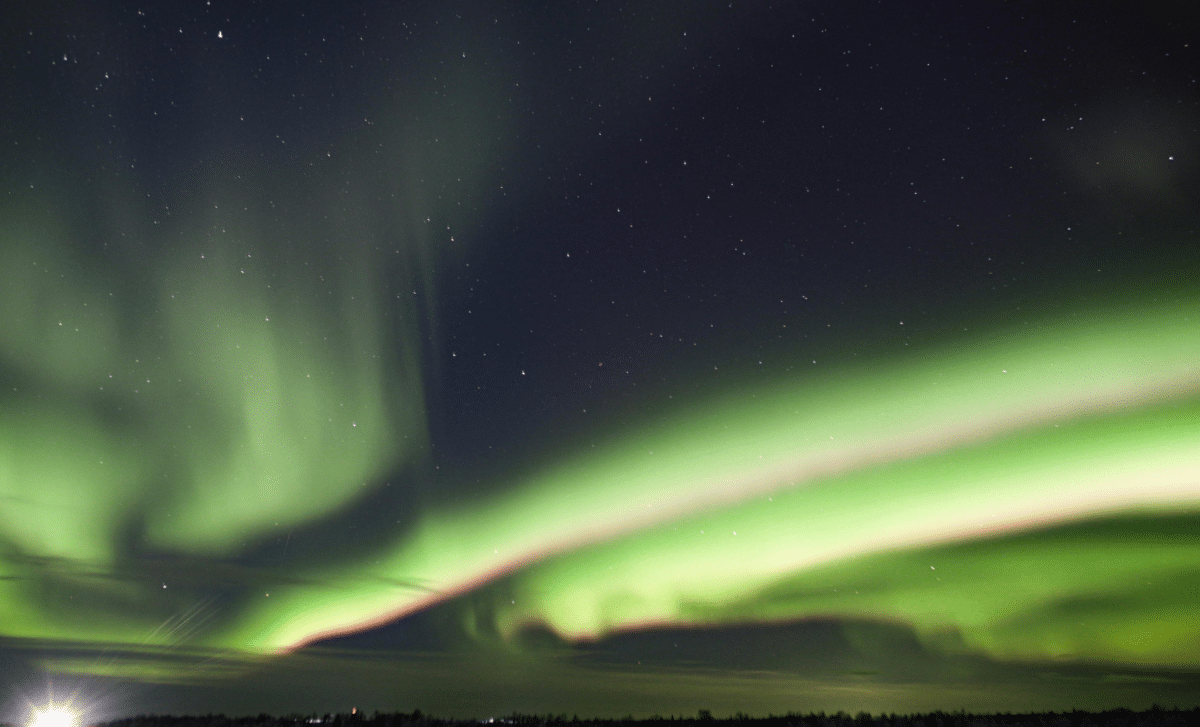
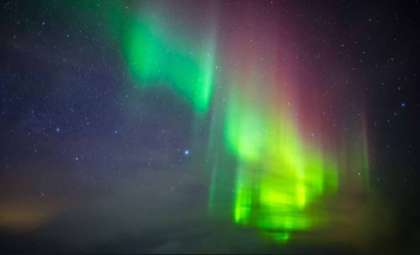
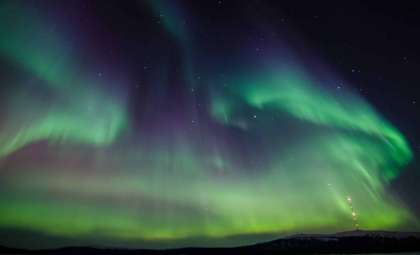
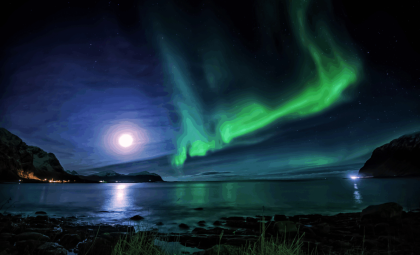
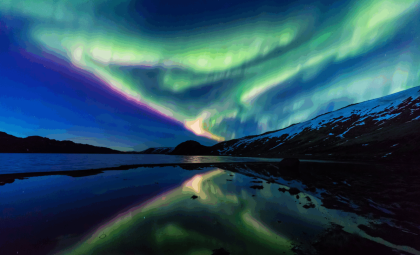
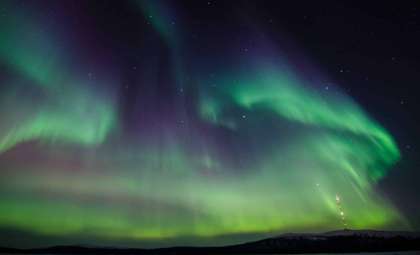
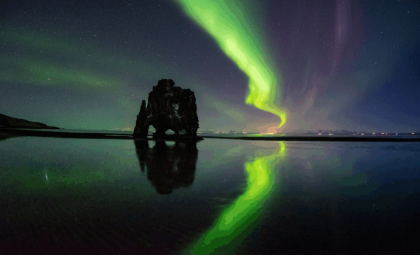
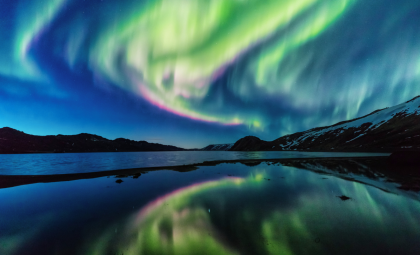
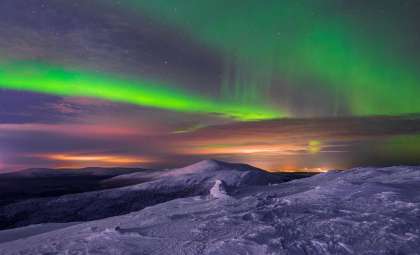
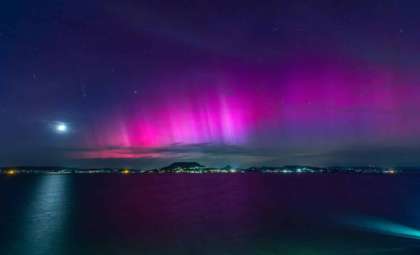
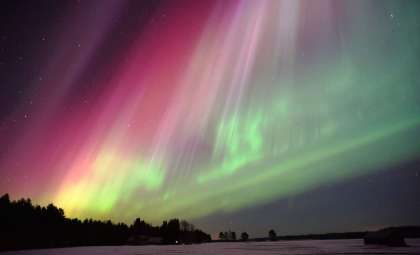
The captivating northern lights, typically seen only in polar regions, are expected to be visible across a broad swath of the northern United States this Thursday and Friday, as reported by the National Oceanic and Atmospheric Administration (NOAA). Experts forecast geomagnetic disturbances reaching G4-level intensity, an uncommon event that can create spectacular auroras far beyond the usual high-latitude locations.
Three Major Solar Events Combine to Trigger Aurora
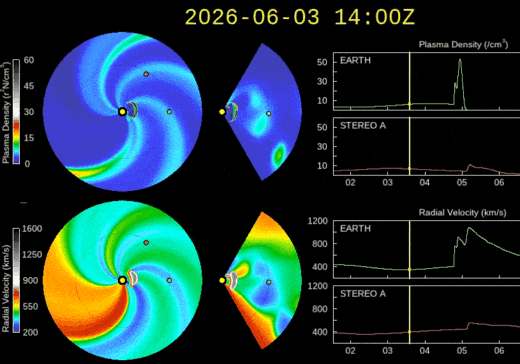
Scientists are monitoring a rare alignment of solar phenomena that might produce one of the most striking auroral displays in recent memory. On May 30, a coronal mass ejection (CME) was released from the sun, followed by a co-rotating interaction region where fast-moving solar wind interacts with slower streams, and a swift solar wind stream flowing from a coronal hole. The near-simultaneous arrival of these events may significantly disturb Earth’s magnetic environment.
The scenario intensified after several X-class solar flares erupted from an unexpected sunspot on June 3, sending additional CMEs that could impact Earth by June 5, according to SpaceWeather.com. These overlapping solar occurrences vastly increase the chances of vivid auroras appearing over states unaccustomed to such sights, especially across the U.S. mid-latitudes.

Unprecedented Aurora Sightings Possible in Lower Latitudes
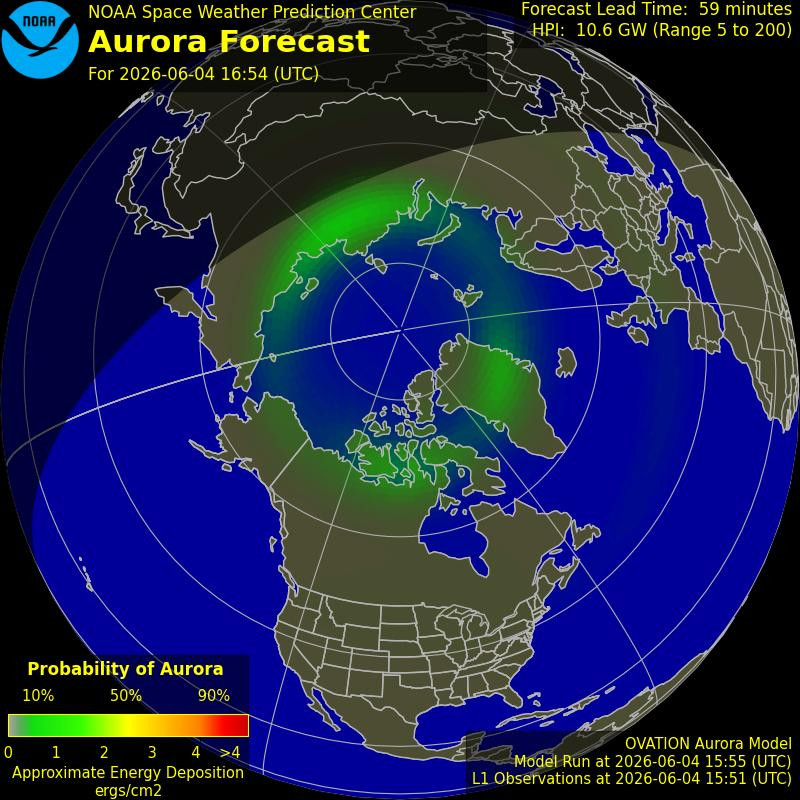
Should the predicted G4 geomagnetic storm occur, auroras may be visible in northern areas of Washington, Idaho, Montana, Wyoming, North Dakota, South Dakota, Minnesota, Wisconsin, Michigan, New York, and Maine. Additionally, more southern states such as Oregon, Nebraska, Iowa, Illinois, Indiana, Ohio, Pennsylvania, Massachusetts, Connecticut, Rhode Island, Vermont, and New Hampshire could catch fleeting views. Northern locales are anticipated to offer the brightest and most consistent displays, especially near the northern horizon.
The geomagnetic disturbance index, Kp, is expected to peak at Kp 8, indicating extreme conditions conducive to spectacular auroras even in mid-latitude regions.
How Geomagnetic Storms Generate Auroras
Geomagnetic storms happen when solar wind particles interact with Earth's magnetic field. The interplanetary magnetic field (IMF) carried within the solar wind is critical; if its north-south component, known as Bz, turns southward, it enables energy to connect more effectively with Earth’s magnetosphere, triggering intensified auroral activity. Generally, a sustained Bz of −5 nT or lower signals that auroras are likely imminent.
NOAA’s DSCOVR satellite, positioned about a million miles from Earth, continuously monitors solar wind speed and magnetic properties, enabling short-term forecasts. However, observers typically have only around 30 minutes’ notice before the auroral peak, making timing essential for viewing.
Viewing Auroras Near the June Solstice Can Be Challenging
For much of northern U.S. and Canadian regions, this auroral event coincides with the approach of the June solstice, a time when nights are short and twilight extends, reducing darkness and making auroras less visible unless geomagnetic activity is strong. Viewers should seek dark, remote locations, track live solar wind conditions, and remain vigilant because the displays may appear suddenly and last just minutes.
Despite these hurdles, the convergence of multiple solar disturbances and potential G4 geomagnetic storm conditions presents a rare chance for residents at mid-latitudes to witness one of nature's most stunning light shows.
- Categories:
- News


0 comments
Sign in to Comment