
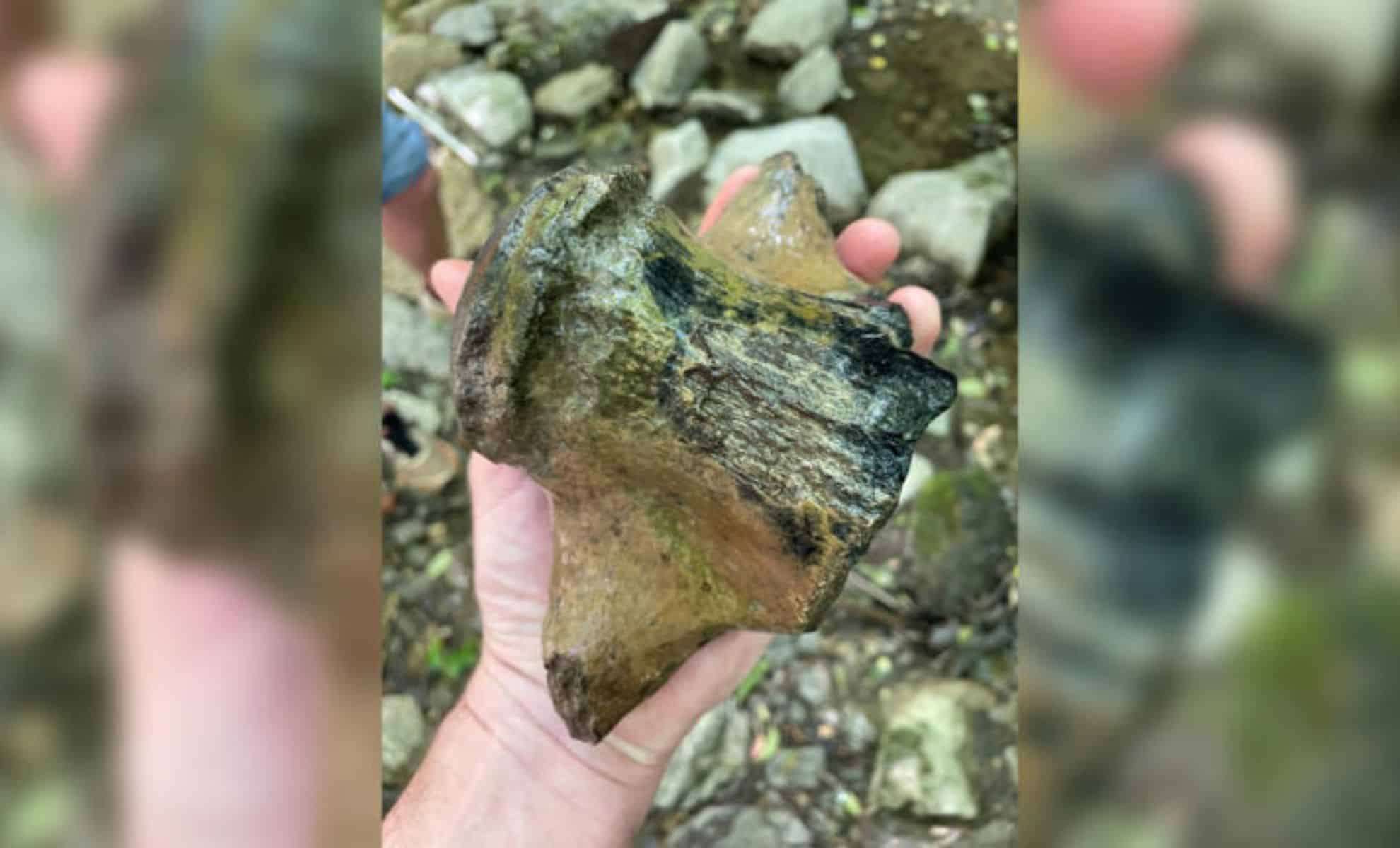
In Mississippi, geologists have unearthed a remarkable fossil of a mosasaur, a formidable marine predator from the past. Known as a “sea dragon” for its massive build and fearsome features, this reptile thrived approximately 70 million years ago during the Cretaceous period.
Unearthing a “Sea Dragon” Fossil in Mississippi
Popular Mechanics reports that while mosasaur remains have surfaced in various parts of the globe, discovering such a finely preserved specimen in Mississippi is truly exceptional.
At that time, the area was submerged beneath the expansive Western Interior Seaway, which stretched across much of North America and served as a habitat to creatures like the mosasaur.

The finding of this fossil offers significant insights into the geography and ecosystem dynamics during the Late Cretaceous period.
This predator, closely related to today’s lizards and snakes, was an aquatic animal, fully adapted to marine life.
“Mosasaurs, ranging in size, were apex predators reigning supreme over the seas during their era,” remarked the leading geologist on the excavation team.
Equipped with sharp, serrated teeth, this giant hunter excelled at capturing sizeable fish and other marine creatures, while its streamlined body enabled swift pursuit of prey.
Significance of the 30-Foot Mosasaur Discovery
Fossils of this kind usually emerge from regions like Kansas and South Dakota, making this Mississippi discovery especially noteworthy.
It provides new evidence suggesting the ancient Western Interior Seaway’s waters once extended farther south than previously estimated, covering parts of Mississippi.
“While mosasaur fossils occasionally surface here, uncovering one of this magnitude is extraordinary. The sheer scale of this specimen amazed our team,” explained James Starnes of Mississippi’s Department of Environmental Quality Office of Geology.
Researchers are eager to study the fossil in depth to better understand the mosasaur’s physical structure and its lifestyle.
Dating back at least 70 million years, this fossil holds the promise of unveiling critical details about the evolutionary path of marine reptiles.
Insights Into Evolution from the Mosasaur Fossil
Mosasaurs belong to a lineage of marine reptiles that originated from land-dwelling ancestors during the Mesozoic Era. Though related to present-day lizards and snakes, these creatures adapted fully to aquatic environments.
Over millions of years, mosasaurs evolved into formidable ocean hunters, with some species reaching lengths of up to 50 feet. Their evolutionary journey illustrates how species can modify their anatomy and behavior to succeed in new habitats.
The discovery in Mississippi presents an uncommon chance for paleontologists to investigate these evolutionary changes firsthand.
As the Cretaceous period stands as a pivotal chapter in Earth’s biological history, studying mosasaurs enriches our understanding of the marine ecosystems of that era and their role in shaping life’s diversity.
- Categories:
- Nature












0 comments
Sign in to Comment