
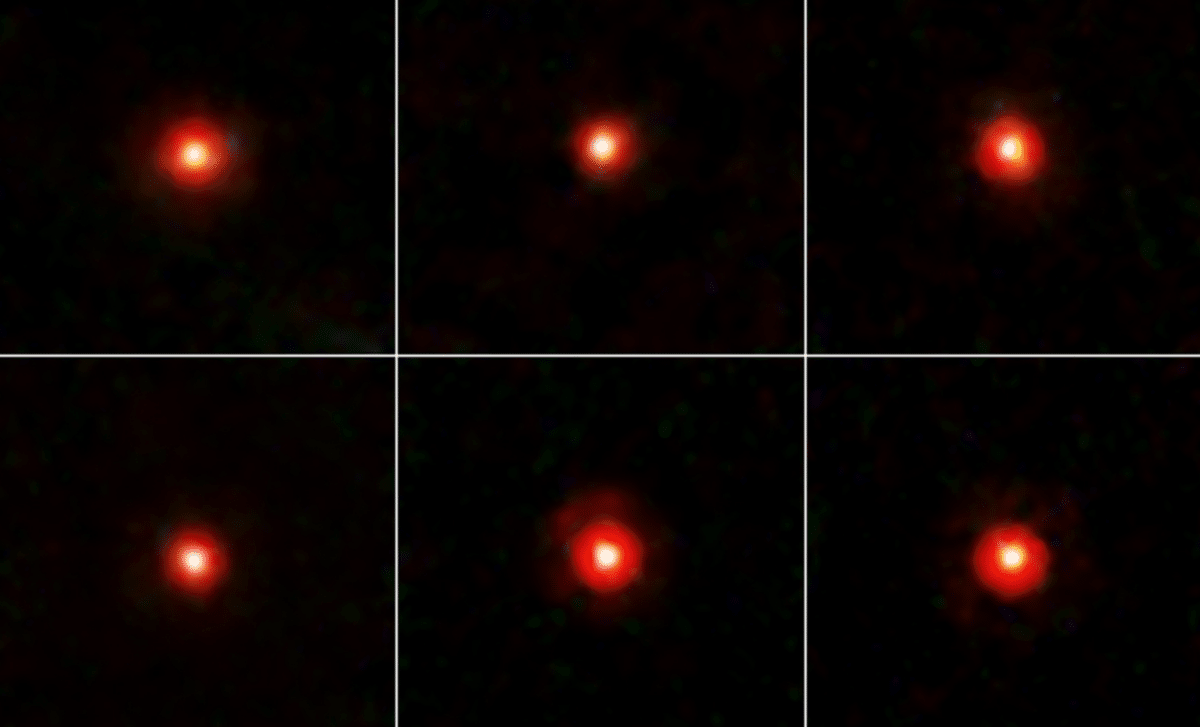
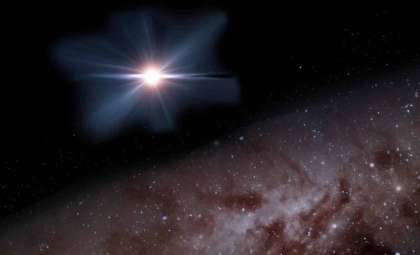
Recent theoretical research shared on arXiv proposes that the enigmatic Little Red Dots (LRDs) identified by the James Webb Space Telescope (JWST) might be black holes experiencing intense growth phases. These minute, dim objects, scattered throughout the infant universe, have baffled astronomers due to their distinctive light patterns and puzzling abundance. The new hypothesis suggests LRDs represent black holes accreting matter at rates far exceeding previous assumptions, shedding light on how supermassive black holes formed within a billion years after the Big Bang.
Small Red Dots at the Universe’s Earliest Epochs
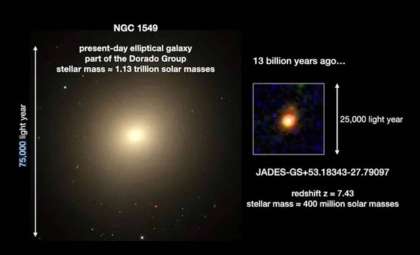
Following JWST’s launch, scientists have cataloged a set of compact, faint red objects at very high redshifts that defy classification as typical galaxies or quasars. These LRDs display a V-shaped spectral signature, exhibiting brightness in ultraviolet and optical wavelengths, with a dip in between. They also show broad emission lines indicative of active black hole presence but notably lack signals in X-ray, radio, or infrared bands, distinguishing them from conventional quasars.
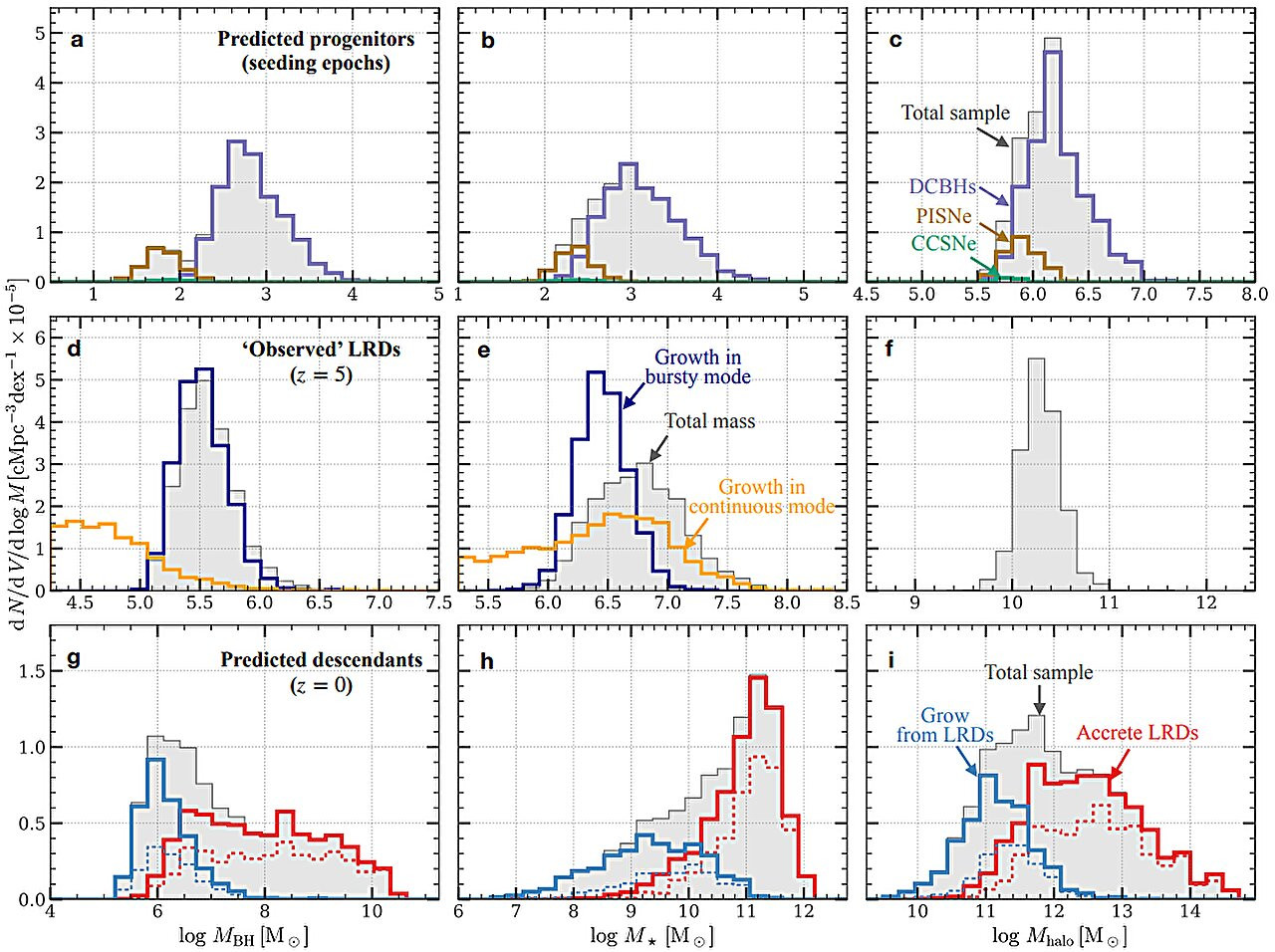
The unexpectedly large discovery rate of LRDs has challenged existing cosmological theories. While earlier explanations invoked exotic physics or unknown effects, the new investigation by Yangyao Chen of Nanjing University and Houjun Mo from the University of Massachusetts situates these objects squarely within the ΛCDM cosmological paradigm. Utilizing a galaxy formation model, the researchers traced LRDs back to black hole seeds that originated more than 13 billion years ago.

Black Hole Growth Driven by Intense Bursts
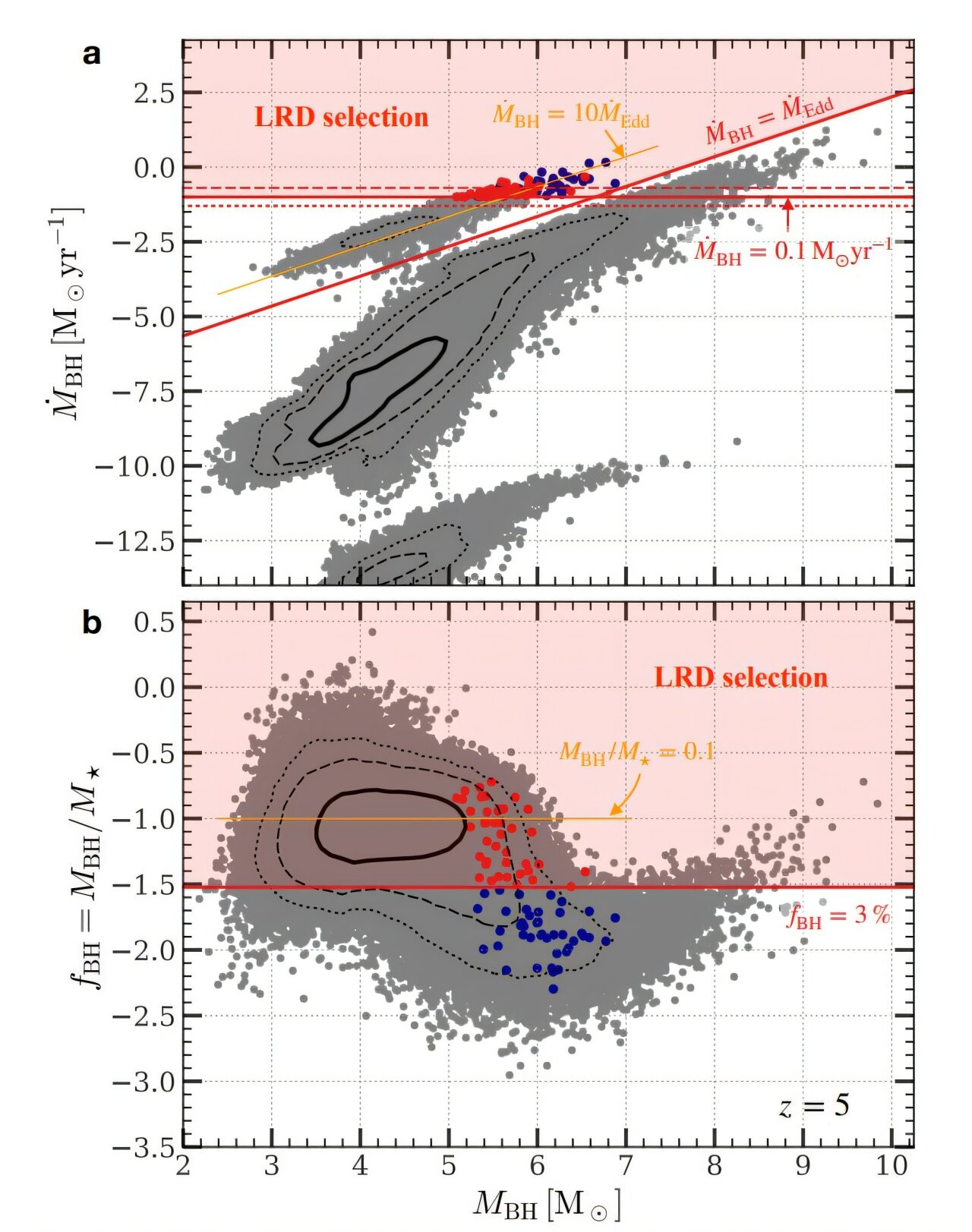
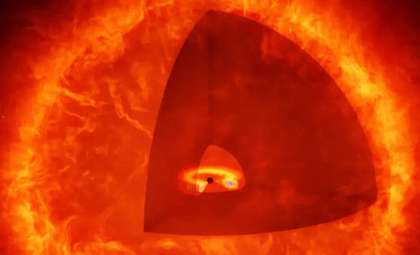
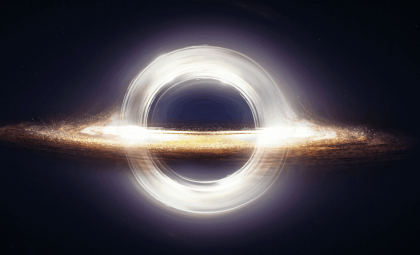
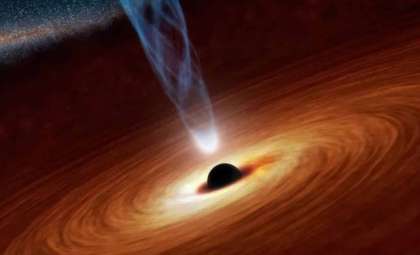
According to the model, most black hole seeds emerge at redshifts beyond 20, forming within small mini-halos influenced by the universe’s first stars. Initially, these black holes are intermediate in mass and too faint to be detected as LRDs. Their transformation into the luminous compact sources identified by JWST is fueled by super-Eddington accretion, wherein black holes consume material at rates up to ten times the classical limit.
“Our model suggests that it is post-seeding growth, mainly through episodic nuclear bursts, that raises BH seeds to supermassive status,” the researchers write in the paper.
These episodic nuclear bursts are brief, intense growth spurts triggered by gravitational interactions such as galaxy mergers or close encounters. During these events, black holes go through rapid mass increase while star formation surges in the concentrated nuclear regions. The interplay of hot, young stars and rapidly accreting black holes produces the distinctive V-shaped spectrum of LRDs, featuring ultraviolet light from stars and reddish optical emission from the black holes themselves.
A Natural Feature Within the Standard Cosmological Model
The arXiv paper highlights that LRD formation does not require extraordinary physical processes beyond the conventional ΛCDM framework. Instead, these objects naturally arise as black hole seeds evolve alongside their parent galaxies and surrounding dark matter halos. Environmental conditions lead to diverse outcomes for LRDs: some merge into larger galaxies, while others endure as isolated ultra-compact dwarfs or globular cluster-like systems.
“We will present a detailed analysis of the connection between LRDs and present-day compact dwarf galaxies in a forthcoming paper,” the researchers conclude.
This suggests that studying LRDs can reveal important clues about how compact stellar systems and intermediate-mass black holes have evolved across cosmic history.
Unveiling a Larger Hidden Black Hole Population
The model forecasts the LRDs spotted by JWST represent only the brightest members of a much wider group of black holes undergoing similar burst-like growth phases, many of which are currently too faint to detect. Upcoming observations with JWST and future telescopes are expected to uncover more of this concealed population, enhancing understanding of the early stages of black hole and galaxy formation. These insights also imply that turbulent nuclear growth episodes were common in the early universe, playing a key role in shaping both stellar and black hole development within dense galactic systems.
- Categories:
- News




0 comments
Sign in to Comment